Table of Contents >> Show >> Hide
- What Makes Banana Bread Actually Good?
- Ingredients
- The Best Banana Bread Recipe (Moist, One-Bowl, No Drama)
- How to Know When Banana Bread Is Done
- Flavor and Texture Upgrades (Without Turning This Into a Science Fair)
- Banana Bread Variations
- Troubleshooting: When Banana Bread Misbehaves
- How to Ripen Bananas Fast
- Storage and Freezing
- FAQ
- Conclusion
- of Banana Bread Experiences (The Real-Life Stuff That Helps)
Banana bread is proof that life’s little messes can be delicious. You know the scene: a few bananas go from
“perfect snack” to “tropical science experiment” on the counter, and suddenly you’re googling a
banana bread recipe with the urgency of someone defusing a fruit-based bomb.
Good news: overripe bananas are not a problemthey’re the whole plan.
This guide gives you a reliable, bakery-style loaf that’s moist, tender, deeply banana-forward,
and friendly to real life (translation: you don’t need three mixers, a culinary degree, or a sponsor from Big Flour).
You’ll also get smart technique notes, troubleshooting, and variationsbecause banana bread is a classic,
but it’s also an excellent excuse to add chocolate and call it “breakfast.”
What Makes Banana Bread Actually Good?
Great banana bread hits three goals at once: big banana flavor, a soft crumb, and a slice that holds together
without turning into banana pudding disguised as a loaf. Here’s what matters most:
1) Very ripe bananas = flavor and moisture
The darker and spottier the bananas, the sweeter and more aromatic your loaf. As bananas ripen, their starches
convert to sugars, which improves both taste and browning. If your bananas look a little dramatic, they’re ready
for their starring role.
2) The fat choice changes the texture
Butter brings classic, cozy flavor. Oil tends to keep quick breads moist for longer. Many top recipes lean on butter,
while some use oil (or a mix) to lock in softness. This recipe uses butter for flavor and adds a moisture helper
(sour cream or Greek yogurt) so the loaf stays plush.
3) Don’t overmix (banana bread is not a cardio workout)
Stirring too much develops gluten, which can make the loaf tough or rubbery. The goal is “just combined,” not
“incorporated until your arm is sore and your batter is angry.”
4) A little acidity helps tenderness and lift
Sour cream or Greek yogurt adds fat and protein for richness and helps baking soda do its job. That’s one reason
tangy dairy shows up in so many “best-ever” versions.
Ingredients
Here’s what you’ll need for one standard loaf (9×5-inch pan). This is an easy banana bread approach,
but with a few upgrades for texture and flavor.
- Ripe bananas: 3 medium (about 1 1/2 cups mashed). Overripe is ideal.
- All-purpose flour: 1 3/4 cups (spooned and leveled).
- Baking soda: 1 teaspoon (main leavener).
- Baking powder: 1/2 teaspoon (optional, for a touch more lift).
- Salt: 1/2 teaspoon (balances sweetness and boosts flavor).
- Cinnamon: 1 teaspoon (optional, but highly recommended for cozy vibes).
- Butter: 1/2 cup (1 stick), melted and cooled slightly.
- Brown sugar: 3/4 cup, packed (adds moisture and a deeper flavor).
- Eggs: 2 large, room temperature if possible.
- Sour cream or Greek yogurt: 1/3 cup (full-fat for best texture).
- Vanilla extract: 1 teaspoon.
- Optional add-ins: 3/4 cup chopped walnuts/pecans OR chocolate chips.
The Best Banana Bread Recipe (Moist, One-Bowl, No Drama)
Equipment
- 9×5-inch loaf pan (metal bakes most evenly)
- Mixing bowl
- Whisk + spatula (or a forkbanana bread is flexible like that)
- Measuring cups/spoons
Step 1: Preheat and prep
Preheat your oven to 350°F. Grease a 9×5-inch loaf pan and, if you want an easy release,
line it with a strip of parchment so you can lift the loaf out like a very delicious, very legal heist.
Step 2: Mix the dry ingredients
In a medium bowl, whisk together:
1 3/4 cups flour, 1 tsp baking soda, 1/2 tsp baking powder (optional), 1/2 tsp salt, 1 tsp cinnamon.
Whisking distributes the leaveners so you don’t end up with random “baking soda surprise pockets.”
Step 3: Mash bananas and build the wet mix
In a large bowl, mash 3 ripe bananas until mostly smooth (small lumps are finethey melt into the loaf).
Whisk in:
3/4 cup brown sugar, 1/2 cup melted butter, 2 eggs, 1/3 cup sour cream (or Greek yogurt), and 1 tsp vanilla.
Step 4: Combine wet + dry (gently)
Add the dry ingredients to the wet mixture and fold with a spatula until you no longer see streaks of flour.
Stop as soon as it’s combined. If you’re adding nuts or chocolate chips, fold them in now.
This is the moment where “less mixing” equals “more tender banana bread.”
Step 5: Bake
Pour the batter into the pan and smooth the top. Bake for 55–65 minutes, or until a toothpick inserted
near the center comes out with a few moist crumbs (not wet batter).
Pro move: If the top is getting too brown at the 35–45 minute mark, tent loosely with foil
and keep baking. Banana bread likes to look bronzed, not sunburned.
Step 6: Cool (yes, really)
Let the loaf cool in the pan for about 10–15 minutes, then transfer to a rack to cool completely.
Slicing too early can make the bread seem gummy, even if it’s fully baked. Patience here pays off in clean,
gorgeous slices.
How to Know When Banana Bread Is Done
Toothpicks are helpful, but banana bread can be sneaky. Look for these signs:
- The center is set and no longer looks glossy or wet.
- The loaf has risen and the top is deeply golden with a crack down the middle.
- A toothpick comes out with crumbs, not batter.
- If you use a thermometer: aim for roughly 200–206°F in the center.
Flavor and Texture Upgrades (Without Turning This Into a Science Fair)
Make bananas taste “more banana”
If you want intense banana flavor without adding extra mashed banana (which can make the loaf heavy), try this:
microwave the peeled bananas in a bowl for a minute or two until they release liquid, then reduce that liquid in a
small pan for a few minutes until syrupy, and add it back. It concentrates flavor like a banana espresso shot.
Brown sugar for softness
Brown sugar contains molasses, which helps keep quick breads tender. If you prefer less sweetness, you can reduce
the sugar slightly, but don’t cut it aggressively or you may lose moisture and browning.
Sour cream or Greek yogurt for moisture
Full-fat sour cream or yogurt adds richness and a subtle tang that balances banana sweetness. It also helps the loaf
slice neatly instead of crumbling like a sad sandcastle.
Banana Bread Variations
One of the best things about a classic banana bread recipe is how easily it adapts. Here are crowd-pleasers:
1) Banana nut bread
Fold in 3/4 cup toasted walnuts or pecans. Toasting matters: it wakes up nut flavor and keeps it from tasting
“slightly cardboard, but make it crunchy.”
2) Chocolate chip banana bread
Add 3/4 cup chocolate chips. For extra flair, sprinkle a small handful on top before baking.
Chocolate makes banana bread feel like dessertwithout forcing you to admit you wanted dessert.
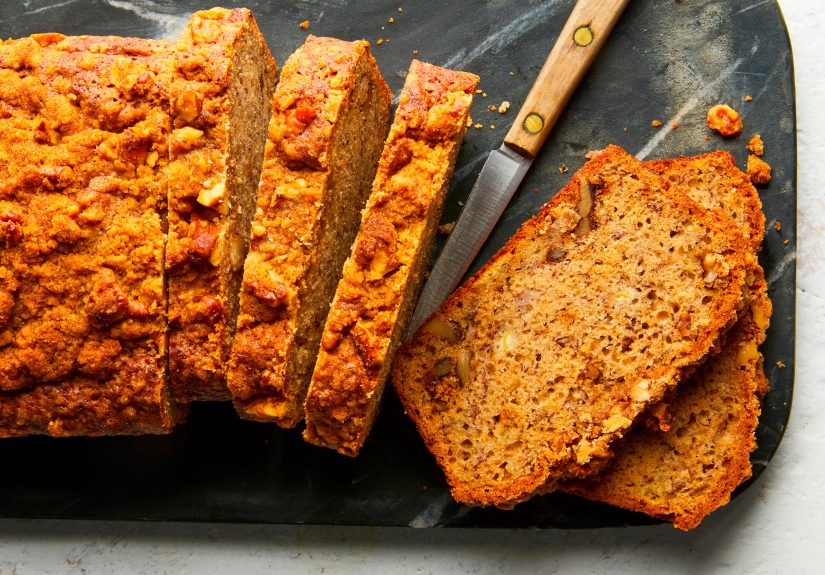
3) Streusel-topped
Mix 2 tbsp butter + 2 tbsp brown sugar + 3 tbsp flour + pinch of cinnamon into crumbles and sprinkle on top.
It adds a bakery-style crunch that makes your loaf look like it came with a price tag and a line at the register.
4) Muffins instead of a loaf
Portion into a lined muffin tin and bake around 18–24 minutes (start checking early).
Same batter, faster payoff.
5) Whole-grain friendly
Swap in up to 1/2 whole wheat flour for a heartier crumb. Whole grains absorb more liquid,
so keep the yogurt/sour cream in the recipe (or even bump it slightly) for a moist result.
6) “I need it gluten-free” option
Use a reputable 1:1 gluten-free baking flour blend designed for baking. Banana bread is forgiving, but gluten-free
batters often benefit from a brief rest (10 minutes) before baking so the flour hydrates.
7) “I need it dairy-free” option
Replace butter with neutral oil or melted coconut oil, and use a thick nondairy yogurt. You’ll still get a soft,
satisfying loaf with a slightly different (but still great) flavor profile.
Troubleshooting: When Banana Bread Misbehaves
Why did my banana bread sink in the middle?
- Underbaked: The center needed more time. Next time, tent with foil and bake longer.
- Too much banana or liquid: Extra banana can weigh down the crumb.
- Overmixing: Too much gluten + too much rise can lead to collapse.
- Old baking soda: If it’s been sitting forever, it may not lift properly.
Why is it dry?
- Too much flour: Spoon and level; don’t scoop straight from the bag like you’re digging for treasure.
- Overbaked: Start checking early; ovens run hot.
- Not ripe enough bananas: Less sugar and moisture = less tenderness.
Why is it gummy?
- Sliced too soon: Cooling matterssteam needs time to redistribute.
- Too much banana: It can push the loaf toward pudding territory.
- Underbaked center: Check doneness with a tester and, if possible, a thermometer.
How to Ripen Bananas Fast
If your bananas are still yellow and feeling proud of it, you have options:
- Counter method: Put bananas in a paper bag (with an apple if you have one) for 1–2 days.
- Oven method: Bake unpeeled bananas on a sheet at 300°F until the skins darken (15–25 minutes),
then cool and mash. - Freeze-and-thaw: Freeze ripe bananas (peel first). Thaw for intense sweetness and easy mashing.
Storage and Freezing
Banana bread keeps well, which is great because it also disappears well.
- Room temperature: Wrap tightly or store in an airtight container for up to about 3 days.
- Fridge: It can last longer, but refrigeration can dry baked goods; wrap well.
- Freezer: Wrap slices (or the whole loaf) in plastic wrap, then foil. Freeze up to 2–3 months.
Thaw overnight in the fridge or on the counter, then warm gently.
FAQ
Can I reduce the sugar?
Yesslightly. Try reducing by 2–3 tablespoons first. Sugar affects moisture and browning, so a big cut can make the loaf
drier and paler.
Can I make banana bread without eggs?
Often, yes. A common swap is a flax “egg” (1 tbsp ground flax + 3 tbsp water per egg, rested 5–10 minutes).
Texture will be a bit denser, but still tasty.
What pan size should I use?
A 9×5-inch loaf pan is standard. If you use smaller pans, the bake time changes (usually shorter). Fill pans about 2/3 full
to avoid overflow.
Conclusion
A truly great banana bread recipe isn’t complicatedit’s just smart. Use very ripe bananas, measure flour
accurately, mix gently, and bake until the center is set. From there, it’s all joy: walnuts for crunch, chocolate for
happiness, streusel for bragging rights.
Keep this recipe as your “default loaf,” and you’ll never look at overripe bananas with fear again. You’ll look at them
like opportunity. (Delicious, fragrant opportunity.)
of Banana Bread Experiences (The Real-Life Stuff That Helps)
If banana bread had a personality, it would be that friend who’s easy to hang out with, never judges your messy kitchen,
and somehow makes everyone feel better. In a lot of households, banana bread is the unofficial “we’ve got this” bake:
it shows up when groceries are low, when schedules are chaotic, or when you just need something warm that smells like
comfort and cinnamon.
One of the most common home-baker experiences is discovering that banana bread is surprisingly sensitive to tiny choices
but in a helpful way. For example, people often think a drier loaf means they “messed up,” when the culprit is frequently
just flour measurement. Spoon-and-level looks fussy until you compare it to the “scoop straight from the bag” method,
which packs in extra flour like it’s trying to win a weightlifting contest. The result? A loaf that tastes fine but feels
like it’s begging for a glass of milk.
Another recurring lesson: the center keeps cooking after it leaves the oven. Many bakers have had the “it smells done,
so it must be done” moment, sliced too early, and watched steam turn the middle into a soft, gummy zone. Cooling isn’t
a punishmentit’s part of the process. Waiting lets the crumb set, the moisture redistribute, and the slices come out
clean instead of collapsing into delicious rubble.
Banana bread is also famous for its social life. It’s the baked good people bring to neighbors, coworkers, teachers,
and friendsbecause it travels well, stays tender, and doesn’t require frosting to feel special. Many home cooks keep
a “base loaf” recipe and then tailor it to the moment: chocolate chips for a birthday breakfast, walnuts for a more
classic snack, or a streusel top when they want it to look like it came from a bakery case.
And then there’s the freezer strategy, which feels like a life hack the first time you do it. Slicing before freezing
means you can grab one piece at a time, warm it up, and instantly upgrade a rushed morning. It’s especially useful for
families, since banana bread can shift roles depending on the day: breakfast with peanut butter, an after-school snack,
or dessert with a scoop of vanilla ice cream. The best experience-related takeaway is simple: banana bread rewards
consistency, but it welcomes creativity. Once you nail the gentle mixing and the doneness check, the rest is pure fun.