Table of Contents >> Show >> Hide
- What Is ARVC (and Why Does the Name Sound Like a Sci-Fi Villain)?
- What Causes ARVC? Think “Cell Velcro” That Doesn’t Hold Like It Should
- Who Gets ARVC and What Does It Feel Like?
- How ARVC Triggers Dangerous Rhythms (The “Electrical Wiring Meets Remodeling” Problem)
- Diagnosis: No Single “ARVC Button,” So Doctors Use a Scorecard
- Treatment: Lower the Risk, Control the Rhythm, Support the Heart
- Family Screening: ARVC Is a “Team Sport,” Whether You Want It or Not
- Daily Life With ARVC: Practical Questions People Actually Ask
- When to Seek Urgent Help
- Frequently Asked Questions
- Bottom Line
- Real-World Experiences With ARVC (What People Commonly Describe)
Your heart is basically a highly trained drummer: steady, precise, and (ideally) not auditioning for a heavy-metal band at 2 a.m.
Arrhythmogenic Right Ventricular Cardiomyopathy (ARVC) is one of the conditions that can mess with that rhythmsometimes quietly, sometimes dramatically.
The good news: ARVC is better understood than ever, and there are real, practical ways to lower risk and live well with it.
Quick note: This article is for education, not personal medical advice. If you have fainting, chest pain, or new palpitationsespecially during exercisetalk with a clinician promptly or seek emergency care.
What Is ARVC (and Why Does the Name Sound Like a Sci-Fi Villain)?
Arrhythmogenic Right Ventricular Cardiomyopathy (ARVC) is a genetic (inherited) heart muscle disease that mainly affects the
right ventriclethe chamber that helps pump blood to the lungs. Over time, some heart muscle cells can be replaced by
fibrous (scar) tissue and sometimes fatty tissue. That remodeling can disrupt electrical signaling and make the
heart more prone to ventricular arrhythmias (abnormal rhythms that start in the lower chambers).
ARVC has also been called arrhythmogenic right ventricular dysplasia (ARVD). You’ll still see that older label in some clinics,
articles, and family conversationsespecially if someone in the family was diagnosed years ago.
While ARVC is “right-ventricle famous,” it’s not always a solo act. Some people develop involvement of the left ventricle too, and many experts now
use broader terms like arrhythmogenic cardiomyopathy (ACM) to reflect a spectrum rather than a single-chamber story.
What Causes ARVC? Think “Cell Velcro” That Doesn’t Hold Like It Should
Most ARVC is linked to changes (variants) in genes that help heart muscle cells stick together. These “cell-connection” structures are called
desmosomes. When desmosomal proteins don’t work properly, cells may separate more easilyespecially under mechanical stress like
prolonged intense exercise. Over time, damaged cells can be replaced with scar and fat, which can set the stage for rhythm problems.
Common Genetic Players
Many genes have been associated with ARVC/ACM. A frequently implicated one is PKP2, but others include
DSP, DSG2, DSC2, and additional non-desmosomal genes depending on the family.
Inheritance is often autosomal dominant (a parent may pass it down), but expression can be highly variablemeaning one person can have
significant symptoms while another carrier has mild or no obvious issues for years.
Why Exercise Matters So Much
ARVC is one of the clearest examples of a heart condition where high-intensity and endurance exercise can act like a “volume knob,”
turning up risk and sometimes accelerating progression in susceptible people. It’s not that movement is evil; it’s that repeated, intense cardiac
stress can amplify the consequences of the underlying cell-adhesion problem.
Who Gets ARVC and What Does It Feel Like?
ARVC is considered rare, and it often shows up in adolescence or adulthoodsometimes first noticed when someone is training hard,
playing competitive sports, or otherwise pushing their cardiovascular system. It can also appear in people who are not athletes at all.
Common Symptoms (and a Few Sneaky Ones)
- Palpitations (fluttering, racing, or “thump-thump… pause… thump” sensations)
- Lightheadedness or fainting (syncope), especially with exertion
- Shortness of breath or reduced exercise tolerance
- Chest discomfort (less common as a primary symptom, but it can occur)
- Sudden cardiac arrest can be the first sign in some cases (which is why family history matters)
Red Flags Worth Taking Seriously
Call a clinician promptly if you have fainting during exercise, sustained palpitations with dizziness, or a strong family history of unexplained
fainting or sudden death at a young age. If symptoms are severe or suddenespecially fainting, chest pain, or trouble breathingseek emergency care.
How ARVC Triggers Dangerous Rhythms (The “Electrical Wiring Meets Remodeling” Problem)
Scar and fibrofatty replacement can interfere with electrical conduction. The result can be abnormal rhythms that start in the ventricles, including:
- Premature ventricular contractions (PVCs) (extra beats)
- Ventricular tachycardia (VT) (fast rhythm from the ventricles)
- Ventricular fibrillation (VF) (chaotic rhythm that can cause sudden cardiac arrest)
A classic pattern in ARVC is VT that appears to originate in the right ventricle, sometimes described on ECG as having a “left bundle branch block
(LBBB) morphology” because of the direction the electrical wavefront travels. That’s a clinician-level detail, but it’s one reason ECG interpretation
is so central in ARVC workups.
Diagnosis: No Single “ARVC Button,” So Doctors Use a Scorecard
ARVC diagnosis usually relies on a combination of findings rather than a single test. Clinicians often use consensus-based diagnostic frameworks,
historically the 2010 Task Force Criteria, and more recent refinements that better address left-ventricular involvement in the broader
arrhythmogenic cardiomyopathy spectrum.
Tests Commonly Used
1) History and Family Story
Expect questions about fainting episodes, palpitations, exercise habits, and relatives with cardiomyopathy, unexplained accidents, or sudden death.
Sometimes the “family history” isn’t obvious until someone starts connecting dots across generations.
2) Electrocardiogram (ECG/EKG)
An ECG can show patterns suggestive of ARVC, such as T-wave inversions in certain leads (especially beyond normal adolescent patterns), conduction
delays, or other markers. An “epsilon wave” may be discussed in classic descriptions, though it’s not present in many cases and is not required.
3) Rhythm Monitoring (Holter / Patch Monitors / Event Monitors)
Because arrhythmias can be intermittent, monitoring over 24–48 hours (or longer) can detect PVC burden, runs of VT, or symptom-rhythm correlations
(“I felt the flutter at 3:14 p.m.; what happened on the strip?”).
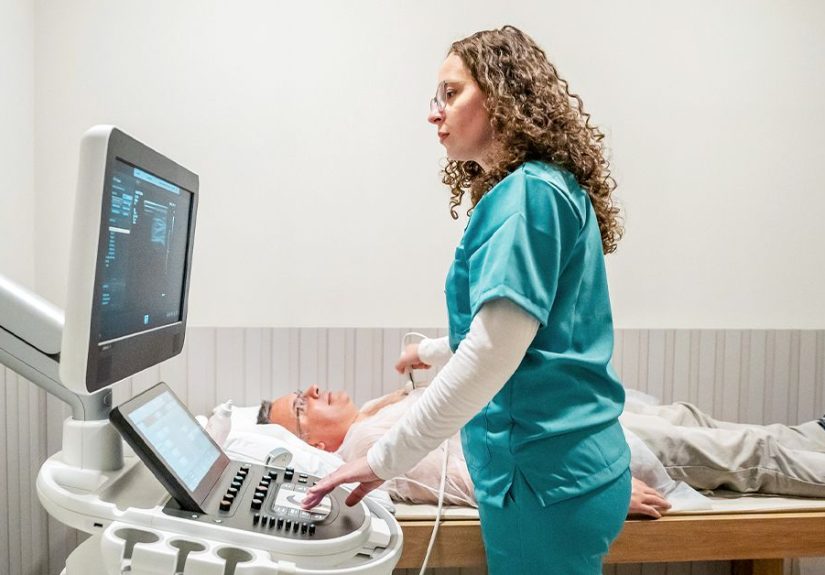
4) Imaging (Echocardiogram and Cardiac MRI)
Imaging looks for right ventricular enlargement, reduced function, regional wall motion abnormalities, or aneurysm-like changes. Cardiac MRI can be
especially helpful for tissue characterization, but interpretation requires expertise; not every “bright spot” equals ARVC, and not every true case is
obvious early on.
5) Genetic Testing
Genetic testing can identify a pathogenic variant in a gene associated with ARVC/ACM. It’s also valuable for cascade screeningtesting
relatives to identify who needs closer clinical follow-up. Importantly, a negative test doesn’t always exclude ARVC if clinical features are strong,
because not every causal variant is known or detectable.
6) Sometimes: Exercise Testing, Signal-Averaged ECG, or Biopsy
Additional tools may be used depending on the case. Endomyocardial biopsy can show fibrofatty replacement but has limitations because disease can be
patchysampling the wrong area may miss it.
Treatment: Lower the Risk, Control the Rhythm, Support the Heart
ARVC care is highly individualized. The goal is typically threefold: (1) reduce arrhythmic risk, (2) treat symptoms,
and (3) manage any heart muscle weakening if it develops.
1) Lifestyle: The Big One Is Exercise Prescription (Not Just “Stop Everything”)
Many people with ARVC (or those at high risk because of genetics/family history) are advised to avoid competitive and
high-intensity endurance exercise. This recommendation can be emotionally hardespecially for athletesbut it’s one of the most
evidence-backed levers to reduce arrhythmias and slow progression.
That said, “avoid intense endurance” does not automatically mean “become a couch ornament.” Clinicians may recommend lower-intensity, tailored activity
based on risk level, symptoms, and monitoring results. The safest plan is personal, not one-size-fits-all.
2) Medications
- Beta blockers are commonly used to reduce adrenergic triggers for arrhythmias.
- Antiarrhythmic drugs (such as sotalol or amiodarone in selected cases) may help reduce arrhythmia burden.
- Heart failure medications may be used if ventricular function declines (even if ARVC started as mostly a rhythm issue).
3) Catheter Ablation
If ventricular tachycardia becomes frequent or hard to control, catheter ablation can reduce arrhythmia episodes. In ARVC, the arrhythmia substrate
may involve both the inside and outside surfaces of the heart (endocardial and epicardial), so specialized centers may perform more advanced ablation
strategies. Ablation can be very helpfulbut it’s typically not considered a stand-alone “cure,” because ARVC can be progressive.
4) Implantable Cardioverter-Defibrillator (ICD)
An ICD is the most effective tool for preventing sudden cardiac death in people at higher risk. It continuously monitors rhythm and can
deliver pacing or a shock to stop life-threatening ventricular arrhythmias. ICD decisions balance benefits (life-saving therapy) with risks (inappropriate
shocks, device complications), so clinicians use risk factorslike prior sustained VT/VF, fainting concerning for arrhythmia, and ventricular dysfunction
to guide shared decision-making.
5) Advanced Heart Failure Therapy and Transplant
A smaller subset of people develop severe ventricular dysfunction or refractory arrhythmias. In advanced cases, heart failure programs may consider
mechanical support or heart transplant evaluation.
Family Screening: ARVC Is a “Team Sport,” Whether You Want It or Not
Because ARVC is often inherited, first-degree relatives (parents, siblings, children) may be advised to undergo evaluation. Screening commonly includes
ECGs, rhythm monitoring, and imaging at intervalsespecially during adolescence and early adulthood when signs may emerge. Genetic counseling is a huge
help here: it turns a scary family mystery into an organized plan.
What If You Carry a Variant but Feel Fine?
This is common. Many carriers are asymptomatic for years. The usual approach is regular surveillance and a thoughtful conversation about
exercise intensity, symptoms to watch for, and what “risk-reduction” means for your specific situation.
Daily Life With ARVC: Practical Questions People Actually Ask
“Can I still work out?”
Often yesjust not the same way. Many people transition from intense endurance training to lower-intensity movement guided by their cardiology team.
The best plan considers your genotype (if known), phenotype (what your heart looks like today), arrhythmia history, and personal goals.
“What about caffeine, alcohol, and stress?”
Responses vary. Some people notice palpitations with stimulants or heavy alcohol use, while others don’t. Many clinicians encourage moderation and
attention to triggers: if something reliably provokes symptoms, it’s not your friendno matter how charming it tastes at brunch.
“Can I get pregnant?”
Many people with cardiomyopathies have successful pregnancies, but ARVC introduces considerations: medication choices, monitoring frequency, and rhythm
risk. If pregnancy is on the table, preconception counseling with a cardio-obstetrics team (or cardiology + maternal-fetal medicine) is ideal.
“Will I need to stop driving?”
Restrictions depend on symptoms (especially fainting), arrhythmia history, and local regulations. Your clinician can give personalized guidance based on
risk and your specific events.
When to Seek Urgent Help
- Fainting or near-fainting, especially during or right after exercise
- Palpitations with chest pain, severe shortness of breath, or dizziness
- New, persistent chest pain or trouble breathing
- An ICD shock (especially repeated shocks)
If you suspect a heart emergency, call emergency services. It’s always better to be “dramatic and alive” than “chill and unlucky.”
Frequently Asked Questions
Is ARVC curable?
There isn’t a single “erase button,” but ARVC is manageable. Risk can be reduced with exercise adjustments, medications, and (when appropriate) ICDs and
ablation. Many people live long lives with careful follow-up and individualized care.
Does everyone with ARVC have symptoms?
No. Some people are diagnosed after family screening or incidental findings. Others have symptoms for years before diagnosis. And yesrarely, sudden
cardiac events can be the first sign, which is why family history and appropriate screening matter.
What’s the difference between ARVC and “ACM”?
ARVC refers to the classic pattern with predominant right ventricular involvement. Arrhythmogenic cardiomyopathy (ACM) is a broader term
acknowledging that the same disease process (and related genetic pathways) can involve the left ventricle or both ventricles.
500+ words of experiences appended below
Real-World Experiences With ARVC (What People Commonly Describe)
For many people, the ARVC journey starts with a moment that doesn’t seem “cardiac” at first: a strange flutter during a run, a sudden wave of dizziness
at practice, or a fainting episode that gets blamed on dehydrationuntil it happens again. A common theme is how long it can take to connect the dots.
Because ARVC is rare and symptoms can be intermittent, people often bounce between “I’m fine” and “something is definitely not fine” before they land in
the right clinic with the right tests.
Athletes and fitness-focused people frequently describe the emotional whiplash of being told to rethink exercise. It’s not just a hobby changeit can be
an identity change. Some people grieve the loss of competition, while others feel relief (finally, an explanation). Many do best when the conversation
shifts from “stop” to “replace”: swapping long endurance sessions for lower-intensity movement, strength training with careful oversight, or activities
that keep the joy without pushing the heart into high-stress territory. The most successful transitions usually involve a clear plan and a clinician who
treats the patient like a person, not a malfunctioning treadmill.
If an ICD enters the picture, experiences can be mixed. People often report feeling safer once the device is inlike having a highly competent
bodyguard who never sleeps. At the same time, anxiety about shocks is real. Some individuals describe a period of “hyper-awareness,” where every
heartbeat gets analyzed like it’s a suspicious email attachment. Over time, many adapt, especially with good device education, mental health support,
and knowing what triggers are truly risky versus what’s simply uncomfortable.
Family dynamics can become unexpectedly intense. Genetic testing and screening turn ARVC into a shared family project: phone calls with siblings, parents
revisiting medical history, and sometimes difficult conversations about relatives who died young. Some families feel empowered by the clarity“we have a
name for this, and we can do something.” Others feel guilt or fear, especially when children are involved. Genetic counselors are often the unsung heroes
here, helping families translate science into an actionable plan without panic.
People also talk about the “invisible workload” of living with a condition that can be silent for long stretches: regular monitoring, follow-up imaging,
medication adjustments, and the constant low-level question of “Is this symptom meaningful?” Many find it helpful to track symptoms briefly (without
obsessing), prioritize sleep and stress management, and build routines that support cardiovascular health. Community supportpatient groups, inherited
cardiomyopathy clinics, and even trusted friendscan reduce the sense of isolation.
Clinicians who work with ARVC often describe the most rewarding cases as the ones where proactive care prevents catastrophe: identifying at-risk relatives,
tailoring exercise recommendations, and using ICDs thoughtfully. With modern risk stratification and specialized care, many people with ARVC are not
defined by the conditionthey simply manage it, like any other serious but controllable part of health. The goal isn’t a life without caution; it’s a
life with confidence built on knowledge, planning, and support.