Table of Contents >> Show >> Hide
- The Story Behind the Ant Chair
- Why Arne Jacobsen Ant Chairs Were So Revolutionary
- Design Details That Still Make the Ant Chair Special
- Ant Chair vs. Series 7: What Is the Difference?
- Why the Ant Chair Still Works in Modern Interiors
- How to Style Arne Jacobsen Ant Chairs at Home
- How to Spot Authentic Ant Chairs
- The Cultural Legacy of the Ant Chair
- Experiences Related to Arne Jacobsen Ant Chairs
- Conclusion
Some chairs are designed to support your back. The Arne Jacobsen Ant Chair also supports entire conversations about taste, design history, and why Scandinavian furniture has the annoying habit of looking effortlessly cooler than everything else in the room. First introduced in the early 1950s, the Ant Chair became one of the defining pieces of Danish modern design and helped prove that a chair could be light, stackable, sculptural, and still strong enough for everyday life.
That balance is exactly why Arne Jacobsen Ant chairs still matter today. They work as dining chairs, desk chairs, conference seating, and style statements for people who want a room to whisper “good design” instead of yelling it through a megaphone. Whether you are a serious collector, a mid-century modern enthusiast, or just someone who wants furniture with brains and cheekbones, the Ant Chair deserves a closer look.
The Story Behind the Ant Chair
The Ant Chair was designed by Arne Jacobsen in 1952 for the canteen of Novo, the Danish pharmaceutical company now associated with Novo Nordisk. That origin matters because this was never meant to be a precious museum object that sat in a corner looking expensive. It was designed for real use: large numbers of people, repeated daily wear, easy movement, and efficient storage. In other words, the Ant Chair started life not as a diva, but as a hard-working overachiever.
Jacobsen was already known as an architect, and like many great modernists, he did not believe architecture stopped at the walls. He approached buildings, interiors, furniture, and atmosphere as part of one unified vision. The Ant Chair fit perfectly into that thinking. It was functional enough for a company cafeteria, but refined enough to become a design icon. That kind of leap does not happen by accident.
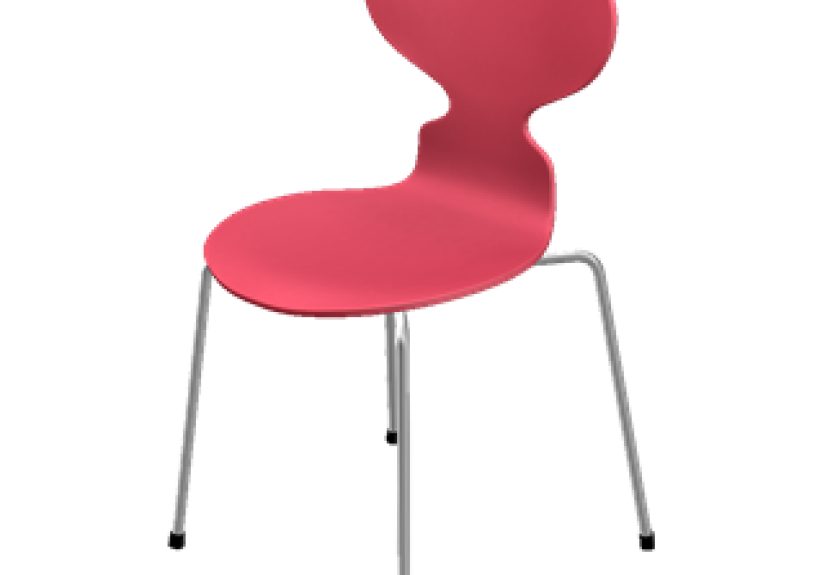
The chair’s name comes from its silhouette, which resembles an ant with its head slightly raised when viewed from the side. Once you see it, you cannot unsee it. Suddenly, this elegant little chair has personality. Not cartoonish personality, thankfully. More like the quiet confidence of someone who knows they are the best-dressed guest at dinner.
Why Arne Jacobsen Ant Chairs Were So Revolutionary
A molded plywood breakthrough
What made the Ant Chair remarkable was its shell. Jacobsen created a seat and back from a single, continuous piece of molded veneer, shaping it with subtle curves that gave the chair both flexibility and visual grace. Today that may sound normal because molded plywood has been around long enough to become part of the furniture vocabulary. In the early 1950s, though, this was a major design and manufacturing achievement.
The result was a chair that looked almost impossibly slim while still offering comfort and durability. Its narrow waist was not just a styling trick. That taper helped accommodate the complex bends in the shell and gave the chair its springy, lively feel. The Ant Chair does not look bulky, padded, or over-engineered. It looks like one line turned into furniture.
Lightweight and stackable without looking boring
Plenty of practical chairs are stackable. Very few are stackable and elegant. That is part of the Ant Chair’s genius. It was designed to be moved, grouped, stored, and used in numbers, but it never looked generic. Even in a row of identical chairs, each one seems to have a bit of grace to it. Jacobsen turned utility into style without making utility disappear.
This is one reason the chair became so important in the history of Danish modern furniture. It captured the movement’s love of simplicity, natural materials, and honest construction, while also embracing industrial production. The Ant Chair did not reject modern manufacturing. It made modern manufacturing look beautiful.
The famous three-leg design
The original Ant Chair appeared with three legs, which immediately set it apart from the four-legged furniture crowd. The three-leg base made the chair visually lighter and gave it a slightly daring, experimental character. It was practical, too, because the design was intended to reduce visual clutter and allow easier movement around the chair.
Later, four-leg versions became more common, partly because some users preferred the added sense of stability. That development did not weaken the design story. If anything, it showed the flexibility of Jacobsen’s original concept. The Ant Chair could evolve while keeping its identity intact, which is more than most furniture can say after one redesign, let alone several decades of production.
Design Details That Still Make the Ant Chair Special
The beauty of Arne Jacobsen Ant chairs lies in their restraint. The shell is curved but not fussy. The steel legs are slim but not fragile-looking. The overall form feels organic, yet precise. This tension between softness and discipline is what gives the chair its lasting appeal.
Authentic models produced by Fritz Hansen are available in a range of finishes, including natural veneers and colored lacquer options, along with both three-leg and four-leg bases. Upholstered versions have also expanded the chair’s versatility for homes and commercial interiors. That means the Ant can slide into many different rooms without losing its design credibility. It can be warm and woody, crisp and monochrome, or a little more tactile with fabric or leather. Not bad for a chair born in a canteen.
The chair also has a deceptively comfortable feel. Nobody mistakes it for a plush lounge chair, but that is not the point. The shell has enough give to make sitting feel natural, and the proportions are thoughtful enough that the chair stays pleasant longer than its slim profile might suggest. Good design loves a plot twist.
Ant Chair vs. Series 7: What Is the Difference?
Any discussion of the Ant Chair eventually bumps into the Series 7, Jacobsen’s later and even more commercially successful molded plywood chair. The two are related, but they are not twins. Think of them as stylish siblings with different personalities.
The Ant Chair is narrower and more spare. Its profile is leaner, its shape a bit more taut, and its personality a little more architectural. The Series 7, introduced a few years later, softened and broadened the idea into a form that appealed to an even wider audience. If the Series 7 is the social butterfly of mid-century seating, the Ant Chair is the design purist who arrives early, orders something neat, and somehow still steals the show.
For collectors and design lovers, this distinction matters. The Ant Chair feels closer to the experimental leap that made the later chairs possible. It represents Jacobsen testing the limits of molded plywood and discovering a new visual language. That makes it historically significant as well as aesthetically compelling.
Why the Ant Chair Still Works in Modern Interiors
It fits the mid-century modern look
If you love mid-century modern chairs, the Ant is practically required reading. Its clean lines, visible materials, and practical elegance all align with the style’s core values. Pair it with a wood dining table, a minimalist pendant light, and a neutral rug, and the room suddenly looks as if it has better manners.
It also works outside strict mid-century spaces
The Ant Chair is not limited to vintage-inspired homes. In contemporary interiors, it adds warmth and shape without visual heaviness. In eclectic spaces, it brings a note of discipline that keeps the room from drifting into chaos. In small apartments, its slim profile helps the space feel more open. In creative offices, it says, “Yes, this is a meeting room, but we do have standards.”
It mixes well with other materials
Because the chair combines molded wood or colored veneer with tubular steel legs, it plays nicely with glass, stone, concrete, oak, walnut, and even softer textiles. It can be the hero piece in a quiet room or a supporting actor in a busier one. Great furniture is often less about demanding attention and more about making everything else look smarter.
How to Style Arne Jacobsen Ant Chairs at Home
One of the best things about Arne Jacobsen Ant chairs is that they do not need a perfect museum-like interior to look good. They are surprisingly adaptable if you know how to use them.
In the dining room
For a classic look, place several matching Ant Chairs around a simple wood or laminate dining table. Walnut or oak finishes create warmth, while black or white lacquer versions sharpen the room’s outline. If you want a softer mood, choose front-upholstered models that make long dinners more inviting.
In a home office
The Ant Chair works well at a desk because it has a compact footprint and a light visual presence. It is especially effective in small workspaces where bulky office seating would dominate the room. Add one beside a floating desk or a vintage writing table and suddenly your email habits look more sophisticated than they actually are.
In an entryway or bedroom corner
A single Ant Chair can function like a sculptural accent. Use it in a hallway, next to a dresser, or in a reading nook where you want a practical seat that still contributes to the room’s design story. Few chairs are this good at looking intentional even when they are just holding a tote bag.
How to Spot Authentic Ant Chairs
Because the Ant Chair is famous, the market is full of look-alikes, reinterpretations, and straight-up impostors. If authenticity matters to you, pay attention to the manufacturer. Genuine Ant Chairs are produced by Fritz Hansen, the Danish company long associated with Jacobsen’s furniture designs.
Check the labeling, production marks, materials, proportions, and overall quality. Originals and licensed editions tend to have cleaner detailing, better shell shaping, and more refined hardware than cheap copies. Vintage examples can be especially appealing, but condition matters. Look closely for repairs, replaced parts, instability, or shell damage. A little patina is charming. A chair that feels one sneeze away from collapse is less charming.
If you are buying online, ask for detailed photographs of the underside, the base, and any stamps or labels. If you are buying from a design retailer, verify that the product is a current authorized Fritz Hansen piece. When in doubt, it is better to pay for the real thing than to end up with a chair that merely looks right from six feet away and disappoints at every other distance.
The Cultural Legacy of the Ant Chair
The Ant Chair helped establish Jacobsen as one of the key voices in Scandinavian design. It also helped define what modern seating could be in the postwar period: lighter, more efficient, more sculptural, and more attuned to real spaces and real people. Museums and major design collections have preserved the chair not just because it is beautiful, but because it represents a turning point in furniture history.
Its influence can be felt in countless later chairs that combine molded shells, minimal frames, and multipurpose function. More than seventy years after its debut, the Ant still looks current. That is not because trends stopped moving. It is because the design got the fundamentals right the first time: proportion, material, purpose, and personality.
In a world full of overcomplicated objects desperate to prove their cleverness, the Ant Chair remains refreshingly direct. It does its job, it looks fantastic, and it never seems to be trying too hard. Honestly, many of us should aspire to that.
Experiences Related to Arne Jacobsen Ant Chairs
Living with Ant Chairs, or even encountering them regularly in a thoughtfully designed space, creates an experience that is different from living with ordinary seating. The first impression is almost always visual. People notice the silhouette before they notice the comfort. The chair looks slim, alert, and quietly self-assured, as if it knows it belongs in the room. That first reaction matters because furniture usually blends into the background. The Ant Chair does not scream for attention, but it does invite a second look.
In everyday use, the chair often surprises people with how practical it feels. It is light enough to move around without turning every dinner party into a strength-training session. That matters more than many homeowners expect. You can pull it from a dining table to a desk, shift it into a corner when guests arrive, or bring in extra seating without making the room feel crowded. The experience is one of flexibility. The chair feels ready to adapt, which is probably why it has remained so relevant in homes, cafés, studios, and offices.
There is also a tactile experience that photographs do not fully capture. The curved shell has a subtle spring to it, and the veneer carries warmth that plastic look-alikes usually lack. Sitting in an Ant Chair feels different from dropping into something overstuffed. It encourages a more upright posture and a more engaged way of sitting. That can actually be part of its charm. It is a chair that participates in the room rather than disappearing into it.
For design lovers, ownership often comes with a small daily pleasure: the sense of living with a piece that has genuine design history behind it. That does not mean every breakfast becomes a lecture on Danish modernism, although it certainly could if the wrong guest sits down. It means the object gains depth over time. You begin to appreciate the narrow waist, the relationship between shell and base, and the balance between elegance and economy. The chair becomes more interesting the longer you live with it.
There is a social experience to Ant Chairs as well. Guests tend to comment on them. Some recognize the design immediately. Others simply say, “Those chairs are cool,” which is the civilian version of design criticism. Either way, the chair often sparks conversation. In an interior filled with generic furniture, that rarely happens. The Ant Chair has enough character to make people curious, yet it still feels approachable rather than intimidating.
Over time, many people also discover that the Ant Chair changes how they think about scale in a room. Because it is visually light, it allows tables, artwork, and architectural details to breathe. A dining area can feel furnished without feeling cluttered. A small apartment can feel intentional without being cramped. That experience of spatial clarity is one of the chair’s most underrated strengths. It does not just occupy space; it edits it.
Of course, the experience is not about perfection. Some people prefer more cushioning for long dinners or all-day desk work, which is why upholstered versions can be such a smart choice. But even that reveals something important about the design. The Ant Chair is not frozen in the past. It can evolve with materials, finishes, and settings while keeping its essential identity. That is rare.
Ultimately, the experience of Arne Jacobsen Ant Chairs is about living with a design that makes everyday routines feel a little more considered. You notice the line of the back when sunlight hits it. You appreciate how easily it tucks under a table. You enjoy the fact that a functional object can also carry wit, elegance, and history. It is still just a chair, yes. But it is the sort of chair that gently reminds you good design can improve ordinary moments without turning them into a performance.
Conclusion
Arne Jacobsen Ant chairs are far more than pretty examples of Scandinavian furniture. They represent a breakthrough in molded plywood design, a milestone in Danish modern history, and a lasting lesson in how function and style can work together without compromise. From their canteen-born beginnings to their place in museums, design stores, and carefully curated homes, Ant Chairs have earned their reputation the honest way: by being genuinely good.
If you are drawn to furniture that combines elegance, innovation, and everyday usefulness, the Ant Chair remains one of the smartest choices you can make. It is compact, iconic, and beautifully resolved. In a furniture world crowded with loud trends and forgettable copies, that kind of quiet confidence is worth holding onto.