Table of Contents >> Show >> Hide
- Quick Snapshot: What the Aristo Is (and Isn’t)
- What “Traditional” Means in Toilet Design
- Close-Coupled + Back-to-Wall: Why That Matters
- Water Use and the Reality of “Water-Saving”
- Comfort: Seat Height, Bowl Shape, and the “Actually Living With It” Factor
- Fit Check: Rough-In, Clearances, and That One Wall That’s Never Straight
- Material and Finish: Why Gloss White Is a Practical Choice
- Cleaning and Maintenance: Keeping It Classic, Not Crusty
- Design Pairings: How to Make the Aristo Look Intentional
- Pros and Cons: The Honest Take
- Who Should Buy the Aristo Traditional Toilet with White Seat?
- Buying Checklist: Five Things to Confirm Before You Click “Add to Cart”
- Conclusion: Classic Looks, Modern Practicality
- Real-World Experiences: What People Run Into with a Traditional Toilet Like the Aristo (About )
- SEO Tags
Every bathroom deserves a little drama. Not the “why is the faucet crying?” kindmore like the
“wow, that looks like it belongs in a classy old townhouse” kind. That’s the lane the Aristo Traditional
Toilet with White Seat wants to live in: classic lines, tidy proportions, and the sort of
glossy-white confidence that says, “Yes, I’m a toilet. But I’m also design.”
This guide breaks down what the Aristo is, what “traditional” actually means in toilet terms, how the
design affects cleaning and fit, and what to double-check before you commit your bathroom to a new
porcelain relationship.
Quick Snapshot: What the Aristo Is (and Isn’t)
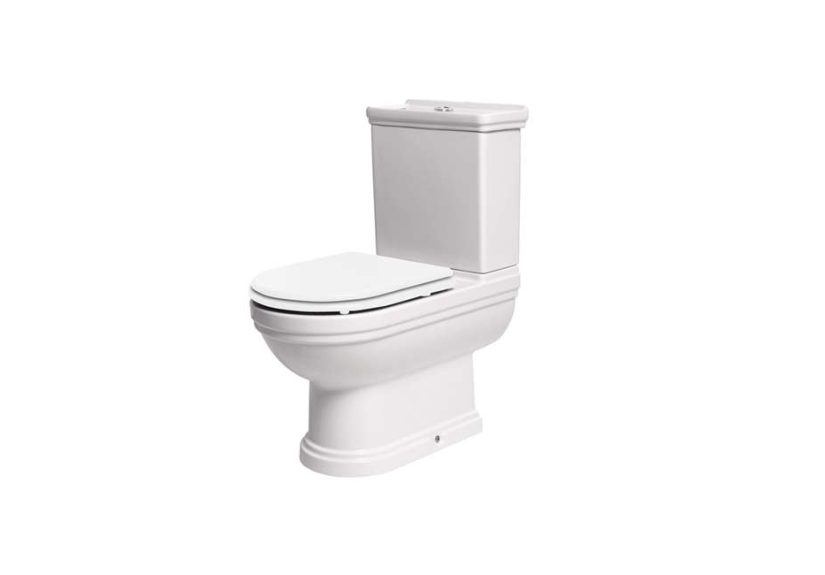
The Aristo is a traditional-style, close-coupled toilet with a white seat and a look that leans
more “heritage bathroom” than “futuristic space pod.” In plain English: it’s meant to coordinate with
classic basins, pedestal sinks, and period-inspired hardware.
In listings for this model, you’ll commonly see it described as a fully back-to-wall design (meaning
the base sits flush to the wall for a cleaner silhouette) and paired with a dual-flush cistern operated
by a chrome push button. Dimensions shown for the Aristo are approximately
31.5 in H × 15.4 in W × 26.8 in D (800 × 390 × 680 mm), with a pan (bowl) height around
15.4 in (390 mm).
- Style: Traditional / classic
- Type: Close-coupled, back-to-wall look
- Finish: Gloss white (bowl and tank), white seat
- Flush: Dual-flush push button (commonly described as water-saving)
- Footprint depth: ~26.8 inches (important for small bathrooms)
What it isn’t: an ultra-modern one-piece toilet, a wall-hung system, or automatically an ADA/“comfort height”
fixture. (More on height and accessibility in a minute.)
What “Traditional” Means in Toilet Design
“Traditional” bathrooms aren’t just about adding a clawfoot tub and calling it a day. Traditional design
usually relies on visual details: gentle curves, crisp edges, and proportions that feel at home next to
wainscoting, subway tile, and framed mirrorswithout looking like a museum exhibit.
The Aristo’s appeal is that it looks intentional in classic spaces. Instead of the sleek, minimal lines of a
contemporary toilet, a traditional close-coupled unit often has:
- More defined curves at the bowl and tank transitions
- Balanced proportions that match pedestal sinks and traditional vanities
- A timeless color story (gloss white + chrome = never out of style)
If you’re renovating a 1920s bungalow, updating a Victorian-inspired powder room, or just trying to make
a newer home feel less “builder beige,” this kind of toilet can quietly anchor the room.
Close-Coupled + Back-to-Wall: Why That Matters
Toilets are not just toilets. They’re also shapes you live with every dayvisually and practically.
A close-coupled toilet is the common two-piece setup where the tank sits directly on the bowl.
The “back-to-wall” idea means the base is designed to sit close to the wall so there’s less visible gap behind it.
Why homeowners like the back-to-wall look
- Cleaner silhouette: It looks neat, especially in traditional bathrooms where symmetry matters.
- Easier wipe-down: Fewer awkward angles behind the base can make routine cleaning less annoying.
- More “built-in” feel: It can look more fitted, even in a small room.
Translation: you get a more polished look without stepping all the way into wall-hung or concealed-cistern territory.
Water Use and the Reality of “Water-Saving”
Plenty of toilets claim efficiency, but in the U.S. there’s a helpful reference point: federal law set the
mainstream maximum at 1.6 gallons per flush (gpf) for toilets sold in the United States starting in the mid-1990s.
Many newer models go lower. The EPA’s WaterSense program is a well-known benchmark for high-efficiency toilets,
historically tied to a 1.28 gpf maximum for tank-type toilets (including dual-flush performance requirements).
The Aristo is commonly described as having a dual-flush systemtypically meaning a reduced flush for liquids
and a full flush for solids. In day-to-day use, the savings depend on your household habits (and whether people
actually use the reduced flush instead of panic-flushing like the toilet is launching a rocket).
What to look for when you care about water use
- Rated flush volume: Look for a stated gpf or Lpf rating in product documentation.
- Independent certification: WaterSense labeling is a strong signal in the U.S. market.
- Real performance: A low gpf is greatunless it needs two flushes every time. That’s “efficiency theater.”
If you’re choosing the Aristo mostly for its looks, that’s valid. But if you want efficiency to be a
headline feature, verify the flush rating and whether the model aligns with the standards common in your region.
Comfort: Seat Height, Bowl Shape, and the “Actually Living With It” Factor
Traditional bathrooms can still be comfortable. The trick is making sure the romance of the look doesn’t
override everyday ergonomics.
Height: Standard vs. “Comfort Height”
Many standard residential toilets land around 15–17 inches from floor to seat height, while ADA-accessible guidance
commonly targets a seat height around 17–19 inches (measured to the top of the seat). The Aristo’s listed pan height
around 15.4 inches suggests a more traditional, standard-height feel rather than a tall “chair height” profile.
If you’re designing for aging-in-place, knee/hip comfort, or universal design, you may prefer a comfort-height toilet.
If you’re matching a period lookor you have kids who treat tall toilets like a climbing wallstandard height can be a plus.
Bowl shape: Round vs. elongated
Round-front bowls typically save space, while elongated bowls often feel more comfortable for adults.
If your bathroom is tight, that ~26.8-inch depth is worth measuring against your clearance needs.
In a small powder room, an inch can be the difference between “charming” and “why do my knees touch the door?”
The white seat: small detail, big daily impact
A white seat sounds simpleuntil you’ve seen five different “whites” argue under bright LED lighting.
A good seat should:
- Match the bowl color closely (true white vs. warm white)
- Feel stable (no shifting, no squeaking, no betrayal)
- Resist staining and scratches
- Optionally include a soft-close hinge if you want quieter operation
If the Aristo you’re buying includes the seat, confirm whether it’s standard-close or soft-close and whether replacements
are easy to source later.
Fit Check: Rough-In, Clearances, and That One Wall That’s Never Straight
Most toilet “installation disasters” are really measurement disasters wearing a plumber’s hat.
Before falling in love with a toilet’s curves, confirm these basics.
1) Rough-in size
The rough-in is the distance from the finished wall (not the baseboard) to the center of the closet flange/bolts.
In the U.S., 12 inches is most common, but 10 and 14 inches exist, especially in older homes or tight layouts.
Measure first. Assume nothing. Houses lie.
2) Front clearance
Bathroom codes and best practices commonly call for clear space in front of the toilet for comfortable use.
Even if your local code is flexible, your knees and shins are not.
3) Side clearance
If you’re placing the toilet near a vanity, tub, or wall, verify there’s enough side-to-side breathing room.
Traditional bathrooms often add chunky trim and panelingbeautiful, but it steals inches.
Because the Aristo is styled as back-to-wall, it can look especially crisp when centered and squared up.
If your walls are wavy, plan for small adjustments so it doesn’t look like it’s trying to escape the room.
Material and Finish: Why Gloss White Is a Practical Choice
Most quality toilets are made from vitreous china (a ceramic body with a glass-like glaze). That glossy finish
isn’t just for looksit helps resist staining and makes routine cleaning easier. It also tends to hold up well
to everyday use, which is important because toilets are not exactly “low-traffic.”
Traditional designs can sometimes have extra contours. The good news is that a smooth glaze and a back-to-wall
silhouette can reduce some of the tricky “dusty corners” that plague older-style fixtures.
Cleaning and Maintenance: Keeping It Classic, Not Crusty
A traditional toilet looks best when it looks freshnot “antique shop in the worst way.”
A few practical habits help:
- Use non-abrasive cleaners to protect the glossy finish.
- Check the seat hardware occasionally so it stays aligned and stable.
- Watch for silent leaks (a running toilet can waste water and money without being dramatic about it).
- Keep the base area dry after mopping to avoid grime buildup at the floor line.
If the cistern uses common flapper/seal components, replacements are typically straightforward to find in the U.S.
If parts are more brand-specific, it’s worth confirming availability before you buyfuture-you will be grateful.
Design Pairings: How to Make the Aristo Look Intentional
A traditional toilet shines when the rest of the bathroom speaks the same language. Consider pairing it with:
- Pedestal or console sinks with classic profiles
- Polished chrome or nickel faucets to echo the flush button finish
- Subway tile, beadboard, or wainscoting for that timeless backdrop
- Soft whites and warm neutrals so the gloss finish doesn’t feel stark
Want it to feel updated rather than costume-y? Add one modern notelike crisp lighting or a simple framed mirror
so it reads “classic,” not “period reenactment.”
Pros and Cons: The Honest Take
Pros
- Classic traditional look that complements heritage-inspired bathrooms
- Back-to-wall silhouette for a tidier appearance
- Dual-flush concept that aligns with modern water-saving habits
- Reasonable footprint for many bathrooms (measure your clearances)
- Gloss white finish that stays visually crisp and coordinates easily
Cons
- Likely standard-height feel rather than comfort height (check your needs)
- Verification needed on flush volume ratings for U.S. efficiency comparisons
- Potential parts/compatibility questions depending on where the model is sourced
- Traditional curves can add a little cleaning detail vs. ultra-minimal modern bowls
Who Should Buy the Aristo Traditional Toilet with White Seat?
This toilet makes the most sense if you care about style continuity and want a fixture that supports a classic
aesthetic without giving up modern basics like a push-button flush.
- Best for: Traditional bathrooms, powder rooms, vintage-inspired remodels, design-forward updates
- Also good for: Homeowners who want a neat “back-to-wall” look without wall-hung complexity
- Consider alternatives if: You need comfort-height seating, strict WaterSense labeling, or ultra-compact depth
Buying Checklist: Five Things to Confirm Before You Click “Add to Cart”
- Rough-in compatibility with your bathroom layout (10/12/14 inchesmeasure!)
- Flush rating (gpf/Lpf) and whether it aligns with your water-saving goals
- Seat details (included or not, soft-close or standard, replacement availability)
- Clearance in front and at the sides for comfort and code friendliness
- Parts support (fill valve, flush valve, sealsstandard or proprietary?)
Conclusion: Classic Looks, Modern Practicality
The Aristo Traditional Toilet with White Seat is a design-first choice that can still be practicalespecially if
you like the clean, fitted look of a back-to-wall silhouette and the everyday convenience of a push-button flush.
Its proportions and traditional styling can elevate a bathroom that’s aiming for timeless rather than trendy.
The key is to treat it like any smart bathroom purchase: confirm fit (rough-in and clearances), confirm comfort
(height and bowl shape), and confirm the details that matter long-term (flush rating and replacement parts).
Do that, and you’ll end up with a toilet that looks like it belongswithout turning your remodel into a
sitcom episode titled “The Great Rough-In Surprise.”
Real-World Experiences: What People Run Into with a Traditional Toilet Like the Aristo (About )
Traditional toilets are a little like vintage denim: they look fantastic when they fit right, but you
absolutely want to try them on (with measurements) before you commit. Here are a few common experiences
homeowners, renovators, and pros often run into when choosing a traditional, back-to-wall, close-coupled
model like the Aristo.
The “I Swear It Was 12 Inches” Rough-In Moment
A classic scenario: someone replaces a toilet in an older home, assumes the rough-in is the standard 12 inches,
and then discovers it’s actually 10 inchesbecause the wall was furred out, the baseboard is thick, or the
last installer performed a little “creative geometry.” The lesson usually arrives at the same time as the
delivery truck. Measuring from the finished wall (not the baseboard) sounds small, but it’s the difference
between a toilet that sits neatly back-to-wall and one that leaves an awkward gap that collects dust like it’s
being paid to do so.
White-on-White Is Not Always the Same White
Another surprisingly common experience: the bowl is a crisp gloss white, but the seat is a slightly warmer
whitebarely noticeable until your bathroom lighting hits it like a spotlight. People often fix this by swapping
the seat for one that matches better (and sometimes upgrading to soft-close while they’re at it). The best part?
Everyone in the house instantly becomes a “seat-lowering enthusiast” once the lid stops slamming like a drum solo.
Traditional Style, Modern Habits
Many buyers love the Aristo vibe because it pairs well with pedestal sinks and classic tile, but they also want
modern expectations: efficient flushing, easy cleaning, fewer clogs, and parts that can be replaced without a
scavenger hunt. In practice, people tend to be happiest when they confirm the flush rating and understand the
mechanism before buyingespecially if they’re coming from an older, higher-volume toilet. The first month is
usually a mix of “this looks amazing” and “okay, which button does everyone press?” After that, it’s just normal life,
except your bathroom suddenly looks like it got a raise.
Small Powder Room Wins (If You Measure)
Traditional close-coupled toilets are popular in powder rooms because they can feel “finished” and intentional.
The experience is often great when depth and door swing are planned. But if the toilet projects too far, it turns a
charming half bath into an obstacle course. People who measure carefully usually end up thrilled; people who don’t
measure end up practicing an awkward sideways shuffle that no one talks about at dinner.
The Quiet Satisfaction of “It Belongs Here”
The best experience you hear from traditional-toilet buyers is also the simplest: the toilet looks like it was always
meant to be there. It matches the era of the home or the design theme of the remodel, it’s comfortable enough for daily
use, and it cleans up easily. It’s not flashy. It’s not trying to be your new hobby. It just does its job while making
the room feel cohesivewhich, for a toilet, is the highest compliment possible.