Table of Contents >> Show >> Hide
- Why an Urban Outdoor Shower Is More Than a Beach-House Flex
- Plan First: The Three W’s (Water, Where, Who Can See You)
- Privacy That Looks Good (and Won’t Start a Neighbor Feud)
- Plumbing 101: Hot Water, Backflow, and Not Flooding Your Basement
- Drainage Without Drama
- Materials That Survive City Weather (and City Neglect)
- Small-Space Layouts: 5 Urban-Friendly Configurations
- 1) The narrow side-yard shower (3–4 feet wide, big impact)
- 2) The courtyard “pocket spa” (perfect for rowhouses and townhomes)
- 3) The rooftop rinse zone (privacy + waterproofing first)
- 4) The pool/hot tub companion shower (the “no wet footprints” solution)
- 5) The dog-wash deluxe (low sprayer, easy drain, zero chaos)
- Cold-Weather Reality Check: Winterizing and Freeze Protection
- Budget, Timeline, and “What I Wish I’d Known”
- Experience Notes: Living With an Urban Outdoor Shower (Privacy Included)
There are two kinds of city people: those who think an outdoor shower is a ridiculous luxury, and those who try it once and suddenly
start speaking in spa-voice like, “I’m just going to rinse the energy off my shoulders.” An urban outdoor shower can be
wonderfully practical (post-run sweat reset, dog wash station, pool rinse, sandy kid containment), but it’s also the fastest way to
turn a cramped patio, narrow side yard, or rooftop deck into a mini retreatwithout booking a flight or pretending your bathtub is a lagoon.
The catch, of course, is privacy. In the city, there’s always a window. Or a balcony. Or a neighbor who waters their plants with the
dedication of a lighthouse keeper. This guide walks you through how to design a stylish, code-smart, low-drama outdoor shower in an urban
spacecomplete with privacy solutions that look intentional (not like you’re hiding from the law).
Why an Urban Outdoor Shower Is More Than a Beach-House Flex
Outdoor showers got famous in coastal towns, but city showers are having a moment for a simpler reason: outdoor living has become
precious square footage. If you have a patio, courtyard, roof deck, or even a side passage wide enough to turn around without doing a
three-point turn, you can create a rinse zone that keeps dirt, sweat, chlorine, and “mystery sidewalk grime” out of the house.
In real life, city homeowners use outdoor showers for:
- Post-workout resets (especially if your “gym” is a stoop + resistance band situation).
- Dog washing without turning your bathroom into a splash park.
- Pool or hot tub rinsing to reduce chlorine smell and protect towels and upholstery.
- Garden cleanup after you’ve become one with the soil.
- Guest convenience (because houseguests love two things: snacks and a place to rinse off).
Plan First: The Three W’s (Water, Where, Who Can See You)
The prettiest outdoor shower on the internet is useless if it leaks, freezes, or accidentally introduces your neighbors to your entire
shampoo routine. Before you buy fixtures or sketch walls, map the three essentials.
Water: where it’s coming from, and how you’ll shut it off
A basic outdoor shower can run off a hose, but most “real” setups tie into your home’s hot and cold lines. In urban homes, the easiest
(and often cheapest) approach is placing the shower on an exterior wall near an existing bathroom, laundry, or kitchen so the plumbing run
is short and accessible.
Your non-negotiables:
- Indoor shutoff valves you can reach easily (especially for winterizing).
- Backflow protection so outdoor water can’t siphon back into potable lines.
- An access panel (inside or outside) so maintenance doesn’t require “artfully removing” a wall.
Where: drainage, splash zone, and surfaces that won’t become a slip-n-slide
Outdoor shower water has to go somewhere. In cities, “somewhere” is often the difference between a relaxing rinse and a soggy dispute
with your foundation. Your location choice should prioritize:
- Distance from the house foundation (or a plan to pipe water away).
- Non-slip footing (textured tile, stone, composite decking, wood slats, or a grate).
- Ventilation and sun so the area dries fast and doesn’t grow a mildew hobby.
Who can see you: sightlines are real, even if you don’t want them to be
Stand where the shower would be and look around. Check:
- Neighbor windows (especially second story).
- Balconies and roof decks nearby.
- Alleyways, shared driveways, and “surprise” angles from stairs.
This is not paranoia. This is design. The goal is to create privacy without building something that looks like a backyard witness protection program.
Privacy That Looks Good (and Won’t Start a Neighbor Feud)
In an urban setting, privacy is less about total enclosure and more about controlling angles. You want coverage where sightlines exist,
with airflow and light where they don’t. Here are privacy approaches that work beautifully in tight spaces.
1) The “staggered entry” layout
This is the simplest high-impact trick: instead of a doorway that faces outward, create a short, offset entry path (even 18–24 inches of
offset helps). Think of an L-shape or a zig-zag: you can’t see in from the street or a neighbor’s window unless they’re actively trying,
which is its own issue.
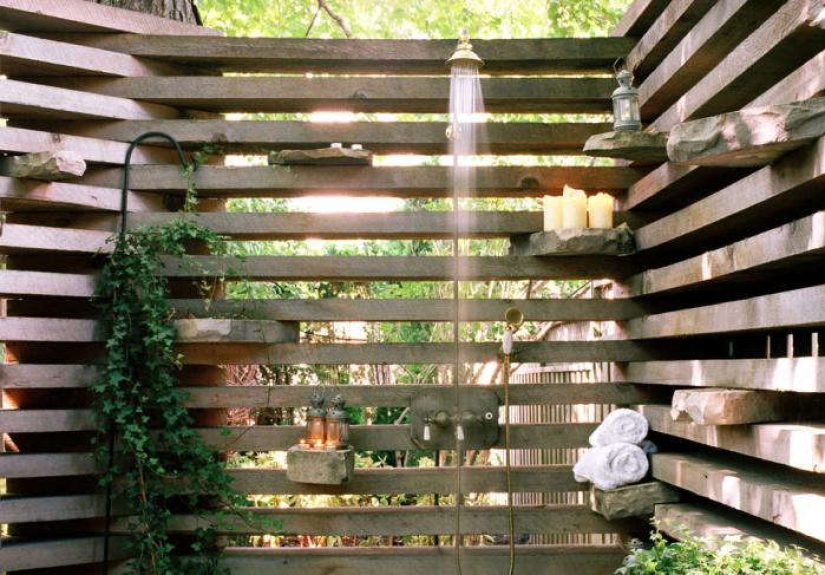
2) Slatted walls (cedar, redwood, composite) with smart spacing
Vertical or horizontal slats feel modern and breezy, and they dry quickly. Keep spacing tight enough to block direct views but open enough
to avoid a damp cave. Bonus points if you align slats with neighboring lines (fence rails, siding reveals) so the shower looks “built-in,”
not “tacked-on.”
3) Living privacy: tall planters, trellises, and green walls
In cities, greenery does double duty: it softens hardscape and blocks views. Use tall planters with ornamental grasses, bamboo (choose
clumping varieties), or trellises with vines. If you’re on a roof deck, confirm load limits and choose lightweight planters and soil mixes.
4) Semi-translucent panels (frosted acrylic, polycarbonate, or glass block)
If your space is narrow and you’re worried about it feeling boxed in, translucent panels are a cheat code. They obscure detail but let light
in, which is gold between tall buildings. They also look intentionally architecturallike you hired someone with a black turtleneck and a
vocabulary.
5) Doors and curtainsonly if they’re the right kind
Curtains can be charming, but they must be outdoor-rated, quick-drying, and positioned so they don’t cling dramatically to wet skin like a
soap opera villain. A better option in many urban builds is a simple gate door (wood, composite, or metal) that defines the space and feels
secure, especially if the shower is visible from a shared alley or walkway.
Plumbing 101: Hot Water, Backflow, and Not Flooding Your Basement
If you remember one thing: an outdoor shower is still plumbing. Water pressure, freezing risk, and code requirements do not magically relax
because you’re outside.
Hot + cold supply: what most people do in cities
The most common urban approach is tying into existing lines on an exterior wall closest to a bathroom or laundry. A plumber can run insulated
PEX or copper lines to an outdoor mixing valve and shower riser. If you want a “real shower” feel, add:
- A thermostatic mixing valve (steady temperature even when someone inside runs the dishwasher).
- An anti-scald setting for safety.
- A hand shower for dog washing and rinsing corners.
Backflow protection: the unglamorous hero
Outdoor hose connections and similar fittings are commonly required to have vacuum breakers or other backflow protection, because outdoor
water can be exposed to contaminants. If your shower design includes a hose connection (or ties in similarly), plan for code-compliant
backflow prevention and follow local requirements. This is one of those “boring until it’s a problem” details.
Access + shutoffs: future-you will be grateful
Include indoor shutoff valves and a way to drain down lines (especially in climates with freezing temperatures). If the shower wall backs up
to an interior room, an access panel can make repairs and winterizing much easier. Urban builds benefit from “serviceable design” because
nobody wants to dismantle a custom privacy wall to replace a $12 fitting.
Drainage Without Drama
Drainage is where urban outdoor showers either become a lifelong joy or a seasonal regret. You generally have three categories of solutions,
and what’s allowed depends on local rules, soil conditions, and proximity to structures.
Option A: A dry well
A dry well collects water and lets it percolate into surrounding soil. This can work well when you have decent soil drainage and can locate
the dry well away from the foundation. Many homeowners pair a dry well with a gravel shower base or a sloped surface that directs water to
the collection point.
Option B: Pipe water to a gravel area or approved discharge point
If your yard slopes away from the house, you can sometimes run an underground drain line that terminates in a dry gravel patch or ties into
an approved drainage solution. The important part is keeping water from pooling where it can undermine footings, stain walls, or create a
mosquito lounge.
Option C: Permeable base (gravel + grate) for light-duty rinsing
Some outdoor showers use a gravel “floor” with a removable wood or composite grate on top. Water drains into the gravel and disperses.
If you go this route, use biodegradable soaps and keep expectations realistic: it’s excellent for rinsing, and it can work for showering,
but you must ensure the site drains well and complies with local guidance.
Urban reality check: in dense areas, you may have limited soil, more hardscape, and stricter rules about where water can go.
When in doubt, consult a licensed plumber/contractor and your local building department. It’s cheaper than repairing water damage and
explaining to your downstairs neighbor why their ceiling now smells faintly like lavender body wash.
Materials That Survive City Weather (and City Neglect)
Outdoor showers get hit with sun, rain, temperature swings, and the occasional forgotten loofah. Choose materials that age gracefully.
Walls and screens
- Cedar or redwood: naturally rot-resistant and classic. Let it weather or seal it.
- Thermally modified wood: more dimensionally stable, with a modern look.
- Composite slats: low maintenance, consistent appearance, great in tight urban yards.
- Metal screens: powder-coated or weathering steel for a crisp, architectural vibe (check privacy opacity).
Fixtures
Look for outdoor-rated fixtures and corrosion-resistant finishes. In coastal or humid cities, higher-grade stainless steel can be worth it.
If you love the look of brass or copper, know that patina is part of the dealthink “character,” not “defect.”
Flooring
- Textured tile or stone: beautiful, but make sure it’s slip-resistant.
- Concrete pavers: durable and easy to slope for drainage.
- Wood/composite decking: comfortable underfoot and quick to install with a drain plan beneath.
- Gravel + grate: simple, spa-like, and excellent for drainage if site conditions cooperate.
Small-Space Layouts: 5 Urban-Friendly Configurations
1) The narrow side-yard shower (3–4 feet wide, big impact)
Use a slatted wall on the neighbor side, a shorter return wall for entry offset, and hooks on the house wall for towels and robes. A hand
shower is especially useful here because tight spaces splash more.
2) The courtyard “pocket spa” (perfect for rowhouses and townhomes)
Create a U-shaped enclosure with one open corner for entry. Add a small bench and a shelf niche. With the right lighting, it feels like a
boutique hotelminus the tiny shampoo bottles you can’t open.
3) The rooftop rinse zone (privacy + waterproofing first)
Roof decks are prime urban shower territory, but they demand careful waterproofing, drainage planning, and structural awareness. Use
planters as privacy walls, choose a floor system designed for exterior decks, and keep plumbing runs protected and serviceable.
4) The pool/hot tub companion shower (the “no wet footprints” solution)
Place the shower between water features and the back door, with storage hooks and a quick-dry mat. This is the shower that quietly saves
your floors, your rugs, and your sanity.
5) The dog-wash deluxe (low sprayer, easy drain, zero chaos)
Add a handheld sprayer, a simple waist-high tie point, and a small shelf for pet shampoo. Put the drainage plan on “serious mode” because
pet washing usually means more water, more splash, and more… enthusiasm.
Cold-Weather Reality Check: Winterizing and Freeze Protection
If temperatures drop below freezing where you live, your outdoor shower needs a winter plan. The basics are straightforward:
- Shut off the water indoors to the outdoor lines.
- Open the outdoor valves to drain remaining water.
- Drain down or blow out lines if the plumbing configuration traps water.
- Remove or protect fixtures if recommended by the manufacturer.
Even if your winters are mild, a surprise cold snap can still cause damage if water sits in an exposed section of pipe. A little prevention
beats a springtime “why is the wall hissing?” mystery.
Budget, Timeline, and “What I Wish I’d Known”
Outdoor showers can be simple or stunning, and the budget range reflects that. A basic hose-fed setup with a privacy screen can be done
affordably. A fully plumbed hot/cold shower with a custom enclosure, lighting, and drainage work costs moreespecially in cities where
labor, permits, and access can add complexity.
Common budget drivers
- Plumbing distance (short runs are cheaper; long runs are not your friend).
- Drainage complexity (dry wells and piping add labor and materials).
- Enclosure build (custom carpentry vs. prefabricated panels).
- Finish level (basic fixtures vs. outdoor-rated designer hardware).
Small details that make a big difference
- Towel hooks placed where they won’t get soaked (this is a real art).
- A shelf or niche for soap so it doesn’t live on the floor like a sad bar-of-soap castaway.
- Lighting for evening use (soft, warm outdoor-rated fixtures feel luxurious and safe).
- A changing spot (even a small bench or peg rail makes it feel complete).
Done right, an urban outdoor shower becomes one of those features you use constantlythen wonder how you lived without it. Done poorly,
it becomes “that corner that’s always damp.” Choose your destiny.
Experience Notes: Living With an Urban Outdoor Shower (Privacy Included)
People who add an outdoor shower in the city often describe the first week as a mix of delight and mild disbelieflike you’ve pulled off a
tiny heist against stress. The shower doesn’t have to be huge or expensive to feel transformative. What changes the experience is how it
fits into daily routines and how thoughtfully the privacy is handled.
The most common “aha” moment is timing. A lot of homeowners expect the outdoor shower to be a weekend novelty, but it quickly becomes a
weekday tool: a two-minute rinse after a hot commute, a reset between work and dinner, or an easy way to wash hands and arms after
container gardening on a roof deck. In dense neighborhoods, the mental separation matters. Stepping outsideeven into a compact courtyard
feels like closing a tab in your brain. You’re still at home, but the environment shifts just enough to feel like a break.
Privacy is the second “aha,” and it’s surprisingly emotional. When the enclosure is designed wellstaggered entry, angled screens, or tall
planterspeople stop thinking about being watched. That sounds obvious, but it’s the point: the best privacy designs disappear. You’re not
performing “privacy.” You’re just showering. If you’ve ever tried to relax while wondering whether a neighbor’s kitchen window has a direct
line-of-sight, you know how quickly that kills the vibe. Once privacy is solved, the outdoor shower becomes genuinely restorative.
There are also some very urban-specific joys. City air can feel sticky, and a quick outdoor rinse can be more satisfying than a full indoor
shower because it’s immediateno damp bathroom, no fogged mirror, no waiting for the exhaust fan to catch up. In summer, many people end up
leaving a robe and towel on dedicated hooks near the shower and treating the rinse like brushing teeth: quick, normal, part of life. Some
even keep a pair of outdoor slides there so the whole routine is seamless.
The surprises tend to be practical. Water splashes farther than you think in tight spaces, so homeowners often add a small splash guard wall
or choose a showerhead that’s less aggressive than a full rainfall blast. Storage matters more than expected; a tiny shelf for soap and a
spot for a razor (if you’re brave) makes the space feel finished. Lighting becomes important toomany city patios are shaded by buildings,
and the shower can feel dim in late afternoon. A simple outdoor-rated sconce or soft string lighting can turn “functional rinse” into
“accidental spa moment.”
And then there’s the social side. Guests love outdoor showers, but not in the way you’d expect. They don’t talk about water pressure; they
talk about how it feels. It becomes a story: “They have this hidden outdoor shower and it’s actually private!” In dense neighborhoods where
outdoor space is limited, that little moment of delight is powerful. It’s proof that small, thoughtful design upgrades can change how a home
feelswithout changing your address.
If there’s one consistent takeaway from outdoor-shower owners, it’s this: the magic isn’t in making it extravagant. The magic is in making
it easy. Easy to enter. Easy to feel private. Easy to drain. Easy to shut off and maintain. When those basics are right, the city
noise fades, the day rinses off, and your tiny outdoor corner becomes your favorite roomwithout technically being a room.