Table of Contents >> Show >> Hide
- What Is a Chemical Peel (and What It Isn’t)?
- The 3 Main Depths of Chemical Peels
- What Can Chemical Peels Help With?
- Who Should Be Cautious (or Skip Peels Until Cleared by a Pro)?
- What Happens During an In-Office Chemical Peel?
- Downtime and Healing Timelines (What Beginners Usually Want to Know)
- Chemical Peel Aftercare: The Rules That Make or Break Your Results
- At-Home Chemical Peels vs. Professional Peels
- How Many Treatments Do You Need?
- What Do Chemical Peels Cost in the U.S.?
- How to Choose a Provider (Without Getting Fooled by Fancy Photos)
- FAQs Beginners Ask (Usually at 11:47 p.m. While Staring in the Mirror)
- Beginner Experiences: What Chemical Peels Feel Like in Real Life (About )
- Conclusion: Peel Smarter, Not Harder
Chemical peels are the skincare equivalent of decluttering your closet: you’re not “destroying” anythingyou’re making space for better stuff to show up. The difference is, instead of donating old sweaters, you’re helping your skin shed dull, uneven, damaged surface cells so fresher, smoother-looking skin can take the spotlight.
If you’ve ever stared at fine lines, acne marks, rough texture, or stubborn discoloration and thought, “Can I just… hit refresh?”this guide is for you. We’ll cover what chemical peels are, how they work, which type is best for common concerns, what recovery really looks like, and how to avoid beginner mistakes (like scheduling a peel two days before a weddingplease don’t).
Quick note: This is educational, not personal medical advice. A licensed dermatologist or trained clinician should help match peel type to your skin, your goals, and your risk factors.
Jump to:
- What a chemical peel is (and what it isn’t)
- Types of peels: superficial vs. medium vs. deep
- Best peels for acne, dark spots, fine lines, and scars
- What happens during a peel appointment
- Downtime and healing timelines
- Aftercare rules that actually matter
- At-home peels vs. in-office peels
- Costs and how to choose a provider
- Beginner experiences ( of “what it feels like”)
What Is a Chemical Peel (and What It Isn’t)?
A chemical peel is a skin resurfacing treatment where a carefully chosen chemical solution is applied to the skin to create controlled exfoliation. That controlled exfoliation encourages the surface to shed and renewoften improving the look of uneven tone, rough texture, clogged pores, acne scars, and fine lines.
It’s not the same as:
- A facial scrub: scrubs are manual exfoliation; peels use acids to loosen bonds between dead skin cells.
- Microdermabrasion: that’s mechanical exfoliation (buffing). Peels are chemical exfoliation.
- A laser: lasers use light/heat energy; peels use solutions (though both can be “resurfacing” treatments).
Think of peels as a spectrum: some are “lunchtime glow” peels, others are “I’m staying home with a wide-brim hat and hydrating ointment” peels. Your best option depends on your goal and how much downtime you can realistically handle.
The 3 Main Depths of Chemical Peels
Most beginner confusion comes from one thing: not all chemical peels are equal. The same phrase can describe a gentle AHA peel with mild flakingor a deeper peel that requires serious recovery and strict aftercare.
| Peel Depth | Common Ingredients | Targets | Typical Downtime | Best For |
|---|---|---|---|---|
| Superficial (Light) | AHAs (glycolic, lactic, mandelic), BHAs (salicylic) | Outer layer (epidermis) | 0–7 days (often 1–3 days of mild dryness/flaking) | Glow, mild discoloration, mild acne, texture |
| Medium | TCA (trichloroacetic acid), Jessner’s solution, stronger blends | Deeper epidermis + upper dermis | ~7–14 days (visible peeling, swelling possible) | More noticeable sun damage, pigmentation, acne scars, fine lines |
| Deep | Phenol (and certain deep TCA approaches) | Deeper dermal layers | Weeks (significant recovery; strict medical oversight) | Severe photoaging, deeper wrinkles (not for everyone) |
Superficial Chemical Peels: The “Beginner-Friendly” Category
Superficial peels are where most beginners should startespecially if your main goals are brighter tone, smoother texture, fewer clogged pores, and a more even “overall look.”
Common superficial acids:
- Glycolic acid peel: an AHA often used for glow, uneven tone, and mild texture.
- Lactic acid peel: gentler AHA, often favored for dry or sensitive-leaning skin.
- Mandelic acid peel: larger molecule, tends to feel milder; commonly chosen for sensitive skin or beginners.
- Salicylic acid peel: a BHA that’s oil-solublepopular for acne-prone skin and clogged pores.
Typical recovery: redness that feels like mild sunburn, dryness, and light flaking. Many people can wear makeup the next day (though you’ll get better results if you let your skin breathe and focus on hydration).
Medium-Depth Peels: When You Want Real Change (and Accept Downtime)
Medium peelsoften using TCA or combination solutionsgo deeper and can help with more stubborn concerns: visible sun damage, more noticeable discoloration, and some types of acne scarring. They’re also more likely to cause visible peeling and swelling, and they require more careful aftercare.
Beginner reality check: A medium peel isn’t a “Friday treatment for Monday meetings” unless you work remotely and your camera has a blur filter.
Deep Peels: Powerful, Rare, and Not a DIY Moment
Deep peels (classically phenol-based) can create dramatic resurfacing for deep wrinkles and severe photoagingbut they come with higher risk, longer healing, and strict medical supervision. Today, many people explore other resurfacing options before considering deep peels, especially because safety and recovery are major factors.
What Can Chemical Peels Help With?
Chemical peels are used to improve a range of cosmetic and texture concerns. Here’s how to match common goals to a reasonable starting point:
Acne and Congested Pores
If your skin is oily, breakout-prone, or full of stubborn congestion, a salicylic acid peel is a common choice because it penetrates oil and helps clear pore buildup. It can also help reduce the “texture map” left behind by frequent breakouts.
Specific example: If you get blackheads around the nose and chin and feel like your pores “refill” quickly, a series of light salicylic peels (spaced out appropriately) may improve clarityespecially paired with a gentle, consistent at-home routine.
Dark Spots and Uneven Tone (Hyperpigmentation)
Discoloration can be tricky because the wrong peelor the wrong aftercarecan make pigmentation worse. Light-to-medium peels may help brighten uneven tone, but the plan should be tailored to your skin tone and pigment sensitivity.
Key concept: When treating pigmentation, sun protection isn’t optional. It’s the foundation that keeps your progress from undoing itself.
Fine Lines and Early Wrinkles
Light peels can help soften the look of early fine lines by smoothing surface texture. Medium peels can sometimes provide more noticeable improvement, especially for sun-related texture changes.
Acne Scars and Texture
Not all acne scars are the same. Superficial peels may help with discoloration and minor texture, while medium peels may help more with certain shallow scars. Deep, pitted scars often require a combination approach (for example: peels plus microneedling or other resurfacing techniques) rather than relying on one method.
Who Should Be Cautious (or Skip Peels Until Cleared by a Pro)?
Chemical peels are widely used, but they’re not a free-for-all. You should get professional guidanceespecially if any of the following apply:
- You have a history of hyperpigmentation or melasma (peels must be chosen carefully).
- You have darker skin tones and are considering medium or deep peels (risk of pigment changes can be higher without careful planning).
- You get cold sores (HSV-1), especially around the mouth (your clinician may recommend preventative medication).
- You’re using strong actives like prescription retinoids, or you’ve recently used isotretinoin (your provider will advise timing).
- You have active dermatitis, eczema flares, rosacea flares, open wounds, or skin infection in the area.
- You’re prone to keloids or poor wound healing (risk assessment matters).
In other words: if your skin is already irritated, inflamed, or unpredictable, a peel can act like gasoline on a campfire. The goal is controlled exfoliation, not chaos.
What Happens During an In-Office Chemical Peel?
Exact steps vary, but a typical professional peel appointment looks like this:
1) Consultation and Skin Prep
Your provider assesses your skin type, concerns, and history, then recommends a peel depth and solution. You may be instructed to stop certain products beforehand (like retinoids, scrubs, or waxing) to reduce irritation risk.
2) Cleansing and Protecting Sensitive Areas
Your skin is cleansed thoroughly. Sensitive spots (like corners of the nose, lips, and around the eyes) may be protected.
3) Application: The “Spicy Face” Phase
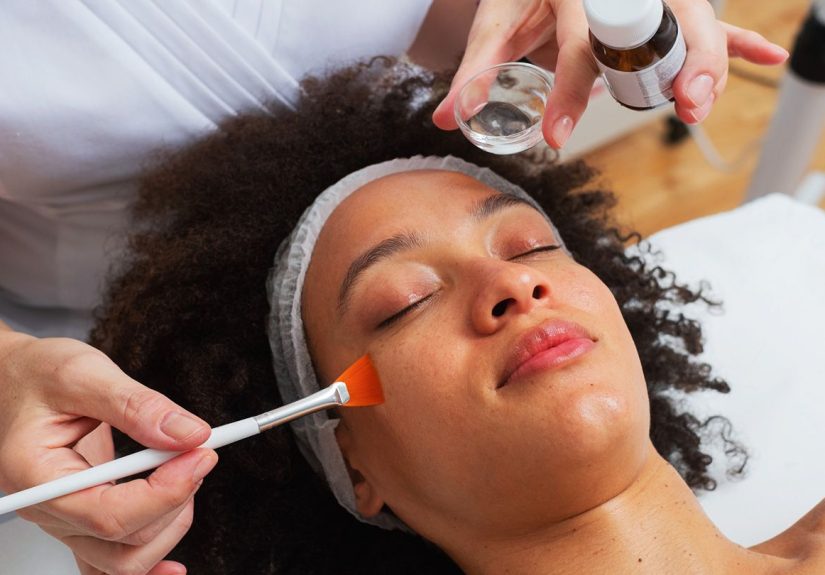
The solution is applied for a controlled amount of time. You might feel tingling, warmth, or stinging. With some peels, clinicians “layer” the solution for a stronger effect. With certain deeper approaches, you may hear terms like “frosting,” which describes a temporary whitened look on treated areas.
4) Neutralization and Post-Peel Barrier Care
Some acids are neutralized; others are designed to self-neutralize or be removed in specific ways. Afterward, you’ll typically leave with instructions focused on soothing hydration, barrier repair, and sunscreen.
Downtime and Healing Timelines (What Beginners Usually Want to Know)
Downtime depends on peel depth, your skin’s sensitivity, and how aggressively the peel is performed. Here’s a beginner-friendly timeline to set expectations:
Superficial Peel Timeline (Typical)
- Day 0: Redness and tightness; skin feels warm.
- Days 1–3: Dryness; mild flaking; makeup may emphasize texture.
- Days 3–7: Flaking tapers; tone looks brighter; texture smoother.
Medium Peel Timeline (Typical)
- Day 0–1: Redness, swelling possible; skin feels very tight.
- Days 2–5: Noticeable peeling; patchy shedding; “do not pick” becomes your life motto.
- Days 5–14: Peeling resolves; pinkness can linger; sun protection is critical.
Important: Deep peels can involve weeks of recovery and should only be done under strict medical supervision.
Chemical Peel Aftercare: The Rules That Make or Break Your Results
Aftercare isn’t a bonus featureit’s the deal. Peels temporarily weaken your skin barrier, and the way you treat your skin afterward affects comfort, pigment risk, and results.
The “Do” List
- Use gentle cleansing: lukewarm water, no scrubbing.
- Moisturize like it’s your job: barrier-supportive creams or ointments as directed.
- Wear broad-spectrum sunscreen daily: and reapply if you’re outdoors.
- Keep it simple: gentle cleanser, moisturizer, sunscreenrepeat.
The “Please Don’t” List
- Don’t pick peeling skin: picking increases risk of scarring and discoloration.
- Don’t use retinoids, harsh acids, or scrubs until your provider says it’s safe.
- Don’t overheat your face: avoid hot yoga, saunas, and intense exercise for the recommended period.
- Don’t forget sun protection: UV exposure during healing can trigger pigment issues.
If you only remember one thing: your peel results live and die by sunscreen and patience.
At-Home Chemical Peels vs. Professional Peels
At-home “peel” products (like peel pads, masks, or overnight exfoliating treatments) can be useful for gentle exfoliationbut they are not the same as an in-office peel. Professional treatments involve stronger solutions, clinical judgment, and safety protocols that matter when things get intense.
Safety warning for beginners
Do not buy or use high-concentration chemical peel solutions marketed online for home use. Strong acids in unregulated products can cause serious burns, scarring, and pigment changes. If you’re going to exfoliate at home, choose reputable, professionally formulated products designed for consumer useand follow directions exactly.
Beginner-friendly approach: If you’re curious but nervous, start with a gentle at-home exfoliant used correctly, or choose a supervised superficial peel in a clinic. Leveling up is easier than repairing avoidable damage.
How Many Treatments Do You Need?
Many beginners expect a single peel to “erase” everything. In reality, superficial peels often work best as a seriesespecially for acne, texture, and gradual brightening. Medium peels may deliver more noticeable change in fewer sessions, but they also come with more downtime and risk.
A practical way to think about it:
- Light peels: smaller improvements per session, usually less downtime, often done in a series.
- Medium peels: bigger changes, longer recovery, usually fewer sessions.
What Do Chemical Peels Cost in the U.S.?
Costs vary by city, provider credentials, peel type, and whether your plan involves a series. In the U.S., you’ll commonly see:
- At-home exfoliating peel products: typically lower cost (but not comparable to in-office results).
- In-office superficial peels: often priced per session, with package discounts for series.
- Medium-depth peels: higher per treatment due to stronger solutions and more involved care.
- Deep peels: can be significantly more expensive because of medical oversight and recovery needs.
Smart budgeting tip: Don’t compare a single-session cost without comparing the plan. A “cheap” peel that’s too weak for your goal can become expensive if you repeat it endlessly. A properly matched peel plan is usually the best value.
How to Choose a Provider (Without Getting Fooled by Fancy Photos)
The best peel is the one done safely by someone who understands skin. Look for a board-certified dermatologist or a licensed, trained practitioner working under appropriate medical oversightespecially if you’re considering medium-depth peels or have pigmentation concerns.
Questions worth asking
- What peel depth do you recommend for my goal, and why?
- What risks apply to my skin type (especially pigment changes)?
- What’s the expected downtime for me specifically?
- What pre-care and aftercare do you require?
- What’s the plan if I get unexpected irritation or pigment changes?
If a provider dismisses aftercare or downplays risk, that’s a red flag. A professional should be able to explain benefits and risks clearly, without pressure or vague promises.
FAQs Beginners Ask (Usually at 11:47 p.m. While Staring in the Mirror)
Will my skin peel dramatically?
Sometimes. Superficial peels can cause mild flaking or dryness; medium peels often cause visible peeling. Not peeling doesn’t automatically mean the peel “did nothing”some peels work with subtle shedding and gradual improvement.
Can I wear makeup after a peel?
Many people can wear makeup after superficial peels (sometimes the next day), but makeup can cling to dry patches. After medium peels, you may be advised to avoid makeup for a period. Follow your provider’s guidance.
When will I see results?
You’ll usually see clearer brightness after healing. With a series, results build over time. Deep resurfacing results take longer because recovery takes longer.
Is it okay to get a peel in summer?
It can be, but it demands strict sun avoidance and sunscreen. If your lifestyle involves a lot of sun exposure, timing your peel for a lower-UV season can reduce risk of discoloration.
Beginner Experiences: What Chemical Peels Feel Like in Real Life (About )
If you’re a first-timer, you’re probably less worried about “alpha-hydroxy acids” and more worried about: Will my face fall off? Will I be purple? Can I go to work? The good news is that most beginner-friendly, superficial chemical peels feel intense in the momentbut manageableand the recovery is usually more “dry and flaky” than “horror movie.”
During the application, people often describe a hot, tingly stinging that builds in waves. It’s not usually the kind of pain that makes you question your life choicesmore like your face is doing a spicy face mask challenge. Many clinics use fans, cool air, or timed layers to keep you comfortable. The “worst” part is often the anticipation: you’re watching the clock like it’s the final seconds of a game show, and your skin is the contestant.
Right afterward, it’s common to look in the mirror and think, “Oh, I’m… normal?” That’s because some results aren’t immediate, and superficial peels can look deceptively calm at first. Over the next 24–48 hours, a lot of beginners report their skin feeling tight, almost like a light sunburn. Then the dryness shows up. Makeup can become your frenemy: you can apply it, but it may highlight texture and cling to dry spots like it’s trying to win a contest.
The peeling stage varies wildly. Some people get barely-there flaking around the nose and mouth; others get a more noticeable “shedding” look around the chin and cheeks. The most common emotional arc goes like this: Day 2: “I paid for this?” Day 4: “Oh… there it is.” Day 7: “I understand why people do this.” The key is not to pick. Beginners are often shocked by how tempting it is to pull a loose bit of skin. But picking can lead to irritation, raw patches, and dark marks that take longer to fade than the original problem.
Another common beginner experience is realizing how much aftercare matters. People who keep it simplegentle cleanser, moisturizing, sunscreen, and no aggressive activestend to feel more comfortable and heal more smoothly. People who try to “speed things up” with scrubs, retinoids, or extra exfoliation usually learn a hard lesson: your barrier is healing, not auditioning for a second peel.
Finally, most first-timers notice that chemical peels are less about instant perfection and more about momentum. A good superficial peel can make your skin look brighter, smoother, and more even, but it won’t rewrite your entire skin history in one session. Beginners who love their results usually treat peels like a smart tool in a broader routineconsistent sunscreen, gentle maintenance, and (if needed) a planned series rather than a one-time miracle hunt.
Conclusion: Peel Smarter, Not Harder
Chemical peels can be one of the most effective ways to improve dullness, uneven tone, acne congestion, and early signs of agingwhen they’re chosen wisely and treated with respect. Start with your goal, pick the right peel depth, plan your downtime honestly, and treat aftercare like it’s part of the procedure (because it is).
If you’re a true beginner, a supervised superficial peel is often the safest first step. From there, you can adjust based on results and tolerancewith guidance from a qualified professional who understands your skin type and pigment risk.