Table of Contents >> Show >> Hide
- What Makes This Swedish Retreat So Different?
- Designed by Survivalists, Not Minimalists Playing Dress-Up
- The Scandinavian Design Lesson Hidden in the Woods
- Why Remote Retreats Like This Feel So Timely
- Architecture That Does Not Try to Dominate the Landscape
- Inside the Experience: Simplicity, But Make It Memorable
- Experience the Retreat: A Longer, More Immersive Look
- Conclusion
There are luxury hotels with robe menus, pillow menus, and the kind of lighting that makes everyone look like they just got back from a very flattering facial. Then there is Urnatur, a remote retreat in the Swedish woods that takes a different approach: fewer outlets, more owl sounds; fewer screens, more stars; fewer “smart” devices, more actual fire. Oddly enough, that may be the smarter setup.
The retreat, originally spotlighted as A Remote Retreat Designed by Swedish Survivalists, feels less like a resort and more like a gentle reset button disguised as a forest village. Created by forester Håkan Strotz and biologist-designer Ulrika Krynitz, the place is not built around flashy amenities or polished Scandinavian cliché. It is built around something rarer: a working idea of how humans might feel better if they stopped trying to outsmart nature for five minutes and instead learned how to live with it again.
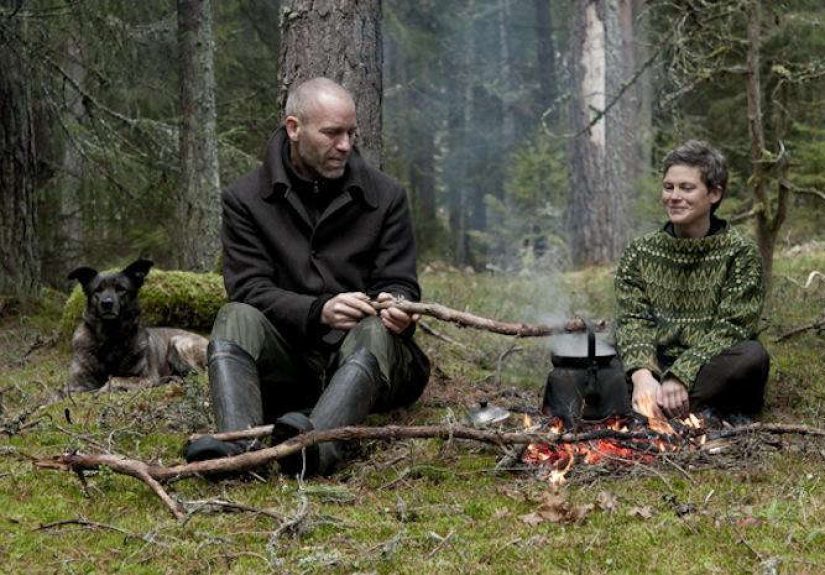
That ethos shapes everything here. The cabins are hand-built. The lighting comes from candles and lanterns. Heat comes from stoves and fire. The walk to the woodland structures matters. The silence matters. Even the discomfort matters a little, in the best possible way. This is not the Sweden of showroom-perfect blond wood and aggressively tidy shelving. It is the Sweden of moss, smoke, wool, tar, rough timber, lake water, and coffee that tastes better because you had to earn it.
Section research:
What Makes This Swedish Retreat So Different?
Urnatur sits on a small farm that Strotz and Krynitz bought in 1993, eventually developing it into a guest retreat after years of working with courses, events, craft, nature knowledge, and self-sufficiency. The woodland lodging area, called the Wood Hermitage, opened in 2007. It is about a 500-meter walk from the farm, and that little bit of distance is not an inconvenience; it is part of the spell. By the time you reach the cabins, you have already begun leaving behind ordinary life and its constant electronic nagging.
In the Wood Hermitage, there is no electricity or internet in the sleeping huts. If you are cold, you light the stove. If it is dark, you light candles or lanterns. If you are hungry, you make use of the outdoor kitchen or gather around fire-based cooking spaces. That is not rustic theater for tourists. It is the core design principle. The place is intentionally arranged to remind guests that comfort does not always have to arrive through a charging cable.
The retreat includes a mix of cabins and treehouses with names that sound like they wandered out of a folktale after chopping wood for an hour: the Wolf Cot, the Moss Temple, the Charcoaler’s Hut, the Forest Cabin, the Hat Hut, the Raven Nest, and the Tin Castle. Some are better for couples, some for families, some for solo dreamers who think a one-person treehouse sounds like a reasonable life goal. The shared bathhouse includes solar-heated showers, a sauna, and the kind of practical simplicity that makes modern spa culture suddenly seem very chatty.
Section research:
Designed by Survivalists, Not Minimalists Playing Dress-Up
The title calls the creators “Swedish survivalists,” and that label works because the retreat is rooted in actual survival knowledge rather than aesthetic cosplay. Urnatur’s own description of the project emphasizes ancestral skills, fire-making, tools, wilderness knowledge, ethnobiology, and the long relationship between humans and the forest. That background explains why the retreat feels so convincing. It was not styled into authenticity later. It was designed from the ground up by people who already believed the woods had something to teach.
That distinction matters. A lot of modern “off-grid” design is just regular luxury with fewer neighbors and a better drone shot. Urnatur is different. The materials, mood, and layout all suggest protection from weather, wind, and wildlife first, and visual charm second. The Charcoaler’s Hut, for example, was inspired by historic shelters used for basic survival in the forest. The Wolf Cot and Moss Temple draw from Sami-inspired timber structures with peat roofs, stoves, and central fireplaces. The result is cozy, yes, but in a way that feels earned rather than merchandised.
Even the retreat’s visual language has survival logic behind it. Remodelista noted that the smallest treehouse had a moss-covered roof and minimal insulation, while the huts were intentionally small, dark, and “hence very cozy.” That sounds romantic, but it also sounds like a place shaped by climate, daylight, and old-world practical thinking. When candles and kerosene lamps are your main evening lighting, you stop decorating for spectacle and start arranging a room around warmth, function, and atmosphere. Funny how good design often appears the moment a bunch of unnecessary nonsense leaves the room.
Section research:
The Scandinavian Design Lesson Hidden in the Woods
Urnatur also works because it expresses the deeper logic of Scandinavian design, not just the Pinterest version of it. House Beautiful describes Scandinavian design as a blend of minimalism, coziness, and functionality, with strong use of natural materials, practical beauty, light-maximizing strategies, and warmth created through texture rather than clutter. That description maps almost perfectly onto this retreat, except here the ideas are not dressed up for a showroom floor. They are tested against weather, darkness, mud, and the eternal human need to sit near a fire and stare into the middle distance.
American coverage of Scandinavian cabins and prefabs often points to the same themes: pared-down interiors, smart use of space, natural insulation, durable materials, and a tighter relationship between shelter and landscape. Dwell has highlighted how Scandinavian cabins often pair restrained interiors with serene natural settings, while Architectural Digest has noted that even high-design tiny houses in the Nordic tradition emphasize essentials, wood stoves, insulation, and a strong visual bridge between indoors and outdoors. Urnatur feels like the less polished, more soulful cousin of those design storiesthe one who can sharpen an axe and make coffee without a machine.
There is also a cultural layer here. Sweden’s outdoor tradition of friluftsliv is defined by the Swedish Environmental Protection Agency as being outdoors in natural and cultural landscapes for well-being and nature experiences without the expectation of competition. That is a beautiful phrase, and Urnatur basically builds it into architecture. The retreat does not push performance. It invites presence. You are not supposed to “win” your stay. You are supposed to notice the light through leaves, smell woodsmoke in your sweater, and perhaps remember that not every meaningful hour must be optimized into a productivity podcast anecdote.
Section research:
Why Remote Retreats Like This Feel So Timely
The appeal of a place like this is not just aesthetic. It is physiological, psychological, and cultural. Nature-based retreat design has become more persuasive in recent years because people are exhausted in very modern ways. We are overlit, over-alert, over-notified, and somehow still under-rested. So when a retreat asks us to trade Wi-Fi for a wood stove, it is not simply being quirky. It is responding to a legitimate hunger.
That hunger lines up with what health and travel reporting has observed. Harvard Health notes that decades of forest-bathing research suggest benefits that may include lower stress, improved attention, better mood, and even immune support. NIH-hosted reviews similarly describe the broad mental and physical health value associated with nature exposure. Dwell’s reporting on Sweden’s “72 Hour Cabins” pointed to a stress-reduction experiment in Swedish nature that helped popularize the idea that the right kind of cabin is not merely a place to sleep. It can be a tool for decompression.
Urnatur taps into the same need, but in a way that feels richer than a wellness trend. The place is not saying, “Come optimize yourself.” It is saying, “Come remember yourself.” There is a difference, and it is a pretty big one. One version sends you home with a journal prompt. The other sends you home knowing how to light a fire, sit still, and maybe stop treating silence like a software bug.
Section research:
Architecture That Does Not Try to Dominate the Landscape
One of the retreat’s quiet triumphs is that its buildings do not behave like invaders. Many cabins featured in American design coverage succeed because they “sit quietly” in the landscape, use stained or natural wood to blend into forests, or elevate compact footprints while preserving views and minimizing disturbance. Sunset has praised off-grid cabins that seem to disappear into the trees, and Dwell’s coverage of Swedish nature cabins has emphasized locally sourced materials, raised structures, and low-impact positioning. Urnatur belongs in that lineage, though its language is more handmade than architectural-manifesto sleek.
The cabins often feel camouflaged rather than announced. Mossy roofs, turf, timber frames, dark finishes, and compact forms allow the structures to settle into the forest instead of shouting over it. Even the Tin Castle, which acts as a social and practical hub with electricity and internet access, sounds less like a modern convenience bunker and more like a gently civilized outpost beside the lake. Breakfast is served there, which is fitting. Every wilderness fantasy needs at least one room where coffee arrives before existential reflection.
There is also something deeply Swedish in the way tradition shows up through materials and silhouettes. ELLE Decor’s look at a Swedish cottage describes the importance of natural materials, pine, linseed-based finishes, and classic regional color traditions such as Falun red. Smithsonian’s coverage of Swedish cottages underscores how deeply certain rustic visual codes are tied to the nation’s pastoral identity. Urnatur does not simply borrow from those traditions; it folds them into a more primal, back-to-the-forest version of hospitality.
Section research:
Inside the Experience: Simplicity, But Make It Memorable
What would it actually feel like to stay here? For starters, a lot less curated than a city boutique hotel and a lot more alive. You might wake to birds instead of an alarm. You might pull on a sweater because the cabin is cool. You might step outside and discover that your first real task of the day is not opening email but deciding whether to row on the lake, build a fire, forage, walk, write, swim, or do absolutely nothing with impressive commitment.
The retreat offers a rhythm that modern hospitality often forgets to protect. Breakfast is a communal event. Firewood matters. Canoes matter. Sauna time matters. The outdoor kitchen matters. Even carrying your things the last 500 meters matters. These small frictions are not flaws in the experience; they are what create the experience. Convenience is lovely, but it rarely becomes memory. Effort does.
That may be the secret behind the place’s lasting appeal. Urnatur is not selling deprivation. It is selling recalibration. The luxury here is not excess but contrast: dark cabins after bright screens, warm stoves after digital fatigue, rough wood after synthetic smoothness, silence after endless commentary. In a culture that keeps promising us seamless living, this retreat makes a very persuasive case for textured living instead.
Section research:
Experience the Retreat: A Longer, More Immersive Look
What the First Evening Might Feel Like
Imagine arriving in the late afternoon, when the light is already behaving like it has someplace else to be. You leave the car behind, sling a bag over your shoulder, and walk the gravel road toward the woods. There is no dramatic check-in desk, no citrus-infused lobby water, no one offering to explain the thread count of your sheets. Instead, the trees do the welcoming. The path narrows your attention. By the time you reach the cabin, your brain has already stopped sprinting.
Inside, the room feels compact but deliberate. Nothing begs for attention. The bed looks inviting in that Scandinavian way that says, “I am simple, but I know what I’m doing.” The stove sits there like a competent old friend. The textures do the heavy lifting: wood, wool, linen, maybe a sheepskin, maybe the faint smell of tar or smoke or forest damp. You notice how little there is, and then you notice how little is missing.
As evening falls, the retreat changes personality. Candlelight flattens all modern ego. It makes everyone look softer, rooms look wiser, and time look slower. You carry a lantern outside and suddenly understand why people talk about “atmosphere” as if it were a design choice. Here it is not a choice. It is the natural result of darkness, fire, and silence having a very successful meeting.
The Kind of Morning You Cannot Manufacture in a City
Morning in a place like this is wonderfully unbranded. No motivational playlist. No espresso machine sounding like a robot in distress. Just cold air, bird chatter, maybe mist over the lake, and the deeply satisfying ritual of making coffee in a place that deserves coffee. You open the cabin door and the world feels larger than it did the day before, which is a neat trick considering the trees have not moved at all.
You begin to understand why the founders built the retreat around ancestral skills and sensory presence. A fire takes attention. Walking in the woods takes attention. Cooking outdoors takes attention. None of these tasks are especially glamorous, but they are grounding. You are not multitasking. You are just doing one thing at a time like some sort of radical 19th-century philosopher with better outerwear.
Children, especially, probably get the joke before adults do. At retreats like this, kids tend to adapt faster because the place speaks their native language: forts, paths, water, climbing, mystery, useful sticks. Adults arrive with apps and expectations. Kids arrive ready to become woodland mayors by lunchtime.
Why the Stay Lingers After You Leave
The most interesting part of a retreat like Urnatur may be what happens after the trip. People often return from remote places talking about quiet, but what they really mean is proportion. After a few days in a cabin where heat comes from a stove and evening light comes from flame, the hierarchy of needs becomes refreshingly obvious. Warmth matters. Food matters. Company matters. Sleep matters. The sky matters. Everything else drops a few positions in the rankings.
You also start noticing how much of modern life is built to eliminate effort, and how often that effort was where the meaning lived. Carrying wood, rowing a boat, walking to breakfast, waiting for water to heat, sitting long enough to hear the forest settle after sunsetthese things take time, but they give time shape. Back home, where everything is immediate, the days can blur. At a retreat like this, even small actions get edges.
And then there is the design takeaway, which sneaks up on you. The lesson is not that everyone should move into a mossy hut and start writing poetry with a pocketknife. It is that good design does not always add more. Sometimes it removes enough noise that life can finally sound like itself again. A remote retreat designed by Swedish survivalists turns out to offer a very modern gift: a place where function, beauty, and nature stop competing and start cooperating.
That is why this retreat resonates beyond travel envy or cabin-core aesthetics. It is not just picturesque. It is persuasive. It suggests that shelter can still teach us something. It suggests that comfort can be humble. It suggests that maybe the future of hospitality is not louder luxury, but deeper attention. And honestly, in an age of constant updates, a quiet forest cabin with a stove, a lantern, and a view of the trees feels less like an escape and more like a correction.
Experience section research:
Conclusion
A remote retreat designed by Swedish survivalists sounds like the premise of a very stylish wilderness experiment, and in a way, it is. But what makes Urnatur compelling is not novelty. It is clarity. The retreat strips hospitality down to elemental pleasuresfire, shelter, texture, water, weather, community, solitudeand proves that those pleasures are not outdated. They are just underused.
In a world full of overcomplicated getaways, this Swedish forest retreat stands out by being intelligently simple. It honors Scandinavian design, old survival knowledge, and modern well-being without turning any of them into a gimmick. The result is a place that feels at once ancient and timely, humble and beautiful, practical and dreamy. In other words, exactly the kind of retreat many people did not realize they were craving until now.