Table of Contents >> Show >> Hide
- What “Heartwork” Means (And Why It Matters)
- The Heartwork Look: Modular, Bright, and Built for Real Life
- How to Buy Office Furniture Like You’re Hiring a Teammate
- Ergonomics: The Furniture Should Love Your Spine Back
- Sit-Stand Desks and Active Workstations: Movement Beats Myths
- Healthy Materials: What Your Furniture Puts Into the Air Matters
- Sustainability That’s Not Just a Sticker on a Shipping Box
- Designing a Heartwork-Style Workspace: Specific, Real-World Examples
- What to Ask Before You Buy (So You Don’t Rage-Return a Cabinet)
- Conclusion: Furniture as Culture (Not Just Equipment)
- Hands-On Experiences: What Living with “Heartwork” Feels Like (Extra Notes from the Real World)
Office furniture has a reputation problem. Somewhere along the way, we accepted the idea that a desk should feel like a DMV counter
and a filing cabinet should look like it’s auditioning for a role in a dystopian movie. Meanwhile, we spend most of our waking hours
at workcreating, collaborating, emailing, Slack-messaging, and occasionally staring into the middle distance while our brains reboot.
That’s why Heartwork office furniture hits differently. It isn’t just about “stuff to put in a room.”
It’s about building a workspace that supports how people actually work: messy, creative, focused, social, private, hybrid, caffeinated,
and (on a good day) weirdly joyful. Think of it as furniture with a job description: keep you organized, keep you comfortable,
and keep the room feeling like humans belong there.
In this guide, we’ll dig into what makes Heartwork’s approach stand out, how to choose pieces that last, and how to design a workspace
that feels less like a cubicle farm and more like a place where good ideas show up on time.
What “Heartwork” Means (And Why It Matters)
“Heartwork” is one of those words that sounds like a motivational posteruntil you see it executed with real design and real materials.
The philosophy is simple: people do their best work when the environment respects them. That means storage that actually stores,
layouts that reduce friction, and furniture that matches the culture instead of flattening it.
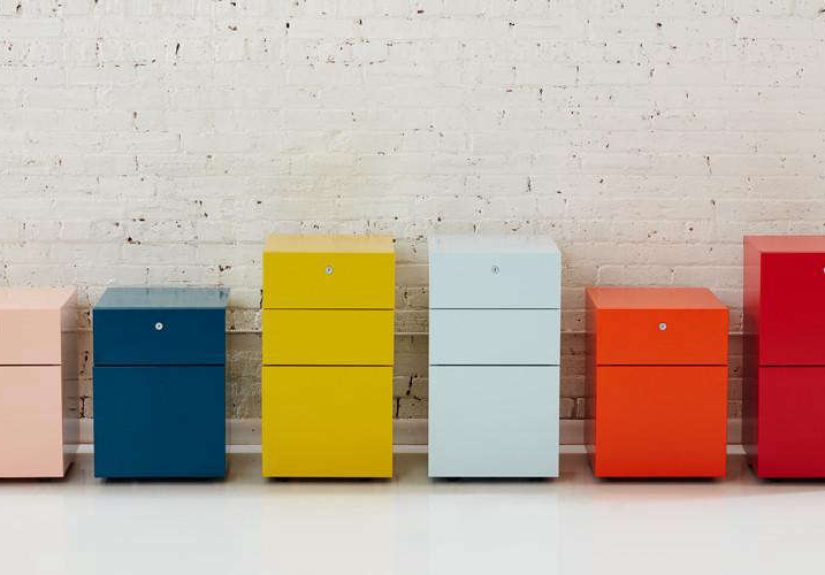
Heartwork has been described as bright, modern, and commercial-gradestorage and office furniture with personality. And there’s a
genuine design pedigree behind it, including industrial design roots and deep experience in both engineering and retail.
Translation: this is not a “we discovered plywood last weekend” situation.
The result is furniture that reads as intentional: modular systems, bold-but-not-clownish color options, and pieces that are
as comfortable in a creative studio as they are in a polished office.
The Heartwork Look: Modular, Bright, and Built for Real Life
Heartwork is best known for storage that doesn’t apologize for existing. Instead of hiding in the background, the furniture becomes part
of the room’s energyespecially in spaces where creativity is the product.
1) Storage that scales with your team
Modular systems are the unsung heroes of office design. Teams change. Projects change. “We’re reorganizing” becomes a quarterly ritual.
Heartwork leans into that reality with collections that can expand and adaptstackers, cubbies, lockers, credenzas, bookcases, and more.
The point isn’t just variety; it’s flexibility without chaos.
2) Pieces that support hybrid work
Hybrid work didn’t kill the office. It made the office grow up. Now the workplace has to earn attendance by offering what home can’t:
better collaboration, better tools, better space planningand, yes, better furniture. Heartwork’s mix of commercial solutions and
work-from-home-friendly offerings fits that modern reality.
3) A “designed” vibe without the preciousness
Some offices look great until someone uses them. The moment a backpack lands on a chair, the illusion dies. Heartwork’s style tends to be
clean and contemporary, but still practicallike it expects humans to show up with water bottles, chargers, and opinions.
How to Buy Office Furniture Like You’re Hiring a Teammate
The best way to shop for office furniture is to treat each piece like a new hire. You’re not buying “a cabinet.”
You’re hiring an organizer, a space-divider, a sound-dampener (sometimes), and a daily stress reducer.
Here’s the checklist that separates long-term wins from “why is this wobbling” regret.
Durability: commercial-grade is a lifestyle
Commercial-grade furniture is designed for repetition: drawers that open a thousand times, doors that get yanked, surfaces that get
wiped down, moved, bumped, and lived on. Even if you’re outfitting a home office, durability mattersbecause replacing cheap furniture
is a tax on your time (and your patience).
Modularity: future-proofing without the crystal ball
Modular furniture lets you redesign without starting over. Need more storage? Add stackers. Need a different layout? Reconfigure
credenzas and cabinets. It’s the office equivalent of buying clothes that still fit after life happens.
Maintainability: the quiet luxury
Look for finishes and construction that handle real use. The best compliment office furniture can receive is,
“We never think about it”because it works, stays clean, and doesn’t fall apart the moment someone aggressively files a folder.
Ergonomics: The Furniture Should Love Your Spine Back
Beautiful furniture that wrecks your body is basically a betrayal with good lighting. Ergonomics isn’t about turning your desk into a
medical device; it’s about aligning furniture to human bodiespluralbecause no two people sit the same way for eight hours.
Desk basics that actually matter
- Leg clearance: Under-desk clearance matters more than people realize. If your knees feel like they’re negotiating for territory, something’s off.
- Work surface height: Your keyboard and mouse should sit around elbow height so shoulders can relax and wrists can stay neutral.
- Reach zones: Daily-use items should be within easy reach so you aren’t doing 400 tiny shoulder shrugs per day.
Monitor setup: save your neck from your ambition
Most “tech neck” is just “monitor too low.” A good rule of thumb: the top portion of your screen should be near eye level, and your
viewing distance should feel natural (roughly an arm’s length for many setups). Reduce glare. Adjust brightness. Your eyes are doing
a lot of unpaid overtime already.
Chair setup: the unsung hero of productivity
If you can’t adjust your chair, you’re basically trying to tailor a suit with a stapler. A supportive chair should allow:
feet flat on the floor (or on a footrest), a seat height that supports thighs comfortably, and lower-back support that encourages a
neutral posture without forcing you into “perfect posture cosplay.”
A quick workstation self-check (60 seconds, no yoga pants required)
- Feet supported (floor or footrest).
- Hips slightly above knees or comfortably level.
- Lower back supported.
- Elbows near your sides; wrists straight while typing.
- Top of screen near eye level; glare minimized.
- Mouse and keyboard on the same surface; shoulders relaxed.
Sit-Stand Desks and Active Workstations: Movement Beats Myths
Let’s be honest: standing desks were marketed like they’d turn us into lean, radiant productivity gods. Reality is more practicaland
still worth it. Research and expert guidance consistently points to the real win: breaking up long periods of sitting,
not replacing sitting with standing all day.
Standing isn’t magic. Movement is.
Standing typically burns only a bit more energy than sitting. That doesn’t make sit-stand setups useless; it just means the goal should be
variation. Use a sit-stand desk to change posture, reduce stiffness, and encourage micro-movementnot to “out-hack” the laws of biology.
A practical rhythm that real humans can follow
- Stand for short blocks (start small), then sit.
- Take quick movement breakswalk to refill water, stretch, do a lap.
- Use your office layout strategically: place printers, supply zones, or snacks a short walk away (yes, snacks count as strategy).
The best setup is the one you’ll actually use. If the standing position feels awkward, adjust the monitor height, keyboard position,
and foot support until it feels natural.
Healthy Materials: What Your Furniture Puts Into the Air Matters
Office furniture doesn’t just take up spaceit shares space with your lungs. That’s why low-emissions materials and credible certifications
matter, especially in workplaces where people spend long hours.
Composite wood and formaldehyde: what to know
Many furniture products use composite wood (like MDF or particleboard). In the U.S., formaldehyde emissions from composite wood products
are regulated under federal standards, which is good news for anyone who enjoys breathing. Still, it’s smart to ask about compliance and
transparencyespecially for enclosed storage pieces where odors can linger.
GREENGUARD Gold: a helpful signal for low-emissions products
GREENGUARD Gold certification is widely used to indicate lower chemical emissions (VOCs), with tighter limits intended to better protect
sensitive populations. For offices, schools, and healthcare-adjacent spaces, it’s a meaningful marker that the product has been tested for
indoor air quality impact.
HPDs: ingredient transparency for the built environment
A Health Product Declaration (HPD) is essentially a standardized “what’s in this product” report for building materials and interiors.
If you’re designing a healthier workspaceor aiming for green building goalsHPDs help teams compare products with clearer information,
rather than relying on vague claims and leaf icons.
Sustainability That’s Not Just a Sticker on a Shipping Box
Sustainability in furniture gets weird fast. Some brands treat it like a marketing costume. Others build it into the actual supply chain.
Heartwork’s sustainability story, as described by the company, emphasizes U.S. manufacturing, a solar-supported facility, a build-to-order
approach (which can reduce excess inventory waste), and product-level certifications tied to indoor air quality and material transparency.
The practical takeaway: if you want a workspace that reflects modern valueshealthier materials, smarter production, and less “throw it away
when it chips”you should prioritize products with both credible certifications and a manufacturing approach that doesn’t depend on constant
disposal.
Designing a Heartwork-Style Workspace: Specific, Real-World Examples
Let’s turn the concept into a plan. Here are a few workspace scenarios and the kinds of Heartwork pieces that typically make sense,
depending on how your team actually behaves (and not how your office policy manual imagines they behave).
Scenario A: The 8-person creative studio
- Need: fast access to supplies, personal storage, flexible organization.
- Furniture strategy: modular storage cabinets + open shelving for shared tools; lockers for personal items; a credenza that doubles as a staging surface.
- Why it works: the room stays functional even when projects overlap and deadlines get spicy.
Scenario B: The hybrid “landing pad” office
- Need: daily hot-desking, secure storage, clean shared zones.
- Furniture strategy: smart lockers or personal storage lockers; workbars for touchdown tasks; storage that supports quick resets.
- Why it works: people can show up, store essentials, and get productive without hauling their whole life in a tote bag.
Scenario C: The serious home office
- Need: professional function without turning your home into a corporate break room.
- Furniture strategy: a well-sized desk with proper leg clearance; a low-emissions monitor stand; compact storage cabinets or bookcases that keep clutter from breeding.
- Why it works: your workspace looks intentional on video calls and feels good when the camera is off.
What to Ask Before You Buy (So You Don’t Rage-Return a Cabinet)
Whether you’re buying directly, working with a dealer, or outfitting a full office, ask questions that reveal qualitynot just aesthetics.
- Is it made for commercial use? (If it’s built for light residential use, it may not age well in a busy office.)
- What certifications support indoor air quality? Look for credible, third-party programsnot “trust us” language.
- How modular is the system? Can you add to it later without replacing everything?
- How easy is it to clean and maintain? If it scuffs easily, it will look tired fast.
- What’s the plan for changes? Hiring, reorganizations, new tech, new workflowsdesign for the next version of your team.
Conclusion: Furniture as Culture (Not Just Equipment)
Heartwork office furniture succeeds because it treats the workplace like a living system: people, projects, movement, mood, and momentum.
The best offices aren’t the ones with the fanciest chairsthey’re the ones where work feels smoother because the environment removes friction.
If you’re building a workspace that needs to flex with a team, support healthier work habits, and look sharp while doing it, the
“labor of love” approach pays off. Buy for durability. Design for movement. Choose materials that respect indoor air.
And don’t underestimate what good storage can do for the human nervous system.
Because nothing kills creativity faster than spending 12 minutes looking for a marker that was last seen in 2022.
Hands-On Experiences: What Living with “Heartwork” Feels Like (Extra Notes from the Real World)
Imagine you walk into the office on a Monday and, for once, your brain doesn’t immediately start running background processes like
“Where do I put my bag?” and “Please don’t let there be nowhere to plug in.” That’s the subtle benefit of a well-designed furniture system:
it lowers the number of tiny decisions you have to make before you can do actual work.
In a Heartwork-style space, the first thing you notice is usually organization that doesn’t feel fussy. Personal items have a home
(lockers are a love language). Shared tools have a home (open storage that doesn’t turn into a junk shrine). And the room doesn’t punish
you for being a human who owns objects. When storage is modular, teams also stop treating “reorg” like a traumatic event. Adding a stacker
or shifting a bank of cabinets becomes a practical adjustmentnot a full demolition of everyone’s workflow.
Then there’s the morale factor, which is real even if nobody writes it into the budget spreadsheet. When furniture looks intentional
not genericpeople tend to treat the space with more respect. They put things back. They reset shared areas. They’re slightly less likely
to abandon a half-empty iced coffee on a random surface like it’s a modern art installation titled Consequences.
On the ergonomics side, the “experience” is mostly about what you don’t feel. Less shoulder tension because the keyboard height is right.
Less neck crankiness because the monitor is up where it belongs. Less end-of-day fatigue because you’re naturally shifting positions
instead of locking into one posture for hours. Sit-stand setups, when paired with good monitor and keyboard positioning, can feel like
giving your body small exits throughout the daystand for a call, sit for detail work, move for a reset.
And yes, the indoor air quality conversation shows up here too. In many offices, new furniture arrives with that unmistakable “fresh
factory smell,” which is not the same thing as “fresh.” In spaces that prioritize low-emissions products and ventilation-friendly choices,
the experience tends to be calmerfewer lingering odors, fewer headaches for sensitive folks, and less of that chemical haze feeling that
makes everyone quietly suspicious of the conference room.
Finally, there’s the creative payoff. When your environment is stablewhen storage is predictable, surfaces are durable, and the room
supports both collaboration and focused workyour brain stops spending energy on friction. The space becomes a tool. People sketch more.
They prototype more. They share more. They take meetings that feel like progress instead of endurance sports.
That’s the real “labor of love” result: furniture that doesn’t demand attention, but earns appreciationbecause it helps people do better work
with less stress. And if your office can do that, it’s not just furniture anymore. It’s part of the team.