Table of Contents >> Show >> Hide
- Long Before the Name, There Was the Awe
- Why New England Became the Star of the Show
- From Fall Outings to Fall Industry
- When “Leaf-Peeping” Became “Leaf-Peeping”
- Leaf-Peeping Goes National
- The Science Behind the Spectacle
- The Modern Era: Big Business, Bigger Crowds, New Worries
- Conclusion
- The Experience of Leaf-Peeping Today
If summer is America’s loud extrovert, autumn is its charming friend who shows up in a wool sweater, says almost nothing, and somehow steals the whole party. Every year, millions of people pile into cars, book inns, check foliage trackers, and point their cameras at hillsides like they’ve just discovered color for the first time. We call it leaf-peeping now, usually with a smile and maybe a little self-awareness. But the habit itself is much older than the cheeky label.
The history of leaf-peeping is really the history of how Americans learned to admire the landscape not just as property, timber, or scenery in the background, but as a seasonal event worth chasing. Long before anyone became a “leaf peeper,” people wrote poems about scarlet maples, advertised train rides for autumn views, built festivals around foliage, and turned New England into a full-fledged fall pilgrimage. What began as appreciation gradually became tourism, then tradition, then industry. Today, leaf-peeping sits at the crossroads of culture, science, travel, and climate anxiety, which is a lot to ask of a tree that was simply trying to prepare for winter.
So how did a few changing leaves become one of America’s most beloved seasonal rituals? Let’s take the scenic route.
Long Before the Name, There Was the Awe
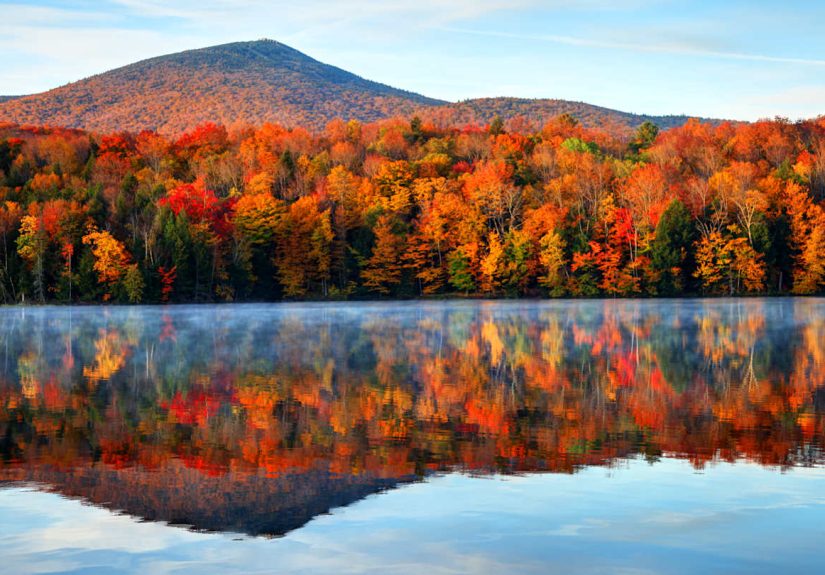
Leaf-peeping existed before it had branding, hashtags, and traffic jams. In the United States, people were admiring autumn color long before the term itself appeared in print. One of the clearest early champions was Henry David Thoreau, who in 1862 famously called October the “month of painted leaves.” That phrase still feels perfect because it captures what makes fall foliage so irresistible: it looks less like weather and more like somebody took a brush to the hills overnight.
Thoreau was not alone. Emily Dickinson also wrote about autumn’s drama, proving that 19th-century New Englanders were fully capable of being emotionally ambushed by a maple tree. But this literary affection mattered for more than poetry. It helped elevate fall color from background scenery to cultural subject. Autumn stopped being the season between harvest and winter and started becoming a spectacle in its own right.
That shift happened at a useful moment. By the mid-1800s, much of New England had been cleared for farms and settlement. Later, as agriculture shifted westward, forests regrew across the region. In other words, the landscape that modern travelers now associate with classic leaf-peeping was not timeless and untouched. It was, in part, a recovered landscape. That regrowth helped create the dense hardwood forests that now blaze with reds, oranges, and yellows each fall.
By the late 19th century, admiration had become motion. Hotels advertised “beautiful fall foliage.” Newspapers described scenic rides through colorful landscapes. Travelers boarded trains and boats not merely to get somewhere, but to experience the trip itself as a seasonal event. Fall foliage was becoming a reason to travel, not just a lucky bonus outside the window.
Why New England Became the Star of the Show
People can see beautiful fall color in many parts of the United States, from the Appalachians to the Rockies to parts of the Midwest. But New England became the celebrity version of the experience. Part of that reputation is cultural storytelling, but a lot of it is geography and forest composition doing some spectacular heavy lifting.
New England’s northern hardwood forests are relatively young in geological terms, forming after the retreat of the last ice age. The region also has an especially rich mix of species that produce strong autumn color, including sugar maple, red maple, birch, beech, ash, and sumac. Sugar maples are the superstars of the fall palette, famous for producing those theatrical reds and oranges that make people stop their cars on perfectly good roads and whisper, “Wow,” as if the leaves can hear them.
Vermont in particular benefits from a high density of sugar maples and extensive forest cover, which helps explain why it became almost synonymous with peak fall foliage. Add mountain topography, winding roads, white-steepled towns, lakes, stone walls, and weather that often cooperates just enough to be photogenic, and you have the ingredients for a tourism legend.
Timing matters, too. Cool nights and sunny days can intensify color, while shorter days trigger the seasonal shift in leaves. This means leaf-peeping is not just about place. It is about being in the right place at the right moment, which gives the whole tradition a mild treasure-hunt quality. You are not simply visiting a landscape. You are trying to catch it in costume.
From Fall Outings to Fall Industry
The Late 1800s: Tourism Learns to Love Autumn
As rail travel expanded and leisure travel became more common, autumn scenery became easier to market. Resorts in the Northeast increasingly recognized that they did not have to shut down emotionally after summer. Fall could be sold as its own season of health, beauty, and escape. In Vermont, natural spas and resort culture helped draw visitors, and the foliage became a major side attraction that slowly turned into the main event.
This was a crucial transition. Once businesses realized colorful hillsides could fill rooms and dining tables, foliage was no longer merely admired. It was organized, advertised, and monetized. Autumn became less of a poetic accident and more of a travel product. That may sound cynical, but it is also why the tradition spread so widely. Someone had to print the brochures, after all.
The 1930s and 1940s: Leaf-Peeping Gets Infrastructure
A major milestone came in 1934, when the New England Council conducted a three-day airplane survey to create a fall foliage guide for visitors. That same year, the region also organized what is widely described as New England’s first fall foliage festival, held in New Hampshire. This was not casual admiration anymore. This was leaf appreciation with logistics.
The next year, reports described New England as a “mecca” for tourists seeking autumn color. Resorts stayed open longer. Towns hosted foliage-themed events. Chambers of commerce leaned into the season. Even during the World War II era, when gas rationing complicated leisure travel, people still found ways to chase the color. That persistence says something important: by the mid-20th century, the fall foliage trip had already become a ritual.
Once a seasonal tradition gets festivals, maps, lodging packages, and traffic complaints, it has officially graduated into civic culture.
When “Leaf-Peeping” Became “Leaf-Peeping”
The pastime is old, but the name is comparatively young. The term “leaf peeper” is widely traced to Vermont and appeared in print in the 1960s, with the Bennington Banner playing a starring role in popularizing it. Some evidence suggests “leaf-peeker” was an earlier cousin of the term, which makes sense. English, like autumn tourism, loves a regional quirk.
The label stuck because it was vivid, slightly goofy, and instantly understandable. You did not need a dictionary to know what a leaf peeper was. It sounded exactly like what it described: a person peering at leaves with suspicious devotion.
Not everyone loved the phrase then, and not everyone loves it now. It can sound affectionate, teasing, or mildly accusatory depending on who is saying it and whether traffic is moving. Locals sometimes use it with a smile. Sometimes not with a smile. But controversial or not, the term gave the tradition a memorable identity. And once an activity gets a name, it gets easier to market, joke about, criticize, celebrate, and turn into an annual headline.
Leaf-Peeping Goes National
Though New England remains the cultural capital of leaf-peeping, the tradition eventually expanded well beyond it. National parks, scenic byways, tourism boards, state agencies, and universities now publish maps, forecasts, weekly reports, and travel guides for fall color across the country. The Blue Ridge Parkway, the Great Smoky Mountains, the Adirondacks, Acadia, parts of the Rockies, and even areas in the Pacific Northwest all attract serious autumn travelers.
That broader popularity changed the meaning of leaf-peeping. It became less regional and more national, less the hobby of New England romantics and more a standard item on the American seasonal checklist, somewhere between apple cider and pretending you enjoy raking. The ritual also evolved with technology. Where earlier travelers relied on local newspapers and hotel brochures, modern peepers refresh foliage trackers, weather maps, and social media posts from strangers standing in scenic pull-offs.
In a funny way, leaf-peeping has become both more democratic and more competitive. Anyone can do it. Everyone wants to time it perfectly. Nobody wants to arrive three days too late and find a lovely but undeniably crunchy parking lot.
The Science Behind the Spectacle
Of course, the leaves are not changing color for our entertainment. Trees are preparing for winter. As days shorten and temperatures drop, deciduous trees slow and eventually stop chlorophyll production. As the green fades, other pigments become visible. Carotenoids create yellows and oranges. Anthocyanins produce reds and purples in certain species, especially under the right weather conditions.
This is why leaf-peeping feels magical but is actually chemistry in formal wear. Warm sunny days, cool nights, and the right moisture balance can help produce vivid color. Too much rain, drought stress, heat, or strong wind can dull the display or knock leaves down early. Timing varies not only by state but by elevation, species mix, and year-to-year weather patterns.
That unpredictability is part of the appeal. Peak foliage is not a fixed holiday. It is a seasonal maybe. You chase it because it is temporary, and because temporary beauty tends to make humans behave like philosophers with camera phones.
The Modern Era: Big Business, Bigger Crowds, New Worries
Today, leaf-peeping is more than a quaint travel habit. It is a major economic engine. In New England alone, fall visitors generate billions in local revenue, and across the eastern United States, the broader economic impact is even larger. Hotels, restaurants, orchards, farm stands, tour operators, rail excursions, roadside shops, and state parks all benefit from the annual migration of people seeking color.
But popularity comes with complications. Crowding, road congestion, trespassing, litter, and strain on small communities have all become part of the conversation. Some famous viewpoints now attract more visitors than the roads around them were ever meant to handle. It turns out that a peaceful communion with nature becomes slightly less peaceful when a hundred people are trying to take the same photo from the same shoulder of the road.
Climate change has added a deeper concern. Research in places such as Acadia National Park suggests that peak foliage is occurring later than it once did and has become less predictable. Warmer temperatures, unusual rainfall patterns, drought, storms, and other stresses can affect not just the timing of color but its brilliance and duration. The future of leaf-peeping, in other words, is tied to the future health of the forests themselves.
That gives the tradition a new emotional layer. What once seemed like a simple seasonal pleasure now also feels like something worth protecting. People do not just want to see beautiful leaves. They want those forests to remain healthy enough to keep making them.
Conclusion
A brief history of leaf-peeping turns out not to be so brief after all, because the tradition touches literature, ecology, tourism, regional identity, and the American talent for turning appreciation into an annual road trip. What started as admiration for autumn beauty became a travel ritual in the 19th century, an organized tourism strategy in the 1930s, a named pastime in the 1960s, and a major cultural and economic force in the modern era.
The next time someone jokes about leaf-peepers clogging the back roads, it may be worth remembering that they are participating in a very old instinct: to stop, look up, and let a season impress itself on the mind. And honestly, in a world that moves too fast, being temporarily distracted by a hillside full of blazing maples seems less like foolishness and more like wisdom with better lighting.
The Experience of Leaf-Peeping Today
To understand why leaf-peeping has lasted, you have to go beyond the history and into the feeling of it. The modern leaf-peeping experience begins long before the first overlook. It starts with anticipation. You watch forecasts. You hear rumors that the color is “coming on strong” in one county and “just starting” in another. A friend texts a photo of a maple that looks like it has been plugged into electricity. Suddenly, you are checking hotel availability, charging your phone, and convincing yourself that leaving at 5:30 a.m. is normal behavior for a person who merely wants to look at trees.
Then comes the drive. Maybe it is a two-lane road winding through the mountains. Maybe it is a village street lined with old houses, church spires, and sugar maples doing their annual show-off routine. Maybe it is a national park road where every turnout creates a new argument about whether this view is somehow even better than the last one. The air is cooler. The sky looks sharper. Farm stands appear with cider, apples, pumpkins, and baked goods that somehow become mandatory purchases the moment the temperature drops below 60.
What makes leaf-peeping memorable is not just the color itself, but the way the whole world seems to cooperate with it. The smell of damp leaves. The creak of a porch at an old inn. The sound of tires on a gravel pull-off. The first sip of hot coffee while fog lifts off a valley. The ridiculous number of photos you take of the same hill, each one apparently necessary. Leaf-peeping is half sightseeing and half gentle surrender. You are not trying to conquer a destination. You are trying to catch a mood.
There is also a social side to it that history books do not always capture. Families return to the same roads year after year. Couples build weekend traditions around foliage season. Photographers chase perfect light with near-religious intensity. Retirees travel midweek to avoid the crowds, while everyone else sits in weekend traffic pretending they are being patient and spiritual about it. Even the tiny inconveniences become part of the folklore. Yes, there may be packed parking lots. Yes, someone will stop too suddenly for a photograph. Yes, there is always one person wearing shorts in 48-degree weather as if autumn were a personal dare. Somehow that all becomes part of the charm.
At its best, leaf-peeping gives people permission to pay attention. Not productive attention. Not monetized attention. Just human attention. For an hour or a weekend, people let color reorder their priorities. They slow down. They notice weather, light, tree species, elevation, and time. They realize that beauty has a season, and that part of what makes it beautiful is the fact that it does not stay. That may be the real reason leaf-peeping has survived for generations. It is not just about leaves. It is about practicing wonder before winter closes in.