Table of Contents >> Show >> Hide
- Why classic board games still feel like magic
- A quick timeline: from ancient tables to American living rooms
- The hall-of-fame classics (and why they work)
- What classic board games teach us about great game design
- How to host a classic board game night that doesn’t drag
- Modern ways to enjoy vintage board games without losing the charm
- Extra: of experiences with old, classic board games
- Conclusion: why #847 deserves the hype
There are two kinds of fun in this world: the kind you download, and the kind you unfold. Old, classic board games belong to the second categorythe glorious, slightly dusty, deeply powerful kind of entertainment that begins with a box lid sliding off and ends with someone saying, “Okay, okay… best two out of three.” That’s why “Old, classic board games” earned the #847 spot on 1000 Awesome Things: because a great game night is basically a tiny holiday you can host in sweatpants.
This isn’t just nostalgia talking (although nostalgia is a fantastic hype person). Classic board games have survived dial-up internet, smartphones, and the era when every household object became “smart,” including refrigerators that can apparently judge you. They’ve endured because they do something screens can’t: they turn the same table into a stage, a battlefield, a courtroom, a spelling bee, andoccasionallya mild family summit about “fairness.”
Why classic board games still feel like magic
They’re social by design, not by accident
A classic board game doesn’t “connect you with friends.” It forces you to look them in the eyes as you buy Boardwalk, steal their last letter tile, or accuse Aunt Linda of doing it in the conservatory (again). The fun isn’t just the mechanicsit’s the micro-drama: alliances, betrayals, laughter you can’t mute, and the sweet relief of realizing your friend is just as bad at math as you are.
They’re tactile, and your brain loves that
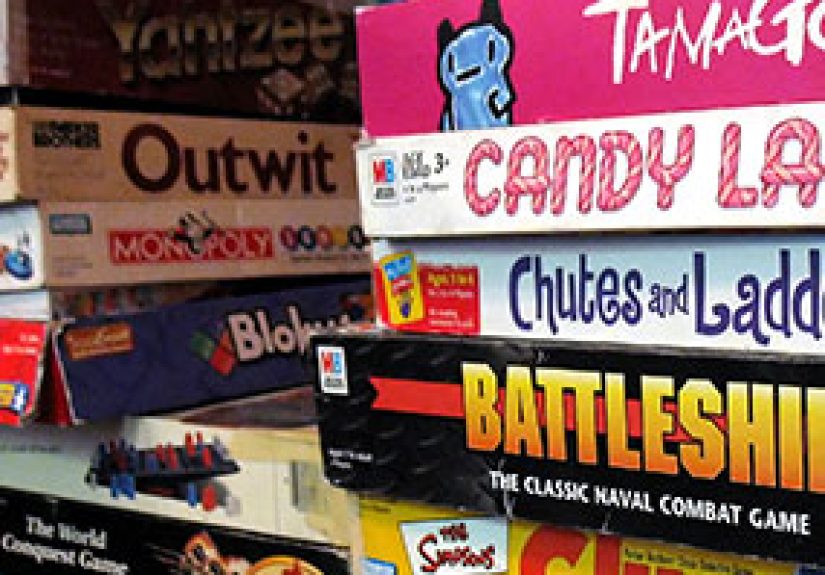
Shuffling cards, rolling dice, clacking checkers, and sliding little wooden pieces across a map scratches an itch that digital games can’t reach. Touch turns play into a physical memory: “the heavy Monopoly money,” “the smooth Scrabble tiles,” “the Candy Land path that looked like a sugar rush.” Your hands help your brain remember the momentand your brain, being a sentimental little librarian, files it under “good stuff.”
They’re simple on the surface, deep underneath
The best vintage board games are friendly at the door and clever in the living room. You can explain the basics fast, but the strategyor the chaoskeeps revealing itself. That’s why you can play them for years and still discover a new move, a smarter trade, or a better way to negotiate with your little brother who insists that “house rules are the law of the land.”
A quick timeline: from ancient tables to American living rooms
Ancient roots: when games were carved, not printed
Long before board games came in glossy boxes, humans played on boards made from wood, stone, and whatever was available. Strategy games and race games show up across ancient cultures, partly because they’re fun and partly because they’re a safe way to practice something humans are weirdly into: competition.
Chess, for example, traces back to early forms like chaturanga in ancient Indiaan ancestor of modern chess that turned military ideas into a game of positioning and foresight. And games related to backgammon-style “tables” games have been played for thousands of years, combining luck (dice) and planning (movement and timing) in a way that feels timeless.
The American boom: mass production meets family game night
In the late 1800s and early-to-mid 1900s, American families increasingly had leisure time at homeand companies got very good at turning play into products. Publishers refined rules, improved components, and marketed games as wholesome entertainment you could enjoy together. Some titles became staples not because they were perfect, but because they were repeatable: easy to set up, fun with many ages, and dramatic enough to create stories.
The hall-of-fame classics (and why they work)
Monopoly: the cash-register opera
Monopoly is half board game, half emotional documentary about ambition. Its modern popularity surged after Parker Brothers acquired and published it in the 1930s, and it became a standout during the Great Depression era. What makes it stick isn’t just the real-estate themeit’s the built-in narrative arc: you start hopeful, you get a lucky break, you make questionable financial decisions, and eventually someone flips the board (or, more commonly, threatens to).
The genius of Monopoly is how it turns abstract economics into immediate feelings: rent hurts, cash feels safe, and a monopoly of properties feels like invincibility. It’s also a masterclass in pacing: early game is exploration, midgame is negotiation, endgame is survival. If you want it to stay fun, set a time limit and stop when the vibes are still alive.
Scrabble: word-nerd dopamine in tile form
Scrabble’s origin story is wonderfully practical: an architect and word-lover, Alfred Mosher Butts, experimented with letter frequency and wordplay, then the game evolved through refinements and a new name. The final result is a classic because it balances three pleasures at once: creativity (making words), strategy (placement and multipliers), and tiny victories (finding a perfect spot for that high-value tile you’ve been hoarding like a dragon).
The best part? Scrabble lets different personality types shine. The competitive player hunts triple-word scores. The artist builds elegant overlaps. The chaos goblin plays “QI” and grins like they just discovered fire.
Clue: dramatic deduction without the homework
Clue (known as Cluedo elsewhere) grew out of the murder-mystery party vibe and took shape during the World War II era, later reaching U.S. shelves in 1949. It’s a classic because it turns logic into theater. You’re not just collecting informationyou’re crafting suspicion, timing your accusations, and enjoying the delicious moment when someone says, “Wait… why do you keep asking about the rope?”
Clue also nails the “everyone stays involved” feeling: even if it’s not your turn, you’re watching, deducing, and quietly judging the person who keeps guessing wildly like the laws of probability are a personal insult.
Candy Land: pure color, pure comfort
Candy Land is proof that a game doesn’t need strategy to be meaningful. Created to entertain children (including those recovering in hospitals) and introduced by Milton Bradley in 1949, it’s basically a guided tour through a fantasy dessert worldpart storybook, part parade.
For little kids, Candy Land teaches turn-taking, patience, and “sometimes you get stuck in the Molasses Swamp and that’s life.” For adults, it’s nostalgia with a side of “how is this still stressful?”
Risk: diplomacy with tiny armies
Risk began as a French-designed world-conquest game and was published in the United States in 1959 after being acquired and refined for a broader audience. It became a defining strategy classic because it combines: planning (positioning armies), negotiation (alliances that may or may not survive the next turn), and uncertainty (dice outcomes that can turn a brilliant plan into a cautionary tale).
Risk is also a lesson in group dynamics: the leader gets targeted, the underdog gets underestimated, and the “quiet player” becomes terrifying around hour two when everyone realizes they’ve been building a continent bonus in silence.
Parcheesi and Sorry!: friendly chaos in bright colors
If Monopoly is a long novel and Risk is an epic saga, then Parcheesi and Sorry! are sitcoms. They’re rooted in older race-game traditions (with Parcheesi linked to games from India, later trademarked and popularized in the U.S.), and they thrive on one simple joy: progress that can be undone in a second.
These games are classics because they create safe, silly conflict. You can be ruthless, but the stakes are tiny plastic pawnsnot your real-life relationships. Plus, they’re great equalizers: the most experienced player can still get sent back to start by a well-timed card or landing.
What classic board games teach us about great game design
Clear goals, visible progress
Classics make it obvious what “winning” looks like: get your pieces home, build your word score, solve the mystery, conquer the map. You can see progress on the board, which keeps everyone engagedespecially players who don’t want to memorize a rulebook the size of a small novel.
Just enough randomness
Dice, cards, and tile draws add surprise without removing agency. In many old board games, luck opens doors, but choices decide what you do next. That balance is a big reason these games work across ages and skill levels: beginners feel they have a chance, and experienced players still feel rewarded for smart play.
Built-in stories
Great tabletop classics generate “remember when…” moments. A Monopoly trade that backfired. A Scrabble comeback from a ridiculous last-minute bingo. A Clue accusation delivered with full courtroom energy. These games aren’t just playedthey’re retold.
How to host a classic board game night that doesn’t drag
Pick games like you’re building a playlist
Don’t make every game a three-hour commitment. Mix “main events” with quick wins. Try a structure like this:
- Warm-up: a short classic (cards, quick word game, or a fast round of checkers)
- Main game: one longer title (Scrabble, Clue, Risk, or a time-limited Monopoly)
- Cooldown: something light and funny (Sorry!, Parcheesi, or a fast rematch)
Use “house rules” responsibly
House rules can improve a gameor turn it into chaos soup. The best rule tweaks do one of two things: speed the game up (time limits, simplified trading) or reduce frustration (clear tie-breakers, fewer edge-case arguments). The worst house rules usually do the opposite: they make the rich richer, the games longer, and the arguments louder.
Set the vibe: snacks, lighting, and the sacred rule of “no phone doomscrolling”
Classic board games feel best when the environment matches the energy. Put on background music, keep snacks simple (nothing greasy that can baptize the rulebook), and agree that phones are for taking photos of absurd playsnot for disappearing into a notification black hole.
Modern ways to enjoy vintage board games without losing the charm
Reprints, thrift finds, and “component glow-ups”
You can find modern reprints of many classic board games, often with sturdier boards and cleaner design. If you thrift a vintage set, treat it like a little time capsule: clean it gently, replace missing pieces creatively, and consider upgrades like a dice tray, tile racks, or coin capsules for paper money. The goal isn’t to make it fancyit’s to make it playable.
Teach the classics like you’re telling a story
The fastest way to lose new players is to read the entire rulebook out loud like a spell. Instead:
- Explain the goal in one sentence.
- Show a sample turn.
- Clarify only the rules that matter early.
- Promise you’ll handle the weird edge cases when they pop up.
People learn classics best by playing, laughing, and making one mildly catastrophic mistake early on. It’s tradition.
Extra: of experiences with old, classic board games
If you grew up around classic board games, you don’t just remember the rulesyou remember the ritual. The box coming down from a shelf like it’s a sacred artifact. The moment the lid lifts and that familiar smell shows up: cardboard, ink, and the faint echo of every past game night. Someone shakes the dice as if momentum can be negotiated with. Someone else immediately asks, “Do we play the real rules or the rules we made up in 2009?” That question alone can start a conversation longer than the game itself.
Classic board games also have a soundtrack. Not musichuman noise. The clatter of tokens in the tray. The soft scrape of pawns moving across squares. The sudden silence when a Scrabble player stares at their rack, lips pursed, like they’re trying to summon vowels from the universe. Then the triumphant table tap when they lay down a word nobody believes is real. Cue the dictionary check, which somehow feels both annoying and comfortinglike a tiny courtroom where everyone is also the jury and the heckling audience.
Monopoly nights have their own special emotional weather. Early optimism is bright and breezy. People buy properties with the confidence of billionaires who have never met consequences. Then the first rent payment lands, and the mood shifts. Someone starts hoarding cash. Someone proposes a trade that sounds fair until you realize it’s basically a legal contract written by a raccoon. The dog token becomes a symbol of stubborn hope. The thimble becomes a warning. And somehow, every family has at least one person who treats Monopoly like a real estate certification exam. You admire them. You fear them. You also wonder if they can help you negotiate your phone bill.
Then there’s Cluethe game that turns ordinary people into suspicious little detectives. You watch your friends try to act casual while asking extremely specific questions. You learn who can bluff, who can’t, and who will deliver an accusation with Oscar-worthy intensity. Clue is also where you discover the joy of being wrong in a dramatic way. You point a finger, name the room, choose the weapon, and thenplot twistyour evidence collapses instantly. Everyone laughs, and somehow that failure becomes the funniest moment of the night.
Candy Land hits differently, especially when you play with kids. Adults think they’re just “helping,” but five minutes in you’re fully invested, cheering like it’s the playoffs. Kids don’t care about strategy; they care about the story the board creates. They narrate the journey, react to the bright colors, and treat every card like a prophecy. And when someone gets stuck or sent backward, the lesson is gentle and real: you can be disappointed and still keep going. That’s a surprisingly big feeling for a game with gumdrops.
The best “classic board game” experience isn’t even the winningit’s the closeness. The little jokes that form midgame. The teamwork of explaining rules to a newcomer without making them feel behind. The shared agreement that, for a couple hours, the world is just this table, these pieces, and the people you chose to spend time with. That’s why these games keep coming back. They don’t just entertain you. They gather you.
Conclusion: why #847 deserves the hype
Old, classic board games are awesome because they’re a reusable kind of joy. They turn spare time into shared stories, help kids and adults meet in the middle, and remind everyone that fun doesn’t need batteries just people, a table, and a willingness to laugh at your own terrible luck. Whether you’re building words, solving mysteries, conquering continents, or simply racing toward “home,” you’re doing something quietly rare: being fully present with other humans. In 2026, that might be the most classic move of all.