Table of Contents >> Show >> Hide
- Before You Start: Define “Clean” for Today
- 1) Do a Two-Minute “Prep Lap” (It Prevents the 20-Minute Spiral)
- 2) Use a Timer (Because “I’ll Clean Until It’s Done” Is a Trap)
- 3) Clean “Categorically,” Not Randomly
- 4) Go Top-to-Bottom, Then Back-to-Front (So You Don’t Re-Dirty Your Work)
- 5) Let Products “Dwell” (The Label Is Trying to Save You Time)
- 6) Keep a “Speed Kit” (Because Hunting Supplies Is Not Cardio)
- 7) Focus on High-Impact Zones (Clean Where Your Eyes Land First)
- 8) Build Tiny Habits That Prevent Big Messes
- A Quick “Speed Cleaning” Routine You Can Repeat
- Conclusion: Make Cleaning Smaller, Smarter, and (Dare We Say) Less Annoying
- Extra: Real-to-Life Speed-Cleaning Experiences (About )
Cleaning has a sneaky talent: it can feel like a full-time job that pays exclusively in lint. The good news is you don’t need a magical mop or a personality transplant to make it easier. You need a faster systemone that turns “ugh, the house” into “okay, I can do this” in the time it takes your coffee to get cold.
This guide is for real life: busy schedules, surprise visitors, pets that shed like it’s their hobby, and kitchens that seem to generate crumbs out of thin air. Below are eight practical ways to speed up your cleaning routine without cutting corners on what actually matters. Expect strategies, examples, and a few gentle jokes at the expense of your future self (who will thank you later).
Before You Start: Define “Clean” for Today
A big reason cleaning feels daunting is because we accidentally try to do every type of cleaning at once: tidying, organizing, deep cleaning, disinfecting, and “why do we even own this?” purging. That’s five projects wearing one trench coat.
Instead, pick your goal for the session:
- Reset clean: looks good, feels calm, no one’s eating off the floor (ideal for most weekdays).
- Maintenance clean: tackles grime and high-touch areas so things don’t snowball.
- Deep clean: slower, detailed, and absolutely not required every time your sink looks at you funny.
Now you’re not “cleaning the whole house.” You’re running a specific play. That mental shift alone speeds you up.
1) Do a Two-Minute “Prep Lap” (It Prevents the 20-Minute Spiral)
The fastest cleaning sessions start with a tiny lap around the space. Not to cleanjust to remove obstacles so you can move without constantly stopping to handle random stuff.
What to do (quick and painless)
- Grab a trash bag and snag obvious trash first (junk mail, wrappers, mystery cardboard).
- Grab a laundry basket for “belongs elsewhere” items (cups, toys, chargers, rogue socks).
- Put your cleaning supplies in a caddy so you stop walking back and forth like a lost Roomba.
Example
If you’re cleaning the living room: trash first, then dishes to the kitchen, then a basket for everything that belongs upstairs. You’ll be shocked how much “mess” is just “items in the wrong ZIP code.”
2) Use a Timer (Because “I’ll Clean Until It’s Done” Is a Trap)
Time expands to fill the space you give itespecially if you start reorganizing your spice rack mid-sweep like you’ve been called to a higher purpose. A timer keeps you focused and makes starting easier because the task has an end point.
Try one of these timer formats
- 15-minute daily burst: a quick reset that keeps chaos from becoming a weekend hostage situation.
- 30-minute sprint: enough time to visibly improve one or two key areas.
- 10/5 method: clean 10 minutes, rest 5, repeat (surprisingly effective for overwhelm).
Pro move
Pair the timer with something you like (playlist, podcast, audiobook). You’re not bribing yourselfyou’re stacking habits like an adult.
3) Clean “Categorically,” Not Randomly
Random cleaning looks like this: wipe counter, notice mail, sort mail, find scissors, reorganize drawer, question your life. Categorical cleaning looks like this: do one type of task everywhere, then move on.
Fast categories that work in almost any room
- Trash: remove it.
- Dishes: relocate to kitchen (even if you don’t wash them yet).
- Laundry: scoop up clothes, towels, linens.
- Clutter sweep: everything that doesn’t belong goes into one basket.
- Surfaces: dust/wipe top surfaces.
- Floors: vacuum/sweep last.
Why this is faster
Your brain stops switching gears every 30 seconds. You reduce “decision fatigue” and you also stop cleaning the same area twice because you accidentally knocked crumbs down after you already vacuumed (we’ve all done it; no judgment).
4) Go Top-to-Bottom, Then Back-to-Front (So You Don’t Re-Dirty Your Work)
There’s a reason professionals repeat this like a mantra: dust and debris fall downward. If you clean the floor first and dust the shelves after, you’ve invented extra labor.
Fast order for any room
- High: ceiling fan, light fixtures, top of shelves (even a quick pass helps).
- Mid: counters, tables, sinks, mirrors.
- Low: baseboards (only if needed), then floors.
Speed tip: use an efficient wipe pattern
When wiping surfaces, use smooth “S” strokes instead of tight circles. You cover more area with less effort and avoid pushing grime around like you’re playing table hockey with crumbs.
5) Let Products “Dwell” (The Label Is Trying to Save You Time)
The fastest cleaners aren’t the ones who scrub harder. They’re the ones who let chemistry do the heavy liftingsafely and correctly. Many disinfectants and cleaners need contact time (the surface stays wet for a specified period) to actually work. If you spray and immediately wipe, you may be doing a quick “polite swipe” instead of cleaning or disinfecting.
How to use dwell time without slowing down
- Pre-clean first: remove visible grime with soap/detergent where needed (especially in kitchens and bathrooms).
- Spray and walk away: apply cleaner/disinfectant to a section (sink, toilet exterior, shower wall).
- Do something else while it sits: pick up clutter, wipe mirror, empty trash.
- Return and wipe: once the product has had time to work, wiping is faster and easier.
Safety note (quick but important)
- Follow label directions for contact time, ventilation, and surfaces that need rinsing (especially food-contact areas).
- Never mix chemicals (especially anything with bleach and ammonia).
- Store products securely, away from kids and pets.
6) Keep a “Speed Kit” (Because Hunting Supplies Is Not Cardio)
If your cleaning supplies are scattered across three cabinets and a hallway closet that requires a map, you’ll waste time before you even start. A dedicated kit makes quick cleaning genuinely quick.
What to include in a basic speed-cleaning caddy
- Microfiber cloths (a few, so you’re not smearing yesterday’s kitchen adventure onto today’s mirror)
- An all-purpose cleaner (appropriate for your surfaces)
- A bathroom cleaner
- A glass/mirror spray (optional, but satisfying)
- Disinfectant (when needed, used according to label directions)
- Trash bags
- A small scrub brush or sponge
Tool upgrade that saves minutes, not just money
If floors are your time sink, a lightweight vacuum or stick vacuum can be a huge speed boost. The “best” one is the one you’ll actually grab without sighing.
7) Focus on High-Impact Zones (Clean Where Your Eyes Land First)
When time is limited, the goal is maximum visible improvement with minimum effort. That means prioritizing high-traffic, high-visibility spots. It’s not cheatingit’s strategy.
The “looks clean fast” hit list
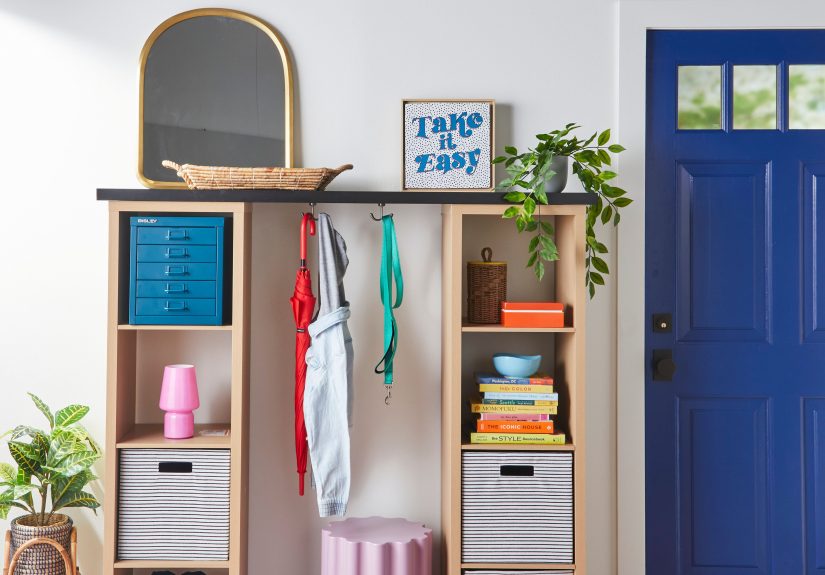
- Entryway: shoes, bags, and the floor (first impressions are loud).
- Kitchen counters & sink: clear, wipe, and do a quick sink rinse.
- Living room surfaces: coffee table, remote-control habitat, couch crumbs.
- Bathroom sink area: wipe faucet, counter, mirror; swap the hand towel if it’s seen things.
- Floors in main paths: a quick vacuum/sweep where people actually walk.
Example: 20-minute “company is coming” plan
- 5 minutes: trash + clutter basket
- 7 minutes: kitchen counter + sink wipe
- 5 minutes: bathroom sink/mirror wipe
- 3 minutes: quick vacuum/sweep main areas
You didn’t deep clean. You made the space feel livable and calm. That counts.
8) Build Tiny Habits That Prevent Big Messes
The fastest cleaning routine is the one you don’t have to do as often. Tiny daily habits keep mess from stacking into a monster that requires snacks, moral support, and a full playlist.
Three habits that quietly change everything
- “Don’t put it down, put it away”: keys, jacket, mail, shoesgive items a home and use it.
- The 2-minute rule: if it takes two minutes, do it now (hang the coat, wipe the spill, load the dish).
- Nightly reset: 5–10 minutes before bed: clear counters, pick up living room, set up tomorrow-you for success.
Make it easier with “homes” for common clutter
If something is always out, it’s not because you’re lazyit’s because there’s no obvious place to put it. Add a bowl for keys, a tray for mail, a bin for cords, or a basket for toys. Your future cleaning sessions will be shorter because your house stops fighting you.
A Quick “Speed Cleaning” Routine You Can Repeat
Want a simple routine that works on most days? Try this repeatable loop. It’s flexible, fast, and doesn’t require you to alphabetize your pantry (unless that’s your version of relaxation, in which case: carry on).
The 30-minute reset loop
- 5 minutes: trash + dishes to kitchen
- 5 minutes: clutter basket sweep (everything that belongs elsewhere)
- 10 minutes: wipe key surfaces (kitchen + bathroom priority)
- 10 minutes: floors (main paths, living room, kitchen)
Optional add-on (once or twice a week)
Rotate one “deeper” task: wipe appliance fronts, vacuum couch cushions, clean the shower doors, or dust baseboards in one room. Rotating keeps deep cleaning from becoming an annual event you fear like taxes.
Conclusion: Make Cleaning Smaller, Smarter, and (Dare We Say) Less Annoying
Speed cleaning isn’t about rushing. It’s about removing friction: fewer trips for supplies, fewer distractions, fewer repeated steps, and more “products doing their job while you do yours.” When you use timers, work top-to-bottom, focus on high-impact zones, and build tiny daily habits, cleaning stops being a monster and becomes a manageable routine.
Start with one change this weekjust one. Maybe it’s the caddy. Maybe it’s the 15-minute timer. Maybe it’s letting the bathroom cleaner sit while you pick up clutter. Once you feel that first “wow, that was faster,” you’ll be hooked (in a healthy, lint-free way).
Extra: Real-to-Life Speed-Cleaning Experiences (About )
To make these tips feel more “real life” and less “perfect house on the internet,” here are a few composite scenarios that show how speed cleaning actually plays out when you’re busy, distracted, and your home is doing its best impression of a tornado shelter.
The “I Have 20 Minutes Before the Delivery Arrives” Moment
This is the classic: you’re waiting on groceries, a package, or a friend who texted “be there soon!” and suddenly your home feels like it’s yelling at you. The fastest win here is the high-impact zone approach. You don’t need to clean the guest room closet. You need the entryway floor clear, the kitchen counter visible, and the bathroom sink not covered in toothpaste archaeology. In this scenario, the trash-and-clutter-basket combo does 80% of the heavy lifting. The basket is your best friend because it lets you “tidy” without stopping to sort. Later-you can return items to their homes. Right now-you is on a mission.
The “I Keep Starting… Then Wandering Off” Problem
Many people don’t struggle with cleaningthey struggle with staying on one task. You start wiping the counter, notice the junk drawer, open it, and suddenly you’re reading instructions for a fondue set you don’t remember buying. Timers fix this. A visible countdown creates urgency without panic. It also gives you permission to stop. The real magic is that you’ll often keep going for a few minutes after the timer ends because you’re already in motion. But even if you don’t, you still got a real reset done in a contained window. That’s consistency, not perfection.
The “My Floors Take Forever” Household
Floors are where time disappears, especially with pets, kids, or a high-traffic household. The trick is to stop treating floor cleaning like a once-a-week epic. In a speed routine, you hit only the main paths: kitchen, entry, living room. You can always do a deeper vacuum later, but the visible crumbs and grit are what make a home feel messy. People who adopt a lightweight vacuum (or keep a broom/dustpan handy) often discover a weird truth: small floor cleanups done more often take less time overall than one gigantic marathon. It’s the same principle as doing dishes before the sink becomes a modern art installation.
The “Bathroom = Doom” Experience
Bathrooms feel daunting because they combine multiple tasks: glass, porcelain, grime, and products that smell like they mean business. The speed breakthrough here is dwell time. Spray the shower and toilet exterior and let the cleaner sit while you wipe the mirror and sink area. By the time you come back, the product has loosened grime so you’re wiping, not scrubbing. This is also where reading the label matters: some products require the surface to stay wet for a set amount of time to disinfect. A quick timer keeps you honest and prevents the “spray-and-immediately-wipe” habit that wastes effort.
The “I Live With Other Humans” Reality
If you share a home, speed cleaning gets easier when you stop doing it solo like a heroic martyr in a detergent commercial. A simple division of labor helps: one person does trash and clutter sweep, another wipes kitchen surfaces, another tackles floors. Even small kids can do “put away” tasks if you give them a clear target (a bin, a basket, a shelf). The household that cleans fastest isn’t the one with the fanciest products. It’s the one where everyone knows the tiny habits: put it away, wipe it now, reset nightly. That’s how you keep cleaning from turning into a dramatic weekend event starring you, a mop, and a thousand-yard stare.
The common thread in all these scenarios is simple: speed cleaning works when the routine is repeatable. When you remove friction, set a time limit, and focus on what matters most, cleaning stops feeling like a mountain and starts feeling like a series of small, winnable hills. Preferably hills without Legos.