Table of Contents >> Show >> Hide
- Before You Prune: The 3 Rules That Save More Shrubs Than Fancy Tools Ever Will
- 1. Panicle Hydrangea
- 2. Smooth Hydrangea
- 3. Summer-Blooming Spirea
- 4. Shrub Roses
- 5. Angel’s Trumpet
- 6. Chaste Tree
- 7. Glossy Abelia
- Shrubs You Usually Should Not Prune in Fall
- How to Prune in Fall Without Regretting It by March
- Final Thoughts
- Common Fall Pruning Experiences Gardeners Talk About Most
Editor’s note: Fall pruning is not a “snip first, ask questions later” kind of job. For many shrubs, autumn cuts are a terrible idea in a cute cardigan. The safest rule is this: prune lightly in fall, wait until true dormancy, and avoid shrubs that bloom on old wood unless you are only removing dead, damaged, or diseased stems.
If you have ever marched into the yard on a crisp October afternoon with pruners in one hand and misplaced confidence in the other, welcome to the club. Fall feels like the season for tidying everything. Beds are fading, leaves are dropping, and every shrub suddenly looks like it could use “just a little cleanup.” But smart shrub pruning in fall is less about giving plants a dramatic haircut and more about setting them up for a better spring.
The trick is knowing which shrubs can handle fall attention and which ones will punish you by refusing to bloom next year. That is where many gardeners get ambushed. A shrub that flowers on new wood is often more forgiving. A shrub that flowers on old wood will remember your mistake all winter and then reveal it publicly in spring by producing exactly three sad blossoms.
Below are seven shrubs gardeners commonly prune in fall for healthier plants next springalong with the fine print that separates helpful pruning from horticultural regret.
Before You Prune: The 3 Rules That Save More Shrubs Than Fancy Tools Ever Will
1. Wait for the right timing
Early fall is usually too soon for major pruning. Warm weather can encourage tender new growth, and that fresh growth may not harden off before cold weather arrives. Translation: your shrub can go into winter stressed, vulnerable, and a little offended.
2. Know whether the shrub blooms on old wood or new wood
This matters more than almost anything else. Old-wood bloomers form flower buds on stems produced the previous season. Prune them in fall, and you are basically tossing next spring’s show into the compost pile. New-wood bloomers are much more forgiving because they produce flowers on fresh growth the following season.
3. Think “cleanup and shaping,” not “chainsaw energy”
Fall pruning works best when it is targeted. Remove dead, diseased, broken, crossing, or weak stems. Improve airflow. Shorten wind-whipped canes. Trim for size only when the shrub’s bloom habit and winter hardiness allow it. If you are itching to cut the entire plant down to knee height, that urge may belong in late winter instead.
1. Panicle Hydrangea
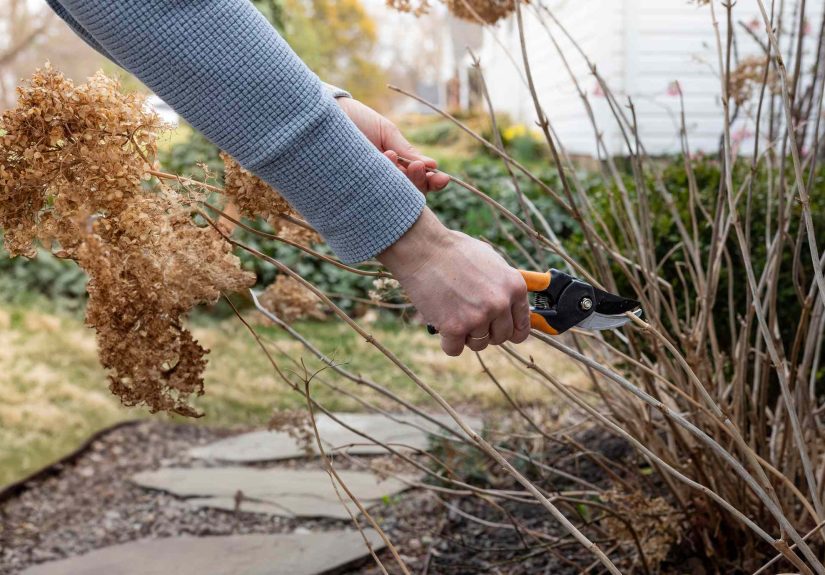
Panicle hydrangea is the overachiever of the fall-pruning world. Because it blooms on new wood, it is one of the safer hydrangeas to touch in autumn. If you grow varieties like ‘Limelight,’ ‘Quick Fire,’ or ‘Berry White,’ you can deadhead spent blooms and do a light shaping trim in fall without sabotaging next season’s flowers.
This is especially useful if your panicle hydrangea spent summer putting on a glorious floral performance and now looks like it has giant paper lanterns drooping in every direction. Trimming back stems to healthy buds can help tidy the shrub and reduce breakage from snow or ice.
That said, avoid turning your plant into a bare skeleton just because you are feeling productive. Many gardeners leave the dried flower heads through winter for texture and interest, then do heavier pruning in late winter or early spring. A moderate hand in fall is the sweet spot.
Best fall move
Remove faded blooms and lightly shorten overly long stems.
Do not do this
Assume all hydrangeas behave the same way. Bigleaf and oakleaf hydrangeas are a different story and usually should not be pruned in fall.
2. Smooth Hydrangea
Smooth hydrangea, including favorites like ‘Annabelle’ and ‘Incrediball,’ also flowers on new wood. That makes it more forgiving than old-wood hydrangeas, but here is the nuance: while many gardeners clean it up in fall, the heaviest pruning is often better saved for late winter or early spring.
So why include it here? Because smooth hydrangea is one of the shrubs people reasonably do address in fallespecially for deadheading, removing weak stems, and tidying the plant before winter. If the seed heads are flopping, if broken stems are making the whole shrub look defeated, or if the center is crowded with tired wood, a little fall cleanup can absolutely help.
Just resist the temptation to scalp it. Hard fall pruning can leave the plant looking neat for about ten minutes and then rather tragic for the rest of winter. A lighter touch keeps the plant healthier and gives you flexibility to decide how hard to prune once spring arrives.
Best fall move
Clip off spent blooms and remove weak or damaged stems.
Do not do this
Confuse “can tolerate some fall pruning” with “needs a brutal reset every autumn.”
3. Summer-Blooming Spirea
Spirea is a dependable landscape shrub that can swing from adorable mound to shaggy tumbleweed surprisingly fast. The key is knowing which kind you have. Summer-blooming types, especially Japanese spirea, are the better candidates for fall cleanup and rejuvenation. Spring-blooming bridal wreath spirea, however, should be pruned after flowering instead.
For the right spirea, fall is a practical time to remove dead stems, thin out old woody growth, and even cut back overgrown plants for a cleaner framework. Gardeners often do this when the plant has lost its shape and started looking more “parking lot island” than “intentional garden design.”
Because spirea can respond well to rejuvenation, it is one of those shrubs that often rewards a little courage. Thin out the oldest stems from the base, open the center for better airflow, and shorten what is sprawling too far. You get a more compact, healthier shrub next season without sacrificing your dignity or your curb appeal.
Best fall move
Thin old stems and tidy overgrown summer-blooming varieties.
Do not do this
Prune spring-blooming spirea in fall and then wonder where all the flowers went.
4. Shrub Roses
Roses are where gardeners either become poets or develop trust issues. The good news is that many shrub roses benefit from light fall pruning. The operative word is light. Fall is not the time for the full dramatic rose makeover you see in late winter pruning guides.
What fall pruning does well is reduce winter damage. Tall canes can whip around in wind, rub against each other, crack, or loosen the plant at the base. Shortening them by several inchesor up to about one-third on especially vigorous growthcan help the plant head into winter in better shape. It is also smart to remove dead, diseased, or damaged canes before cold weather settles in.
For gardeners growing Knock Out roses, hybrid teas, floribundas, or grandifloras, this kind of fall cleanup is practical rather than aggressive. The heavy structural pruning can wait until dormancy is ending and buds begin to swell in late winter or early spring.
Best fall move
After a hard frost, shorten tall canes and remove unhealthy wood.
Do not do this
Give your roses a severe fall haircut and accidentally encourage tender new growth right before freezing weather.
5. Angel’s Trumpet
Angel’s trumpet is not a shrub everyone grows, but for gardeners in warm climatesor anyone overwintering it in containersit is a valid fall-pruning candidate. This fast-growing tropical shrub can become huge, floppy, and gloriously theatrical by the end of the season. Fall is a convenient time to trim it for size, remove crowded growth, and make it easier to manage before dormancy or before moving it indoors.
Because angel’s trumpet responds well to pruning, it is often shaped in fall to keep it from swallowing the patio, pathway, or nearby innocent herbs. If you are overwintering potted specimens, trimming them before moving them inside is especially practical.
One very important catch: this plant is toxic. Wear gloves, keep children and pets away, and do not turn pruning day into an accidental chemistry lesson.
Best fall move
Reduce size, improve shape, and thin crowded branches before winter storage.
Do not do this
Handle it barehanded and then touch your face like nothing happened.
6. Chaste Tree
Chaste tree, or vitex, lives in that charming middle ground between shrub and small tree. In warm regions it grows quickly, blooms on new wood, and can become a little wild if nobody keeps an eye on it. Fall is a reasonable time for light cleanup, especially if you are removing spent flower spikes, twiggy growth, or wayward shoots that are ruining the plant’s shape.
Gardeners like vitex because it is drought tolerant, tough, and generous with color. They do not always like the way it can drift into unruly territory if ignored too long. A light autumn cleanup helps set up the plant for a tidier start next season.
Still, major structural pruning is usually better handled in late winter before new growth begins. Think of fall pruning here as editing, not rewriting.
Best fall move
Remove spent blooms and thin obvious twiggy clutter.
Do not do this
Turn a shaping job into a full renovation unless you are waiting for late winter.
7. Glossy Abelia
Glossy abelia is a graceful, arching shrub that blooms on current season growth, which makes it relatively forgiving compared with old-wood bloomers. In many gardens, it can be lightly pruned in fall to tidy up shape, thin crowded stems, and remove damaged wood. This is particularly helpful when abelia has spent the season bulking up and starting to look more like a sprawling fountain than a defined shrub.
Because abelia flowers on new growth, gardeners do not have to be quite as nervous about pruning away next year’s blooms. That said, late winter and early spring are still commonly preferred for bigger shaping cuts. Fall is best for restraint: remove the awkward stems, clean out the interior, and leave the more ambitious redesign for later.
Used this way, fall pruning improves air circulation, keeps the plant from getting woody and congested, and helps preserve that soft, arching habit that makes abelia attractive in the first place.
Best fall move
Thin crowded stems and lightly shape the plant.
Do not do this
Shear it into a stiff green cube unless your goal is to make a naturally elegant shrub look vaguely annoyed.
Shrubs You Usually Should Not Prune in Fall
Here comes the part that saves springtime heartbreak. Avoid major fall pruning on shrubs that bloom on old wood, including lilac, forsythia, azalea, rhododendron, and many viburnums. Be cautious with bigleaf and oakleaf hydrangeas, too. These plants often set flower buds well before winter, so fall pruning removes the very stems meant to bloom next year.
Also be careful with evergreen shrubs like arborvitae, juniper, and boxwood. Late-season cuts can leave them more vulnerable to winter injury, especially in colder climates. If they need serious work, late winter or early spring is often the safer window.
How to Prune in Fall Without Regretting It by March
Use clean, sharp tools
Dull blades crush stems instead of cutting cleanly. That is bad for plant health and bad for your mood.
Remove the “four Ds” first
Dead, damaged, diseased, and dysfunctional wood always gets first priority.
Do not remove too much
A good rule for many shrubs is to avoid taking more than about one-quarter of the plant at once unless you are following a specific rejuvenation plan.
Make cuts with purpose
Cut back to a healthy bud, side branch, or the base of a stem. Random stubs are ugly and unhelpful.
Know your climate
What works in a mild Southern fall may be risky in a colder northern garden. If winter arrives early and hard where you live, keep fall pruning even lighter.
Final Thoughts
The best fall pruning advice is not “prune everything now.” It is “prune the right shrubs, in the right way, for the right reason.” That means choosing shrubs that tolerate fall cleanup, understanding whether they bloom on new wood or old wood, and resisting the urge to treat every overgrown plant like a weekend transformation project.
If you focus on light shaping, cleanup, airflow, and winter protection, fall pruning can absolutely help certain shrubs head into spring healthier, stronger, and ready to grow. And if you are ever unsure, remember this golden gardening principle: when in doubt, step away from the shears and make tea instead.
Common Fall Pruning Experiences Gardeners Talk About Most
One of the most common stories gardeners share about fall pruning starts with the same sentence: “I thought I was helping.” It usually happens on a cool weekend when the yard looks tired, the mosquitoes have finally clocked out, and a shrub that behaved all summer suddenly looks messy enough to offend the entire neighborhood. The gardener heads outside with noble intentions and returns two hours later with a neat-looking shrub, a pile of branches, and absolutely no idea whether they just improved next spring or erased it.
Hydrangeas are famous for this drama. Gardeners often say panicle hydrangeas make them feel brilliant because those shrubs usually forgive a reasonable fall trim. The same gardeners then meet a bigleaf hydrangea, prune it exactly the same way, and spend the following June staring at a healthy green bush with no flowers and a very personal sense of betrayal. That single lesson tends to convert people into lifelong label readers.
Spirea brings a different kind of satisfaction. Many gardeners describe finally cutting an overgrown spirea in fall and being shocked that it comes back looking younger, denser, and much more intentional the next season. It is one of those plants that often rewards smart pruning quickly enough to make people feel like pros. Roses, on the other hand, inspire caution. Gardeners who lightly shorten long canes in fall usually feel relieved when winter winds do less damage. Gardeners who prune too hard too early often learn that roses are resilient, but not especially interested in helping with experiments in bad timing.
Then there are the container gardeners with angel’s trumpet. Their fall experience is less about flower timing and more about logistics. Many describe the annual ritual of realizing the plant is now somehow the size of a compact car, then trimming it back just enough to fit through a doorway without losing a branch, a pot, or their patience. Anyone who has overwintered a tropical shrub indoors understands that pruning can be part plant care and part furniture-moving strategy.
Gardeners with abelia or chaste tree often talk about the value of restraint. They go out expecting to reshape the whole shrub and end up learning that a few thoughtful cuts do more than an enthusiastic hacking session. That is one of the quieter lessons of fall pruning: the best results often come from removing less, but removing it well.
Perhaps the most useful shared experience of all is the moment gardeners stop seeing pruning as a cosmetic chore and start seeing it as a health decision. Better airflow, less breakage, fewer diseased stems, and stronger spring growth are not flashy outcomes in November, but they pay off when the garden wakes up again. Fall pruning is rarely about instant beauty. It is about setting the stage. And when that stage is set well, spring does the standing ovation for you.