Table of Contents >> Show >> Hide
- Why Minimalists Declutter Right After the Holidays
- 1. Holiday Decorations They Never Used or Need to Retire
- 2. Torn Wrapping Paper, Gift Bags, Tissue Paper, and Shipping Leftovers
- 3. Unwanted Gifts, Duplicate Items, and “Backup” Versions of Things
- 4. Extra Entertaining Gear They Did Not Actually Use
- 5. Leftovers, Stale Snacks, Expired Pantry Items, and Freezer Mystery Containers
- How Minimalists Keep the Clutter From Boomeranging Back
- Real-Life Experiences: What Post-Holiday Decluttering Actually Feels Like
- Conclusion
- SEO Tags
The holidays are wonderful. They are also, let’s be honest, a professionally staged ambush of stuff. One minute you’re lighting a candle and feeling festive, and the next you’re staring at a dining table covered in ribbon scraps, novelty mugs, cookie tins, duplicate gifts, and a mysterious platter you definitely do not remember buying.
That is exactly why minimalist households tend to move fast once the celebrations are over. They do not wait until February, when the wrapping paper has fused with the floor and the leftovers have developed a backstory. They declutter immediately after the holidays, while the clutter is obvious, the memory is fresh, and the difference between what got used and what just took up space is painfully clear.
If you want a calmer home, a more organized new year, and fewer “Why do I own seven serving trays?” moments, this post-holiday reset is one of the smartest routines you can borrow from minimalists. The goal is not to strip your home of joy. It is to clear out the extras that make joy harder to find.
Why Minimalists Declutter Right After the Holidays
Minimalists understand one simple truth: clutter is easiest to deal with when it has just revealed itself. After the holidays, your home tells on itself. You can see which decorations never left the storage bin, which gifts do not fit your life, which kitchen items only existed to crowd a cabinet, and which food items are hanging around out of guilt rather than usefulness.
This timing matters. If you pack everything away without editing it first, you are not organizing. You are just preserving future frustration in labeled bins.
That is why a good post-holiday decluttering session feels so effective. It is practical, emotional, and weirdly satisfying. You are not making abstract decisions about a someday version of yourself. You are looking at the real-life aftermath of the season and choosing what deserves space in your home going forward.
1. Holiday Decorations They Never Used or Need to Retire
Why this is the first thing to go
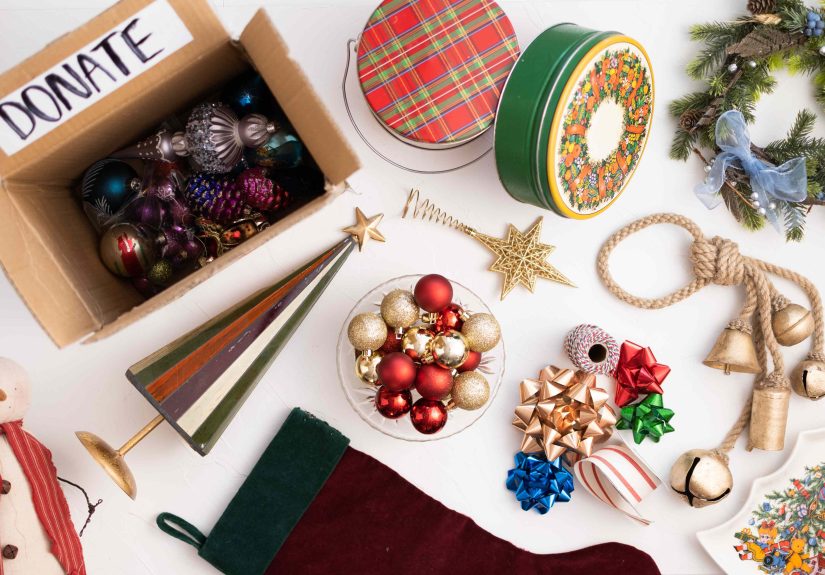
Minimalists do not automatically keep every ornament, wreath, table runner, strand of lights, or themed figurine just because it is seasonal. If it stayed in the box all season, there is a good chance it can leave the house entirely. And if it is broken, faded, chipped, tangled, or no longer your style, it has officially completed its holiday career.
This category tends to be sneaky because seasonal décor hides in storage for most of the year, which makes it easy to overestimate its value. But the holidays create the perfect test: Did you use it? Did you enjoy it? Did it still work? If the answer is no, no, and absolutely not, it does not deserve premium real estate in your closet, attic, or garage.
What minimalists keep instead
Minimalists usually keep the pieces that are versatile, meaningful, and easy to store. Think a favorite wreath, a small collection of ornaments with real sentimental value, a strand of lights that actually works, or neutral winter décor that can stay out longer than one specific holiday. They let go of duplicates, random filler items, and anything they only keep because they spent money on it once upon a time.
A helpful rule: before you put decorations away, edit them. Not next year. Not someday. Right now, while you still remember what you reached for and what gathered dust in the bin like a retired background actor.
2. Torn Wrapping Paper, Gift Bags, Tissue Paper, and Shipping Leftovers
The clutter nobody respects but everybody keeps
Nothing multiplies quite like holiday packaging. Suddenly there are half-rolls of wrapping paper, crumpled gift bags, bent boxes, tangled ribbon, lonely bows, and enough tissue paper to insulate a small planet. Minimalists do not keep this entire pile “just in case.” They sort it fast.
The trick is separating usable from merely optimistic. A crisp gift bag in good condition? Keep it. A sturdy box that has a real purpose? Fine. Three feet of wrinkled wrapping paper, shredded ribbon, and a gift bag with one handle hanging on for dear life? That is not a supply stash. That is a craft-project hostage situation.
How to declutter holiday packaging without regret
Keep only what you will realistically use next year. That means unopened rolls, intact gift bags, good-quality ribbon, and a small organized wrapping kit. Recycle what can be recycled, reuse what is worth reusing, and release the rest without ceremony.
Minimalists also deal with the cardboard-box problem immediately. If online shopping turned your entryway into a shipping warehouse, break down the boxes, recycle what you can, and stop pretending that seventeen medium boxes are all secretly future storage solutions. They are not. They are visual noise with flaps.
This one step alone can make your home look dramatically calmer in under an hour, which is probably why it is such a favorite in a holiday home reset.
3. Unwanted Gifts, Duplicate Items, and “Backup” Versions of Things
The minimalist mindset here is refreshingly sane
Minimalists are not rude about gifts. They are realistic about them. They can appreciate the gesture without committing to storing an item they will never use. That is a powerful distinction.
After the holidays, homes often fill with duplicates: a new blanket when you already own six, another mug for a cabinet that is begging for mercy, a pair of sneakers that makes the old pair suddenly look unnecessary, or beauty sets, gadgets, candles, toys, and accessories that do not fit your actual life. Minimalists tend to act on this immediately.
They use a version of the one-in, one-out rule. If a new item replaces something older, the older one leaves. If a gift is lovely but not useful, it gets donated, regifted appropriately, or passed along to someone who will actually enjoy it. The point is to keep the gratitude, not the guilt clutter.
What this looks like in real life
Maybe your child got new toys, which means the outgrown, broken, or ignored ones can go. Maybe you received a new sweater, so the scratchy one you never wear can be donated. Maybe someone gave you a fancy serving bowl, so the chipped plastic version can finally retire with dignity.
This is one of the smartest ways to declutter after the holidays because the influx of new stuff has already happened. Minimalists do not wait for the closet to become impossible. They rebalance the space right away.
4. Extra Entertaining Gear They Did Not Actually Use
Holiday hosting reveals the truth about your kitchen
If there is one place the holidays expose, it is the kitchen. Entertaining has a magical way of revealing what is truly useful and what is simply taking up cabinet space while pretending to be essential. Suddenly you know exactly which platter you used, which serving spoon you love, which baking pan earns its keep, and which seasonal tableware sat untouched while you reached for the same reliable pieces you always use.
Minimalists pay attention to this. They do not put every specialty item back just because it belongs to the category of “hosting.” They edit the collection while the evidence is still fresh.
What usually goes
Unused platters, duplicate baking dishes, novelty mugs, mismatched wine charms, holiday-themed napkin rings, extra chargers, chipped serving bowls, and random entertaining accessories that looked useful in the store but have now spent three holidays doing absolutely nothing. If it did not get used this year, and it did not get used last year either, it is probably not part of your real hosting style.
This does not mean your kitchen has to become joyless or bare-bones. It means your cabinets should reflect how you actually cook, bake, and host. A minimalist kitchen is not about owning less for the sake of it. It is about owning the right things, in the right quantity, so your space works without a daily avalanche of trays and casserole dishes.
And yes, this includes that drawer of cookie cutters. You do not need fourteen snowflakes unless you run a very festive law firm.
5. Leftovers, Stale Snacks, Expired Pantry Items, and Freezer Mystery Containers
The least glamorous category is often the most important
Minimalists know that post-holiday clutter is not just visual. It is edible, too. The fridge is full, the pantry is crowded, and the freezer is suddenly housing several unlabeled containers that feel less like dinner and more like a science fair risk.
After the holidays, a fast kitchen reset can make the whole house feel lighter. Toss stale chips, old dips, half-empty party snack containers, expired pantry items, and anything in the fridge that has clearly moved beyond its prime. Check baking supplies while you are at it. Spices, sprinkles, frosting tubes, and specialty ingredients love to linger long after the parties are over.
Why minimalists do this immediately
Because food clutter creates decision fatigue fast. When your fridge is packed with leftovers you are never going to eat and your pantry is stuffed with duplicates, you buy more, waste more, and feel vaguely annoyed every time you open a cabinet. Minimalists would rather reset the kitchen right away, make space for normal life again, and start the year with shelves that are usable instead of chaotic.
This also has a practical side. A cleaner fridge, a tidier pantry, and fewer “mystery jars” make meal planning easier, reduce waste, and keep your kitchen from carrying holiday chaos into January like an emotional-support casserole.
How Minimalists Keep the Clutter From Boomeranging Back
The magic is not just in one big purge. It is in the habits that follow.
First, they do not store things they already know they do not want. Second, they create small limits: one wrapping bin, one shelf for seasonal serveware, one tote for holiday linens, one box for ornaments. Third, they ask better questions. Not “Could I use this someday?” but “Did I use this, do I love it, and would I buy it again today?”
That shift matters. It turns minimalist decluttering from a dramatic annual event into a simple maintenance routine. Your home gets easier to manage because you are no longer trying to organize things you do not even want.
Real-Life Experiences: What Post-Holiday Decluttering Actually Feels Like
The most surprising thing about decluttering immediately after the holidays is how emotional it can be. Not sad, necessarily. Just revealing. One homeowner might start with a giant bin of ornaments and realize she uses the same twelve favorites every year, while the rest are leftovers from decorating styles she outgrew a decade ago. Letting go of them does not feel harsh. It feels like admitting she finally knows her taste.
Another common experience happens in the kitchen. After a season of baking, hosting, and hauling out every tray in the house, it becomes painfully obvious which items are useful and which ones are just cabinet squatters. People often discover they are reaching for the same sheet pan, the same serving bowl, and the same platters every single time. Once they donate the extras, the kitchen suddenly feels bigger, calmer, and much less likely to attack them with a collapsing tower of bakeware.
Families with kids often notice the biggest difference in playrooms and bedrooms. The post-holiday toy influx can look overwhelming at first, but it also creates a clear moment to sort. Parents often say that when they donate the toys their children have truly outgrown, the new gifts actually get enjoyed more. The room becomes easier to clean, the kids can see what they own, and the whole space feels less like a tiny plastic retail store exploded overnight.
Gift clutter brings a different kind of experience. Many people feel guilty getting rid of gifts, especially if the item was thoughtful. But once they allow themselves to separate appreciation from obligation, the whole process gets easier. A candle in a scent you hate, a sweater in a color you never wear, or a gadget you did not ask for does not need to stay in your house forever to prove you are grateful. Passing it along to someone who will use it often feels more respectful than burying it in a closet until the end of time.
Then there is the fridge and pantry reset, which is never glamorous but is almost always satisfying. Clearing out stale party snacks, expired ingredients, and leftovers you are definitely not going to eat has an instant effect. It feels like the household is switching out of celebration mode and back into real life. The shelves look cleaner. Grocery shopping becomes easier. Cooking feels less chaotic. And maybe best of all, you stop opening the refrigerator and getting judged by three kinds of dip and a pie slice you have been “saving” for a week.
That is the pattern in nearly every post-holiday decluttering story: people expect the process to feel like deprivation, but it usually feels like relief. Not empty. Edited. Not boring. Functional. Not cold. Clear. And that is the real appeal of the minimalist approach after the holidays. It gives your home room to breathe again.
Conclusion
If you want your home to feel lighter in January, do not start with a massive makeover. Start with the obvious clutter the holidays leave behind. Minimalists know that the fastest way to reset a home is to deal with the things that proved themselves unnecessary: unused decorations, worn wrapping supplies, duplicate gifts, extra entertaining gear, and food clutter hanging around past its welcome.
That is the real lesson here. A calm home is not created by storing more efficiently. It is created by keeping less of what you do not need. Declutter immediately after the holidays, while the truth is still sitting on your counters, packed in your cabinets, and blinking at you from the storage bin. Your future self will be extremely impressed. Possibly even smug.