Table of Contents >> Show >> Hide
- The Flintstones Setup: Modern Life, Stone Age Methods, Zero OSHA
- What Counts as a “Dinosaur Job” in Bedrock?
- The 5 Dinosaur Jobs That Make Bedrock Feel… Spiritually Unsupervised
- Why These Jobs Hit Harder as an Adult
- WaitIs This Actually About God?
- How to Watch (or Rewatch) With Fresh Eyes
- Experiences: of Living in the Flintstones Headspace (Without Moving to a Cave)
- Conclusion
Bedrock is a charming little town where the cars are foot-powered, the houses are carved out of stone, and the neighborhood is so friendly your pet dinosaur might tackle you like a golden retriever the second you get home.
It’s wholesome. It’s nostalgic. It’s… deeply, profoundly unsettling once you notice the “technology” is mostly sentient wildlife being pressed into service like it’s a normal Tuesday.
And that’s where today’s playful (but suspiciously serious) thesis comes in: if there’s a benevolent cosmic supervisor watching over the Flintstones universe, they’re either on a very long lunch break… or they never clocked in at all. Because the job market for dinosaurs in Bedrock is a moral disaster wrapped in a laugh track.
The Flintstones Setup: Modern Life, Stone Age Methods, Zero OSHA
The Flintstones was built on one simple comedic superpower: take mid-century American suburban life and rebuild it with prehistoric materials and creatures. Same problems, same social rituals, same consumer wantsjust with more rocks and more reptiles.
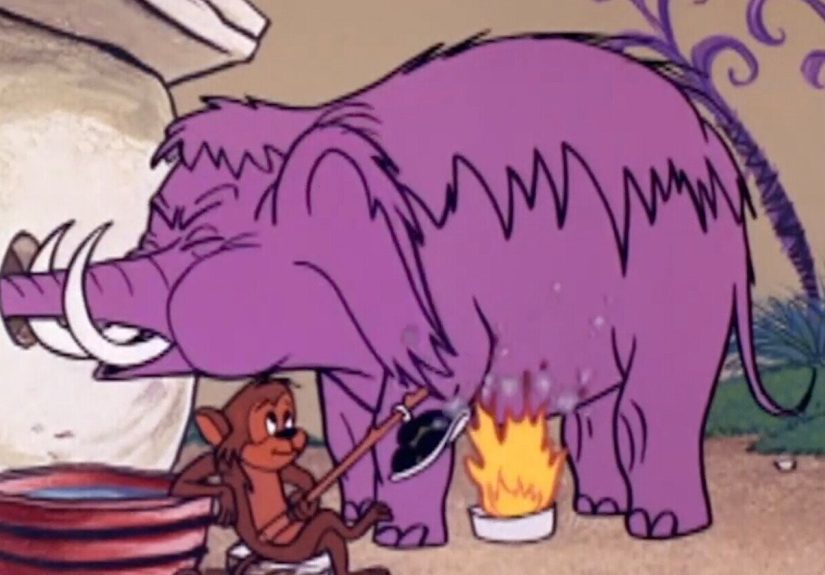
In that world, the “modern Stone Age family” idea isn’t just a cute tagline. It’s the engine of the joke. A record player isn’t a record playerit’s a bird doing precision labor with its beak. A garbage disposal isn’t a machineit’s an animal that lives under your sink and eats your leftovers like a tiny, unpaid sanitation worker. Bedrock has infrastructure, transportation, communication, and household convenience… but a shocking amount of it runs on living beings.
That’s funny because it’s absurd. It’s also funny because it’s familiar. Bedrock is basically the 1960s, only the gadgets have facesand those faces look exhausted.
What Counts as a “Dinosaur Job” in Bedrock?
Let’s define it the Bedrock way (not the paleontology way). A “dinosaur job” is any role where a prehistoric creature is expected to function as:
- a machine (appliance, vehicle, tool, or industrial equipment),
- a worker (performing repetitive labor on demand), or
- a product (packaged convenience with feelings you’re encouraged to ignore).
Whether the creature is technically a dinosaur, a pterosaur, a mammoth, or a suspiciously talented bird doesn’t matter to Bedrock. The hiring manager at Slate Rock and Gravel isn’t quizzing anyone on taxonomy. If it moves, it works.
The 5 Dinosaur Jobs That Make Bedrock Feel… Spiritually Unsupervised
1) The Quarry Dino-Crane: Industrial Lifting, Organic Edition
Fred Flintstone earns his paycheck in a quarry as a dino-crane operator. That single detail quietly explains a lot about Bedrock’s economy: heavy industry exists, productivity matters, and “equipment” may blink at you while you’re operating it.
From a distance, it’s classic slapstick: a crane is a dinosaur; the dinosaur lifts rocks; a joke happens; cue the grin. But look closer and you realize the dinosaur is doing grueling, repetitive industrial laborevery daybecause the town decided that instead of inventing hydraulics, it would simply recruit a giant creature and treat it like a forklift with a pulse.
There’s also something darkly modern about it. Bedrock is a society that has clearly organized itself around production. The quarry has bosses, schedules, workplace norms, and the kind of job stress that follows you home. The dinosaur-crane doesn’t just represent a clever visual gag; it represents a labor system where the cost of convenience is outsourced to the nearest creature that can physically handle it.
If the Flintstones universe has a deity, this is the moment you expect a thunderbolt labeled “WORKPLACE ETHICS.” Instead, everyone shrugs and goes back to moving boulders.
2) The Pterodactyl Airplane: Your Flight Has Feelings
At some point, Bedrock looked at the sky and said, “We should fly.” Then it looked at a pterodactyl and said, “Congratulationsyour new job is aviation.”
In the Flintstones imagination, prehistoric creatures are used to recreate familiar modern technologies, and pterodactyls show up as a kind of living aircraft solution. The humor comes from the mismatch: air travel is supposed to be sleek and advanced; Bedrock’s version is basically a flying creature doing public transportation.
But the existential punch comes from what it implies. Bedrock doesn’t merely use animals for small household chores; it scales exploitation up to entire transportation systems. That’s not just “we’re creative with gadgets.” That’s “we built a society where living beings are infrastructure.”
And if you’ve ever had a bad flight, imagine adding “the airplane is in a mood today” to your list of travel anxieties.
3) The Sink Garbage Disposal: The Grossest Job in the House
In a normal kitchen, a garbage disposal is an appliance you barely think aboutuntil it makes a noise that sounds like it’s chewing a fork. In Bedrock, the garbage disposal is a creature, and chewing is literally the job description.
This is one of the Flintstones’ most famous “animal appliance” ideas: household convenience achieved by keeping a hungry prehistoric critter under the sink to consume scraps. From a comedy standpoint, it’s brilliant. The kitchen becomes a tiny workplace, and the “employee” lives in the cabinet like it’s a studio apartment with worse lighting.
From an ethics standpoint, it’s chaos. The creature’s entire existence is reduced to handling society’s waste. No glamour, no variety, no upward mobilityjust bones, leftovers, and the occasional existential dread when someone drops something non-edible and says, “Eh, it’ll be fine.”
If there’s a god in Bedrock, this is where you’d expect at least one compassionate law: “No sentient being shall be installed beneath plumbing.” Instead, the neighborhood keeps renovating like this is normal.
4) The Record Player Bird: Entertainment at Beak-Point
One of the most iconic Flintstones images is a bird operating a record player using its beak. It’s a perfect snapshot of Bedrock logic: if you want music, you don’t need a needleyou need a bird with a steady beak and the patience of a saint.
This job is particularly bleak because it’s not essential like lifting rocks or disposing trash. This is luxury labor. The bird isn’t keeping the family alive; it’s keeping the vibe alive. Its role is to provide leisure to humans who will never once ask, “Hey, do you enjoy being a stylus?”
And that’s what makes it such a sharp satire of convenience culture. Bedrock doesn’t stop at necessities. It turns living creatures into accessories for comfort, entertainment, and social statusbecause that’s what suburban life often does with everything it can get its hands on.
In a universe with divine justice, the bird would unionize by episode three. In Bedrock, it just keeps the record spinning.
5) The Instant Camera Bird: “Smile!” Now Let Me Chisel Your Face
Photography in Bedrock isn’t digital. It isn’t even film. It’s a stone tablet produced by an animal inside a camera-like box, doing artisanal image-making at speeds that would make modern printers cry.
This is the Flintstones’ genius: they take a modern consumer productan instant cameraand translate it into a prehistoric workflow that is both ridiculous and weirdly logical. It also turns a living creature into a miniature manufacturing line. Click. Flash. Chisel. Repeat.
What makes this job especially “proof-of-no-god” material is how casually it treats creative labor. The creature inside the camera isn’t just doing repetitive work; it’s producing something personal. A photo is a memory. A photo is sentiment. And in Bedrock, that sentiment is outsourced to an animal who is basically running a one-creature print shop.
It’s charming… until you realize every family memory comes with an unspoken footnote: “Made possible by unpaid in-camera wildlife.”
Why These Jobs Hit Harder as an Adult
As a kid, the animal appliances are pure imagination. As an adult, they become a mirror. The Flintstones’ anachronism isn’t just “modern stuff, old setting.” It’s “modern habits, with the supply chain visible.”
Bedrock forces you to see the labor behind convenience because the labor has a face. A real one. Sometimes it even looks directly at the audience with the emotional energy of someone who has worked retail during the holidays.
That’s why the Flintstones premise has lasted: it’s funny, but it’s also quietly insightful. It lampoons consumer culture by making every shortcut look aliveand therefore harder to ignore.
WaitIs This Actually About God?
No, not literally. The “God doesn’t exist” framing here is comedic shorthand for: “This world has moral problems so loud you can hear them over the theme song.” The Flintstones universe is a cartoon exaggeration of human society, and exaggeration is what satire does best.
In fact, later Flintstones storytelling has leaned into that satirical potential more openlyespecially in modern comic adaptations that treat Bedrock as a stage for examining institutions, power, and the human tendency to normalize questionable systems as long as they’re convenient.
So the takeaway isn’t “the Flintstones disproves theology.” The takeaway is: Bedrock is a place where the cost of comfort is never hidden. It’s sitting under your sink, flapping its wings in your living room, or hauling rocks at the quarry.
How to Watch (or Rewatch) With Fresh Eyes
If you want to appreciate the Flintstones dinosaur jobs without turning into a full-time Bedrock ethicist, try this approach:
- Watch one episode for jokes, then rewatch a few scenes for the “how does this society function?” questions.
- Track the animal appliances like a nature documentary: “Here we observe the rare Kitchen Sink Critter, surviving entirely on discarded ribs.”
- Notice when convenience becomes culturewhen the animal tool isn’t a one-off gag but part of Bedrock’s normal life.
You’ll laugh either way. The difference is whether you also end up thinking, “Wow… Bedrock really built a whole economy on creatures doing weird jobs.”
Experiences: of Living in the Flintstones Headspace (Without Moving to a Cave)
If you’ve ever rewatched The Flintstones after a long break, there’s a specific moment that tends to happen: you start out expecting comfort food TV, and then your brain quietly upgrades the animal appliances from “cute gag” to “entire labor market.” It’s like realizing the “magic” in a fantasy movie is actually a whole logistics systemexcept the logistics system is a pterodactyl with a work schedule.
One surprisingly common experience is the double-laugh: you laugh at the visual joke, and then you laugh again because you caught the darker implication a half-second later. The first laugh is, “A bird is the record player needle.” The second laugh is, “That bird has been doing this for hours, hasn’t it?” That second laugh is the one that makes you pause the episode and say something dramatic like, “Bedrock needs labor reform,” even though you absolutely did not plan to become that person today.
Another relatable experience is noticing how the Flintstones gadgets mirror modern convenience in a way that feels almost too accurate. You know the feeling of ordering something with one click, then immediately forgetting how it arrived? Bedrock doesn’t let you forget. Bedrock makes the “how” visible. Want clean floors? There’s an animal involved. Want music? There’s an animal involved. Want to get rid of leftovers? There’s definitely an animal involved, and it lives somewhere you’d normally store cleaning supplies. Watching it can make you oddly appreciative of boring, non-sentient applianceslike you want to walk up to your vacuum and whisper, “Thank you for not having a personality and a tragic backstory.”
Then there’s the experience of talking about these dinosaur jobs with other people. It starts light: “Remember the living garbage disposal?” Five minutes later, you’re in a full debate about whether Bedrock citizens pay their animal appliances, whether the animals have language, and what a pterodactyl’s retirement plan looks like. The Flintstones has a sneaky way of turning casual nostalgia into big questions because the show’s jokes are built on systems: work, consumption, status, comfort. The dinosaur jobs are funny because they’re absurd, but they stick because they’re structured.
If you’re a content creator or just someone who likes overthinking pop culture for sport, this topic also creates a fun writing experience: you can treat Bedrock like a “case study” in prehistoric capitalism and still keep it playful. You can write lists, do “job reviews,” imagine performance evaluations (“Strengths: excellent lifting capacity. Areas for improvement: please stop sighing directly at the camera.”), or even create your own “animal appliance” concepts as a creative exercise. That’s part of why the Flintstones universe lastsit invites you to play along.
Finally, the most oddly comforting experience: after all the ethical spiraling, you usually land on the same conclusionBedrock is ridiculous, yes, but it’s also a clever exaggeration of real life. It makes the invisible visible. It makes convenience feel weird. And it reminds you that sometimes the funniest jokes are the ones that sneak a tiny bit of truth into the punchline… preferably while a dinosaur is doing a job it absolutely did not apply for.
Conclusion
The Flintstones dinosaur jobs are hilarious because they’re inventive, and unsettling because they’re consistent. Bedrock doesn’t use animals as a one-time sight gagit builds a whole modern lifestyle on living labor. The quarry runs on creatures. The home runs on creatures. Even leisure runs on creatures.
So no, this doesn’t “prove” anything metaphysical. But it does prove something wonderfully human: if we can turn a problem into a convenience, we’ll do iteven if the convenience has eyes, opinions, and a deep desire to not live under a kitchen sink.