Table of Contents >> Show >> Hide
Industrial style is what happens when a loft, a coffee roaster, and a vintage flea market all agree to share one living room.
It’s raw, a little rugged, and (when done right) surprisingly cozylike a tough-looking jacket lined with fleece.
The magic of an industrial living room is the contrast: hard materials (metal, concrete, brick) paired with soft ones (pillows, rugs, throws),
plus a few “found-object” details that make the space feel collected, not catalog.
This guide breaks down what makes the style work, then serves up 47 industrial living room ideas you can borrowwhether you live in a true warehouse loft
or in a perfectly normal home that just wants a little urban edge. Expect practical tips, specific examples, and zero pressure to install an actual forklift indoors.
What “Industrial” Really Means in a Living Room
At its core, industrial style celebrates the stuff a building is made ofmaterials and structural details that other styles might hide.
Think exposed brick, visible ductwork, steel, concrete, and weathered wood. But “industrial” doesn’t have to mean “cold” or “unfinished.”
The most livable industrial spaces feel intentional: the rough edges are balanced by warmth, comfort, and a smart layout.
If you’re aiming for urban chic, keep the vibe elevated. That means fewer gimmicks (no fake “factory” signs shouting at you)
and more timeless choices: quality textiles, curated art, and lighting that looks designednot like it escaped from a hardware store (even if it did).
A Few Rules That Keep Industrial From Feeling Cold
1) Start with “bones,” then add comfort
Industrial rooms feel authentic when the architecture leads: a brick wall, a concrete-look floor, or black metal window frames.
If you don’t have those features, you can suggest them with finisheslike a brick veneer accent wall or concrete-look porcelain tile
then add softness through upholstery and textiles so the room still feels like a place humans live.
2) Stick to a neutral foundation, then choose one “mood color”
Industrial palettes often live in the world of black, charcoal, greige, warm white, and brown leather.
For a modern twist, pick one supporting color: olive green, deep navy, rust, or dusty blue. It keeps the room from looking flat,
and it makes your decor feel curated rather than accidentally monochrome.
3) Mix textures like you’re building a playlist
Great industrial style has “tracks”: metal + wood + leather + something woven (jute, sisal) + something plush (wool, velvet, boucle).
The rough materials are the bass line; textiles are the melody. If your room feels harsh, it’s usually missing that melody.
4) Keep furniture shapes simpleand scale them correctly
Industrial rooms often have open layouts and tall ceilings, so undersized furniture can look like it’s lost at an airport.
Anchor the space with a substantial sofa, a large rug, and at least one visually “weighty” piece (a chunky coffee table, a big media console, or a wide shelving unit).
47 Industrial Living Room Ideas for Urban Chic Style
- Expose one “hero” material. Choose brick, concrete, or reclaimed wood for a single statement wall instead of trying to industrialize everything at once.
- Go for a leather anchor sofa. A caramel or chocolate leather sofa instantly reads industrialespecially paired with black metal and warm wood.
- Try steel-framed glass doors. Use black metal-framed doors or a glass partition to get that loft feel while keeping light flowing.
- Embrace a concrete-look rug moment. If you can’t change floors, pick a textured rug in stone tones to mimic that “warehouse slab” vibe.
- Use a big area rug (bigger than you think). Industrial rooms need grounding. Aim for all front legs of seating to sit on the rug.
- Choose a coffee table with honest materials. Reclaimed wood + metal legs, a vintage trunk, or a slab-style table nails the look without trying too hard.
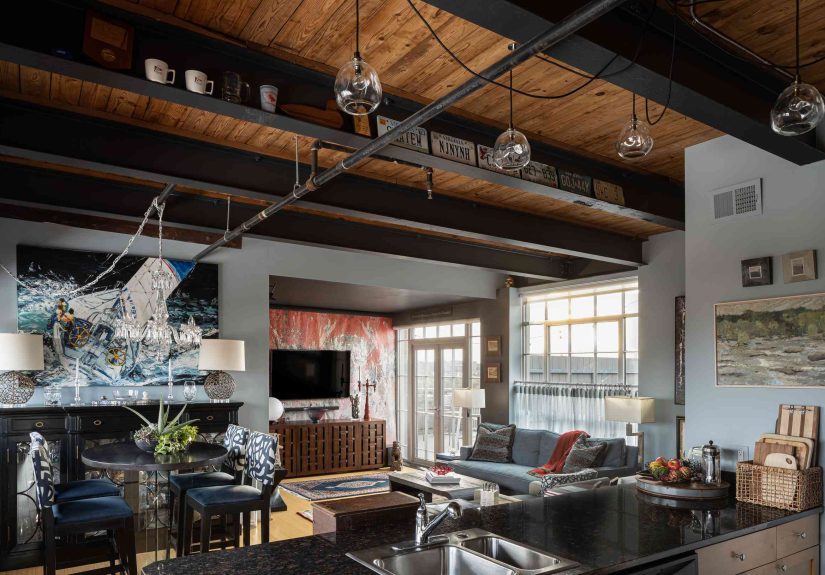
- Install statement pendant lighting. Oversized pendants, dome shades, or cluster lights create industrial drama and help define the seating zone.
- Add “Edison-style” bulbssparingly. They’re fun, but treat them like hot sauce: a little enhances everything; too much and that’s all you taste.
- Mix metals on purpose. Black steel + warm brass can look high-end if you repeat each finish at least twice (lighting + hardware, for example).
- Try a matte black accent. A black fireplace surround, black built-ins, or a black media wall gives the room a crisp, urban edge.
- Layer wood tones for warmth. Industrial doesn’t require one perfect wood finish. Mixing oak + walnut + reclaimed boards can feel collected and real.
- Choose low, clean-lined seating. A streamlined sofa with simple arms keeps the room modern and avoids a heavy “theme set” feeling.
- Add one vintage “work” piece. Think factory stool, drafting chair, metal cart, or an old tool chest used as storage.
- Use open shelving with restraint. Industrial shelving looks great, but curate itbooks, ceramics, baskets, and negative space keep it from becoming visual chaos.
- Balance open shelves with closed storage. Pair shelves with a cabinet or sideboard so you can hide remotes, cords, and the stuff you don’t want to be “display art.”
- Pick a big industrial-style floor lamp. An arched lamp, a tripod lamp, or a task lamp silhouette adds height and a studio vibe.
- Try concrete + softness together. Concrete-look finishes feel best when paired with plush throws, linen curtains, or a thick wool rug.
- Bring in a worn-in textile. Vintage kilim rugs, faded patterns, or distressed textures keep industrial from feeling too new and showroom-y.
- Use oversized art. A single large abstract, black-and-white photography, or a graphic poster can outshine a dozen tiny frames.
- Create a gallery wall with a grid. If you want many pieces, keep frames consistent (black or thin metal) and align edges for a clean architectural look.
- Add greenery to soften hard lines. Tall plants, trailing pothos, or a cluster of smaller plants adds life and breaks up all the straight edges.
- Choose a sculptural side chair. A metal frame chair with a leather sling seat or a bentwood silhouette adds character without clutter.
- Use a bench for flexible seating. A wood-and-metal bench works as extra seating, a landing spot for bags, or a styling surface behind a sofa.
- Go monochrome, then add one warm element. If your room is black/white/gray, add warmth with leather, walnut, or a rust-toned pillow set.
- Lean into “factory windows.” Use grid-pattern curtains, window film, or black mullion-style trim to echo the look of steel windows.
- Let your ceiling do some work. If you have beams, highlight them. If not, consider a subtle wood plank or a darker paint to add depth.
- Expose conduit in a polished way. Visible conduit can look intentional when it’s straight, neat, and paired with clean fixtures (not spaghetti-cable chic).
- Try a brick veneer accent wall. It’s a practical way to get texture and history vibes without major construction.
- Use a metal-and-glass console table. It’s airy, it feels urban, and it won’t weigh down smaller rooms.
- Go for a media console with slatted wood. Slats add texture and warmth, while the linear look complements industrial structure.
- Use a rolling cart as a bar. A vintage-style metal cart can hold glassware and bottlesindustrial, functional, and party-ready.
- Choose “warehouse” curtains. Floor-to-ceiling drapes in linen or heavy cotton add softness and also help acoustics in open-plan spaces.
- Bring in a chunk of stone or marble. A stone side table or marble-topped coffee table adds polish that makes industrial feel more “chic.”
- Pick a statement clock (the right way). One oversized clock can work. Avoid tiny “factory signs” that feel like a themed restaurant.
- Use a neutral sectional for loft-scale comfort. A large sectional in performance fabric makes industrial spaces feel lived-in and family-friendly.
- Add a textured throwyes, even on leather. Wool, faux shearling, or chunky knits soften leather and make it feel inviting.
- Try a black metal bookshelf. Fill it with books, ceramics, and basketsindustrial structure plus everyday warmth.
- Create a reading nook with a task lamp. Pair an accent chair with a bold lamp and a small table for a “studio corner” that feels intentional.
- Use a large mirror to amplify light. Industrial spaces love light. A big mirror with a thin metal frame can double brightness and style.
- Choose concrete-look wall paint or plaster. Limewash or plaster-style finishes add depth without needing actual concrete (which is heavy, emotionally and physically).
- Layer black accents throughout. Repeat black in frames, lighting, table legs, and hardware so the room feels cohesive instead of randomly edgy.
- Blend industrial with Scandinavian warmth. Add lighter wood, simple shapes, and cozy textiles to make “warm industrial” feel welcoming.
- Blend industrial with mid-century lines. A mid-century chair or walnut pieces pair beautifully with brick and black metal for a refined urban mix.
- Add subtle neon or a modern sign. A small neon piece can be playful in a loft-inspired roomjust keep it tasteful, not “open mic night.”
- Use baskets to hide the not-cute stuff. Industrial style is functionalso let storage be practical, especially in open shelving or under-console zones.
- Finish with one “patina” element. A vintage brass piece, distressed wood, or aged metal adds depth so the room doesn’t look freshly assembled yesterday.
Common Mistakes (and Easy Fixes)
Mistake: The room feels like a cold showroom
Fix: Add softness in three layers: a big rug, substantial curtains, and textured throws/pillows. Industrial looks best when it’s comfortable enough to nap in.
Mistake: Too many “industrial” props
Fix: Keep the theme subtle. Swap novelty decor for real materials: a metal floor lamp, a wood-and-steel table, and one strong piece of art.
Mistake: Everything is gray
Fix: Add warmth through wood tones and leather, then introduce one supporting color (olive, navy, rust, or dusty blue) in textiles or art.
Mistake: The space looks cluttered despite “minimal” furniture
Fix: Industrial rooms love negative space. Use closed storage for cords and small items, and limit decor to a few large, intentional pieces.
Experience Notes: What Real Homes Teach You (About Industrial Living Rooms)
Here’s the part most mood boards don’t tell you: industrial living rooms are incredibly livableif you design for real life.
People who choose this style often discover a few repeat lessons once they’re actually using the space every day (with pets, kids, deliveries, and the occasional
“Why is there a sock under the sofa?” mystery).
First: hard surfaces affect sound. Brick, concrete, and big open layouts can make a room echo like you’re hosting karaoke in a parking garage.
The fix isn’t complicatedadd soft absorption in the places that matter: a thick rug, lined drapes, upholstered seating, and even a fabric ottoman.
Many homeowners say the room “clicked” the moment they added a serious rug and full-height curtains. It didn’t just look warmer; it felt calmer.
Second: industrial lighting is mood lightingsometimes too much mood. Exposed bulbs and dark metal fixtures can look amazing,
but if they’re your only light source, the room can feel dim by 6 p.m. (and nobody wants to play “find the remote” in cinematic darkness).
A practical approach people swear by is layering light: overhead for general brightness, a floor lamp for reading, and a table lamp or wall sconce for glow.
Once the lighting is layered, the industrial elements feel intentional instead of cave-adjacent.
Third: the best industrial rooms aren’t purely industrial. Many real spaces that look great in person blend in a “softening style”:
Scandinavian warmth (lighter woods, cozy textiles), mid-century curves (sleek chairs, walnut tones), or even a hint of modern organic (linen, pottery, greenery).
This mix solves a common issue: going too literal can feel like a themed photo set. When you add a few pieces with warmth and shape, the room becomes personal.
Fourth: patina reads as character, but it has to be comfortable. People love distressed wood and aged leatheruntil the chair isn’t comfy
or the coffee table is so rough it snags sweaters. The most satisfying “experience upgrade” is choosing industrial-looking pieces with user-friendly finishes:
sealed wood, performance fabrics, rounded corners where it matters, and storage that hides everyday clutter. Industrial style is supposed to be functional,
so there’s no need to suffer for the aesthetic.
Finally: industrial living rooms reward restraint. Many homeowners say their space looks best when they stop adding “stuff”
and start editing. One oversized artwork beats seven small prints. One killer pendant beats three competing fixtures.
And one well-styled shelf (with breathing room) beats a wall of tiny trinkets. The lived experience is simpler: the room stays easier to clean,
feels more spacious, and still looks impressively put togetherlike you totally meant for it to be that cool.