Table of Contents >> Show >> Hide
- The small-space dining room mindset (so you don’t fight your floor plan)
- 30 Small Dining Room Ideas to Maximize Your Space
- Pick a round table to improve flow
- Choose a pedestal base instead of four legs
- Try a drop-leaf or gateleg table
- Use an extendable table with a leaf you’ll actually use
- Consider a wall-mounted fold-down table
- Build a corner banquette (or fake one with a bench)
- Add storage under banquette seating
- Swap two chairs for a bench on one side
- Use armless chairs to reduce visual bulk
- Pick slim, open-back chairs
- Try “tuckable” stools for bonus seating
- Go transparent with acrylic or glass accents
- Use a narrow rectangular table for long, skinny spaces
- Float the table off the wall (even a few inches)
- Angle the table in a corner for awkward layouts
- Define the dining zone with a rug (yes, even in small spaces)
- Hang curtains higher and wider than the window
- Use a mirror to bounce light and fake depth
- Go monochrome (or tonal) to blur boundaries
- Use bold wallpaper on one wall to create focus
- Choose a light fixture that’s statement-making but correctly scaled
- Add wall sconces to free up ceiling (and table) space
- Use a slim console as a mini sideboard
- Install floating shelves for vertical storage
- Use a bar cart as flexible storage
- Choose a sideboard with doors (not just open shelves)
- Turn a windowsill or ledge into a “micro buffet”
- Keep tabletop décor slim and vertical
- Create a gallery wall to add personality without taking space
- Make the dining area do double duty (on purpose)
- Quick reality check: common small dining room mistakes
- Experience-based advice (): what actually works after the first dinner party
- Final bite
A small dining room is basically the overachiever of the house: it’s asked to host weeknight leftovers, holiday feasts,
homework marathons, and that one friend who always “just needs a minute” (and then stays for three hours).
The good news? You don’t need a bigger roomyou need a smarter one.
The secret sauce is a mix of space-saving furniture, visual tricks, and layout decisions
that keep things comfortable without sacrificing style. Below are 30 practical, doable ideas to help your small dining room
feel bigger, function better, and look like you totally meant for it to be this charming.
The small-space dining room mindset (so you don’t fight your floor plan)
Before we jump into the ideas, here are the three rules that make every small dining room work harder:
-
Protect the “walk zone.” If people have to shuffle sideways like they’re sneaking past a sleeping cat,
your layout is doing too much. -
Choose pieces that earn their rent. In a small dining room, anything that can store, fold, tuck, stack,
or multitask deserves a gold star. -
Keep the room visually light. You can absolutely go boldbut aim for fewer, stronger statements rather than
lots of little cluttery ones.
30 Small Dining Room Ideas to Maximize Your Space
-
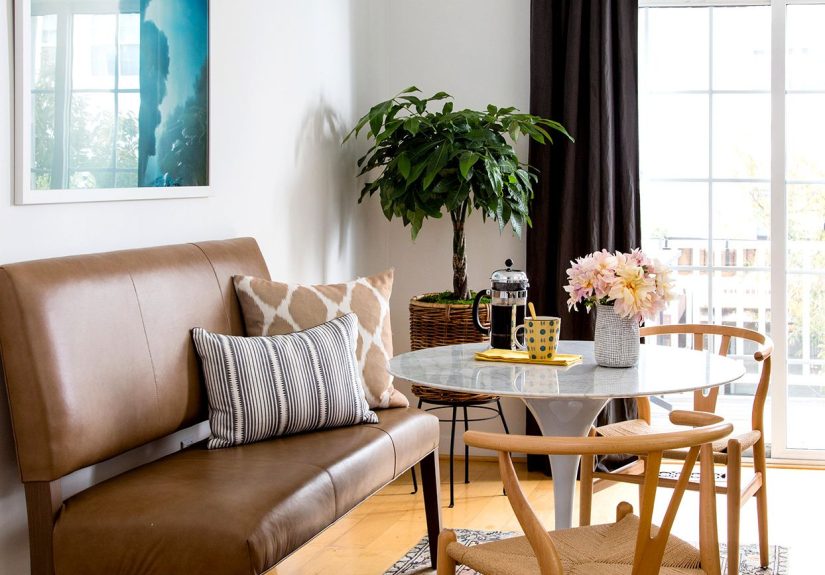
Pick a round table to improve flow
Round tables are the undefeated champs of tight spaces. No sharp corners to bruise hips, and it’s easier to squeeze around
when someone needs to get up mid-meal. Bonus: round tables naturally feel more social (everyone’s in the conversation circle). -
Choose a pedestal base instead of four legs
Pedestal tables reduce “leg clutter” underneath, which means chairs can slide in and out more easily. You’ll get better
knee room and fewer awkward chair-to-table-leg collisions. (Your shins will send thank-you notes.) -
Try a drop-leaf or gateleg table
A table that expands only when you need it is peak small-space logic. Keep it compact for daily life, then open it up for guests.
It’s like having a dining room that can shape-shift without the drama. -
Use an extendable table with a leaf you’ll actually use
If your leaf is buried behind holiday decorations, it doesn’t count. Choose a design with a self-storing leaf or one that’s easy
to pop in, so hosting doesn’t become a home-improvement side quest. -
Consider a wall-mounted fold-down table
Perfect for ultra-small apartments or multipurpose rooms. Fold it down for meals, fold it up when you want open floor space.
Pair with stackable or folding chairs to keep the whole setup sleek. -
Build a corner banquette (or fake one with a bench)
Banquette seating lets you tuck bodies into corners where chairs would waste space. If custom built-ins aren’t happening right now,
a bench pushed into a corner can mimic the same “dining nook” effect. -
Add storage under banquette seating
Hidden drawers or lift-up bench seats can store table linens, seasonal décor, or the fine china you swear you’ll use “someday.”
Small dining rooms love hidden storage like plants love sunlight. -
Swap two chairs for a bench on one side
Benches slide fully under the table, which keeps walkways clear. They’re also great when you need flexible seatingkids can scoot,
adults can squeeze, and everyone feels like they’re at a friendly café. -
Use armless chairs to reduce visual bulk
Arms take up space both physically and visually. Armless chairs look lighter, feel easier to move, and help the room read as less crowded.
If you want comfort, go for upholstered seats or supportive backs instead. -
Pick slim, open-back chairs
Open-back designs allow sightlines to pass through, which makes the room feel bigger. Thin frames also look less heavyespecially in a small
dining room where every inch counts. -
Try “tuckable” stools for bonus seating
Stools can be pulled out when you have guests and tucked away when you don’t. Think of them as seating you can store in plain sight without
the room looking like a chair showroom. -
Go transparent with acrylic or glass accents
Lucite chairs or a glass tabletop visually disappear, which can make a small dining area feel more open. You still get function, but the room
doesn’t feel jam-packed with solid furniture shapes. -
Use a narrow rectangular table for long, skinny spaces
Not every small dining room is square. If yours is more like a hallway with aspirations, a narrower table can fit better and keep movement
comfortable. The goal is flow, not furniture Tetris. -
Float the table off the wall (even a few inches)
It’s tempting to push everything against walls, but that can make the center feel cramped and awkward. Pulling the table slightly away can
improve circulation and make the layout feel intentional rather than “we gave up.” -
Angle the table in a corner for awkward layouts
Diagonal placement can sometimes solve weird room geometry, especially in open-concept areas or corners near kitchens. It softens hard lines and
can create a cozy “nook” vibe without construction. -
Define the dining zone with a rug (yes, even in small spaces)
A rug anchors the table and tells the eye, “This is a dining area, not random furniture floating around.” Choose a rug large enough that chairs
stay on it when pulled outotherwise you’ll be auditioning for a chair-leg obstacle course. -
Hang curtains higher and wider than the window
This trick makes ceilings look taller and windows look bigger. Use lighter fabrics to maximize daylight, especially if your dining room is
tucked into a darker corner of the home. -
Use a mirror to bounce light and fake depth
Mirrors reflect both light and view, which makes tight dining spaces feel more expansive. A large mirror on one wall can be a dramatic,
high-impact movelike giving your room an extra window without any permits. -
Go monochrome (or tonal) to blur boundaries
When walls, trim, and even furniture stay within a related color family, the eye sees fewer harsh breaks. That visual continuity can make a small
dining room feel calmer and larger. -
Use bold wallpaper on one wall to create focus
Counterintuitive but true: small spaces can handle drama. A statement wall draws attention to style rather than square footage. Keep the rest
simpler so the room feels curated, not chaotic. -
Choose a light fixture that’s statement-making but correctly scaled
Good lighting makes a small dining room feel like a destination. A pendant or chandelier adds personality, but scale matterschoose something
bold without swallowing the table like a UFO landing. -
Add wall sconces to free up ceiling (and table) space
Sconces provide layered light without needing floor lamps or bulky fixtures. They’re great for narrow rooms where you want ambiance without
visual clutter. Bonus: they make the room feel “designed.” -
Use a slim console as a mini sideboard
A shallow console can store napkins, candles, and serving pieces without eating the walkway. Top it with a tray to corral essentials so the
surface looks styled, not like a mail drop zone. -
Install floating shelves for vertical storage
When the floor is limited, go upward. Floating shelves can hold glassware, platters, or a small bar setup. Keep the styling simple: a few
pretty pieces beat 47 mugs you never use. -
Use a bar cart as flexible storage
A bar cart can hold serving supplies, dishes, or drinks and roll away when needed. It’s also great in open-concept spaces because it feels
lighter than a full cabinet. -
Choose a sideboard with doors (not just open shelves)
Open shelves are pretty until real life happens. Cabinets with doors hide clutter instantly, which is priceless in a small dining room where
mess is basically always on stage. -
Turn a windowsill or ledge into a “micro buffet”
If you have a deep windowsill, radiator cover, or ledge, use it as a spot for serving dishes during gatherings. It keeps the table clearer and
makes entertaining in a small space feel surprisingly graceful. -
Keep tabletop décor slim and vertical
Massive centerpieces steal functional space fast. Try a narrow vase, a small cluster of candles, or a low bowl. If you want height, go vertical
with something slim so plates still fit comfortably. -
Create a gallery wall to add personality without taking space
Art adds warmth and gives your dining area a “room” feeling even if it’s part of a larger open space. A gallery wall also helps define the zone
like a visual fence, but prettier. -
Make the dining area do double duty (on purpose)
If your dining table is also your desk, craft station, or homework hub, lean into it. Add a stylish basket for supplies, use a pretty desk lamp,
and keep a quick “reset routine” so it’s dinner-ready in five minutes.
Quick reality check: common small dining room mistakes
- Oversized furniture: If the table dominates the room, scale down. Comfort requires breathing room.
- Too many little items: Small décor scattered everywhere reads as clutter. Choose fewer, bigger statements.
- One harsh ceiling light: Layering light (overhead + sconce + lamp) makes spaces feel wider and cozier.
- No storage plan: Without a home for linens, candles, and serving pieces, your table becomes the storage unit.
Experience-based advice (): what actually works after the first dinner party
Here’s the part nobody tells you when you’re scrolling “small dining room ideas” at 11:47 p.m. with a snack in hand: the setup that looks perfect
in photos can be annoying in real life. The most successful small dining rooms aren’t the ones with the fanciest chairsthey’re the ones that
make everyday living smoother. And the difference usually comes down to a few practical habits.
First, the “walk zone” is sacred. People will forgive a tight room; they will not forgive a layout that makes them perform a three-point turn
every time they stand up. If you’ve ever watched guests do the polite chair-scoot dance to escape the table, you already know. The fix is usually
simple: switch to a pedestal table, trade one row of chairs for a bench, or rotate the table slightly so the busiest path stays open.
It’s not glamorous, but it’s the kind of change you feel immediately.
Second, storage is the quiet hero. In small dining rooms, the mess is never “somewhere else”it’s right there, staring at you while you eat.
Hidden storage (a bench with a lift top, a sideboard with doors, a console with baskets) keeps the room looking calm even when life is not.
The best trick is to store what you use weekly within arm’s reachnapkins, placemats, candlesso setting the table feels easy instead of like
a scavenger hunt. Reserve the hard-to-reach storage for seasonal items. Your future self will be grateful.
Third, lighting changes everything. Small rooms can feel like forgotten corners if they’re lit like a basement hallway. A well-placed pendant over
the table makes the space feel intentional. Add warm side lighting (sconces, a small lamp on a console, even a picture light) and suddenly the
room feels wider because your eyes have more places to land. Also: good lighting is flattering, which matters more than we admit. Nobody wants to
look like they’re being interrogated by a ceiling bulb while eating pasta.
Fourth, build a five-minute “reset.” Small dining rooms don’t have the luxury of staying messy. The simplest routine is: clear surfaces, tuck chairs,
corral odds and ends into a basket, and leave one pretty thing out (a small vase, a bowl, a candle trio). This keeps the room ready for both
dinner and life. If your dining table is also your desk, keep a tray or basket dedicated to office supplies so it can all vanish quickly when
someone says, “Should we eat at the table tonight?”
Finally, don’t underestimate comfort. Space-saving doesn’t mean stiff. A small dining nook with a cushioned bench, a soft rug underfoot, and
a chair that supports your back will get used more often. And the more it’s used, the more it becomes the heart of the homesmall square footage,
big energy. The goal isn’t to trick people into thinking your room is huge. The goal is to make your small dining room feel easy, welcoming,
and ready for whatever shows upweekday dinners, birthday cake, or that “quick coffee” that turns into a two-hour catch-up.
Final bite
The best small dining room ideas aren’t about cramming more furniture into less spacethey’re about choosing pieces that fit, moving traffic smoothly,
and making the room feel like it belongs in your life. Start with one upgrade (a round table, a bench, better lighting), then build from there.
Your dining room doesn’t need more square footage. It needs better strategyand maybe fewer chairs with chunky arms.