Table of Contents >> Show >> Hide
- What Makes Metal Detecting Finds So Addictive?
- 30 Brilliant Stories: The Coolest Things People Found With Metal Detectors
- The Dog-Walk That Turned Into a Multi-Million-Dollar Coin Hoard
- The Cornfield Signal That Sparked “Is This Real Life?”
- The Treasure Coast Haul: Coins From a 1715 Shipwreck
- The “Gold Coin + Gold Chain” Double Whammy
- The Heist Plot Twist: When Treasure Comes With Legal Drama
- The Beach Volunteer Who Returns Rings Like a Real-Life Side Quest
- The Clearwater Comeback: A Lost Ring, Found Days Later
- The $40,000 Beach Ring That Didn’t Stay Lost
- The Class Ring Time Capsule: Nearly 50 Years in the Sand
- The 55+ Year Class Ring Reunion (Yes, Really)
- The Roman Sword That Made a Forest Feel Like a Museum
- The Bronze Age Dagger With Cosmic Decoration
- The Netherlands Coin Discovery That Rewrote a Local Story
- The “Is This a Magic Thing?” Roman Object Find
- The Detectorist Who “Found Gold”… Then Found Space
- The Research Team Who Used Detectors to Pinpoint a Hard Truth
- The Sea of Galilee Hoard: When a Signal Leads to Gold
- The Anglo-Saxon Motherload: The Staffordshire Hoard
- The Beach Where Coins Appear “After the Storm”
- The Playground Surprise: A Ring Under the Swings
- The Old Fairground That Still Pays Rent in Coins
- The Button That Turned “Empty Field” Into “Oh… This Happened Here”
- The Token That Revealed a Long-Gone Business
- The “I Thought It Was a Nail” Pocket Watch Moment
- The First Silver Coin That Hooks You for Life
- The Underwater “Ping” That Ends in a Handful of History
- The Farm Permission That Delivered an Unexpected Relic
- The Day a Detectorist Found Something and Immediately Stopped Digging
- The “Trash Patch” That Hid the Best Item
- The Find That Was Valuable… Because It Became a Story
- Hunt Smart: Responsible Metal Detecting in the U.S. (Quick, Useful, Non-Buzzkill Version)
- +: What Metal Detecting Actually Feels Like (The Stuff You Don’t See in the Highlight Reel)
- Conclusion: The Best Finds Are the Ones With a Plot
Metal detecting is basically time travel… except you’re wearing sunscreen, arguing with a shovel, and somehow collecting enough pull tabs to open your own
artisanal soda museum. But every so oftenbeepthe universe hands you a story so good you’ll tell it forever (and your friends will nod politely while
secretly wondering if you’ve started naming your favorite bottle caps).
The “coolest things” aren’t always the most expensive. Sometimes it’s a coin that puts a date on a forgotten place, a ring that makes someone cry happy tears,
or a strange relic that turns your casual weekend hobby into a call with a museum. Here are 30 true-to-life, grin-inducing, “no way” storiessome famous,
some everydayabout what people have actually found while swinging a metal detector.
What Makes Metal Detecting Finds So Addictive?
A metal detector doesn’t just find metalit finds patterns. The heavy foot-traffic line where people always sat. The patch of sand where waves
love to rearrange yesterday’s losses into today’s jackpots. The forgotten corner of a field where history got paused, pocketed, and dropped.
And because the ground is basically the world’s messiest filing cabinet, you never know if the next signal is a modern coin, a century-old button, or
something that makes your brain yell, “THIS SHOULD BE IN GLASS.”
30 Brilliant Stories: The Coolest Things People Found With Metal Detectors
The Dog-Walk That Turned Into a Multi-Million-Dollar Coin Hoard
A couple in Northern California noticed a rusty can sticking out of the ground while walking their dog. Curiosity became a careful dig, which became
multiple cans, which became a staggering stash of historic gold coins. The best part? They didn’t go looking for treasuretreasure essentially tripped them.The Cornfield Signal That Sparked “Is This Real Life?”
In Kentucky, a detectorist sweeping farmland got a hit that didn’t behave like trash. The hole kept producing gold coinsthen more coinsthen the kind of
spread that makes you check your surroundings like you’re in a movie montage. Finds like this are why people keep swinging after hours of nothing.The Treasure Coast Haul: Coins From a 1715 Shipwreck
Off Florida’s coast, treasure hunters working a famous wreck zone used underwater metal detectors and recovery tools to bring up historic Spanish coins.
It’s the kind of story that sounds like folklore until you remember: the ocean is big, storms are chaotic, and history has pockets.The “Gold Coin + Gold Chain” Double Whammy
Some shipwreck recoveries aren’t just a few scattered pieces. One season produced not only gold coins but lengths of gold chainproof that “treasure” isn’t
always a metaphor. Underwater signals can be faint, messy, and thrilling, because sand moves… and occasionally uncovers your retirement plan.The Heist Plot Twist: When Treasure Comes With Legal Drama
Not every treasure story is cheerful. A major case involving shipwreck coins showed how seriously authorities treat historical artifacts and permitted
salvage. It’s a reminder that “I found it!” and “I can keep it!” are not the same sentenceespecially underwater.The Beach Volunteer Who Returns Rings Like a Real-Life Side Quest
On a New England beach, a volunteer detectorist found a wedding ring and tracked down its owner. Stories like this happen more than people realizethere’s
a whole unofficial network of detectorists who treat “lost jewelry” posts like a mission briefing.The Clearwater Comeback: A Lost Ring, Found Days Later
A ring disappears in beach sand and suddenly it’s like it entered another dimension. Yet detectorists regularly prove it’s still therejust buried, shifted,
and waiting. One Florida story ended with a happy reunion after a group searched and recovered the missing band.The $40,000 Beach Ring That Didn’t Stay Lost
A Florida detectorist scanning the sand dug up a diamond ring valued so high you’d expect it to have its own security detail. The real win wasn’t the
sparkleit was returning it to the owner. The internet loves a treasure story, but it loves a good return even more.The Class Ring Time Capsule: Nearly 50 Years in the Sand
A metal detectorist found a high school ring on a Florida beachone that had been lost for decades. Engraved jewelry is basically the cheat code of
metal detecting: it’s proof of ownership, plus an instant plotline, plus the chance to be someone’s hero for the day.The 55+ Year Class Ring Reunion (Yes, Really)
Another class ring story went even bigger: a ring lost in the late 1960s and found again more than half a century later. Saltwater, sand, and time don’t
always winespecially when metal and engraving keep the identity intact.The Roman Sword That Made a Forest Feel Like a Museum
In Poland, metal detectorists discovered a rare Roman-era swordan object with the kind of presence that instantly changes your posture from “hobbyist” to
“person holding history.” Finds like this often involve quick reporting and collaboration with professionals to document properly.The Bronze Age Dagger With Cosmic Decoration
Also in Poland, detectorists uncovered an ancient dagger decorated with tiny stars and crescent moons. It’s the kind of artifact that makes you realize
ancient people weren’t just survivingthey were creating beauty, symbolism, and identity in metal.The Netherlands Coin Discovery That Rewrote a Local Story
Two detectorists in the Netherlands stumbled onto hundreds of coins connected to a major historical period. Big coin scatters like that can indicate trade,
movement, conflict, or simply someone’s very bad day centuries ago.The “Is This a Magic Thing?” Roman Object Find
A detectorist found a mysterious Roman object that researchers think may have been linked to ritual or “magic.” The thrilling part isn’t just the itemit’s
the question it creates. Some finds are valuable because they refuse to be fully explained.The Detectorist Who “Found Gold”… Then Found Space
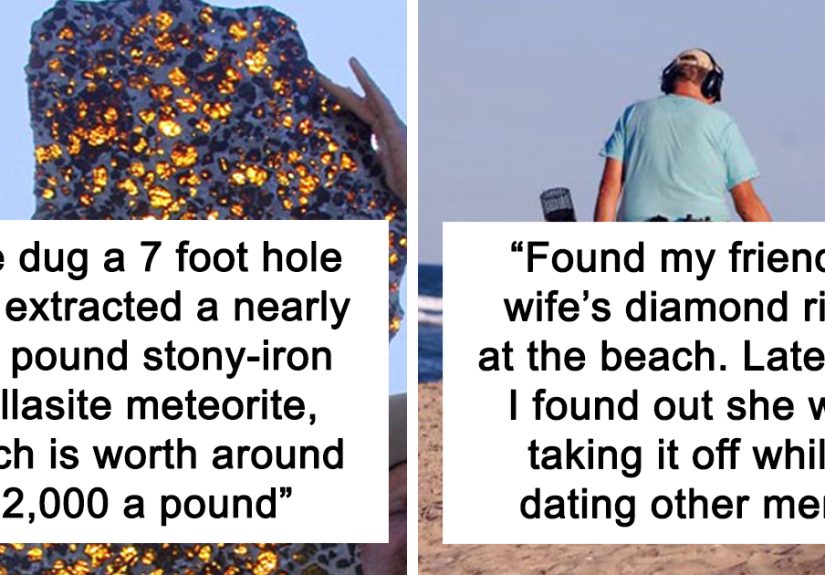
One of the strangest metal detecting stories begins with a heavy “gold rock” that turned out to be a meteorite. Metal detectors can pick up iron-rich
space rocks, and the idea that your weekend hobby might connect you to the early solar system is… a lot to process before lunch.The Research Team Who Used Detectors to Pinpoint a Hard Truth
Metal detectors aren’t only for hobbyists. Archaeologists use them, toosometimes to locate battlefield debris, uniform pieces, or evidence that helps
confirm historical accounts. It’s not “treasure,” exactly, but it can be more important than treasure.The Sea of Galilee Hoard: When a Signal Leads to Gold
A metal detectorist working with an archaeological project helped uncover a hoard of gold coins and jewelry near the Sea of Galilee. That’s the dream
scenario: the beep that becomes a documented discovery rather than a mystery object tossed into a drawer.The Anglo-Saxon Motherload: The Staffordshire Hoard
In England, an amateur detectorist found what became known as the Staffordshire Hoardan enormous collection of Anglo-Saxon-era gold and silver. It’s the
kind of discovery that becomes a cultural headline because it’s not one cool itemit’s thousands, and it reshapes what we know.The Beach Where Coins Appear “After the Storm”
Many detectorists have a ritual: go after weather. Storms strip sand, rearrange layers, and sometimes reveal coins and jewelry that were out of reach for
years. The story is often simple“I went after the storm”and the results can be cinematic.The Playground Surprise: A Ring Under the Swings
It’s almost unfair how often playgrounds pay off. People pump their legs, hands fling outward, and rings slip. Detectorists get a clean signal, pop a neat
plug, and there it isa tiny circle with an enormous emotional impact.The Old Fairground That Still Pays Rent in Coins
Fairgrounds, picnic groves, and parade routes are basically historic “spending zones.” One detectorist’s best day might be a pocket spill of older coins
that tells you exactly where crowds stood decades ago.The Button That Turned “Empty Field” Into “Oh… This Happened Here”
Military and uniform buttons are classic relic-hunting finds. A single marked button can date a site and hint at who stood there. Detectorists often
describe this as the moment the past stops being abstract and becomes… local.The Token That Revealed a Long-Gone Business
Store tokens and transit tokens are small, ordinary, and weirdly powerful. One signal can uncover the name of a business that disappeared before your
grandparents were bornproof that “cool finds” can be humble and still fascinating.The “I Thought It Was a Nail” Pocket Watch Moment
Sometimes the detector reads like junk. You dig anyway (because hope is a disease). Then out comes an old pocket watch case, or a decorative piece of
jewelry, or a relic that proves you should never judge a signal by its grumpy tone alone.The First Silver Coin That Hooks You for Life
Every detectorist remembers their first silver coin. It’s rarely a fortune. But it’s a milestone: a bright, older signal that says the place has depth,
history, and potential. After that, “just one more pass” becomes your entire personality.The Underwater “Ping” That Ends in a Handful of History
Shallow-water metal detecting turns a beach hunt into a balancing act: waves, currents, and sand that refills holes the second you blink. But the payoff
can be incrediblecoins, jewelry, and artifacts that settled where swimmers and boaters once moved.The Farm Permission That Delivered an Unexpected Relic
Getting permission to detect private land can open up older groundespecially near former homesteads. A common “best find” story starts with a polite
introduction and ends with a relic that’s been waiting quietly behind a barn line for generations.The Day a Detectorist Found Something and Immediately Stopped Digging
The most responsible stories aren’t the flashiest: a detectorist hits multiple old items clustered together and realizes it might be an archaeological
context. They mark the location, take photos, and report it. That’s how a hobby can help preserve history instead of scattering it.The “Trash Patch” That Hid the Best Item
Veteran detectorists will tell you: the best stuff often lives among the worst stuff. A site full of modern trash can also be where people gathered for
decadesmeaning older items are still there, masked by newer chaos. Patience turns noise into treasure.The Find That Was Valuable… Because It Became a Story
A last category: the object that isn’t priceless, but changes someone’s day. A returned ring. A class ring with a name. A charm that someone thought was
gone forever. In metal detecting, the emotional value can dwarf the market valueand that’s the coolest currency of all.
Hunt Smart: Responsible Metal Detecting in the U.S. (Quick, Useful, Non-Buzzkill Version)
If you want your “brilliant story” to end with high-fives instead of paperwork, remember three basics:
permission, place rules, and context.
- Know where detecting is prohibited. For example, U.S. national parks generally ban metal detecting and removing artifacts. Always check the
land manager’s rules before you go. - Federal lands and archaeology laws matter. Many federal areas require permits for any digging, collecting, or metal detectingespecially if
items could be archaeological resources. - Fill your holes and leave sites better than you found them. Clean recoveries protect parks, protect the hobby’s reputation, and keep access
open for everyone. - When in doubt, report significant finds. If you hit multiple older artifacts clustered together, you may be looking at a site, not a single
lost item. Documentation beats guessing. - Underwater treasure hunting is its own world. Permits, salvage rights, and state rules are seriousespecially in famous wreck areas like
Florida’s Treasure Coast.
+: What Metal Detecting Actually Feels Like (The Stuff You Don’t See in the Highlight Reel)
The first experience every new detectorist shares is the “beep-to-trash ratio.” You imagine cinematic discoveries, but your first week is mostly aluminum:
pull tabs, can slaw, foil wads that could’ve been a historic coin in another life. The trick is learning to enjoy the process anywaybecause those early digs
teach your ears and hands what “real” signals feel like. A crisp tone at six inches hits different than a scratchy surface chirp, and your brain slowly
builds a weird new skill: translating sound into probability.
Then there’s the rhythm. Sweep, overlap, sweep again. The ground becomes a grid you’re painting with patience. You learn that “old places” aren’t always old
findssometimes the best drops happen where people sat yesterday. Beaches are the perfect classroom because they reset constantly. Tides shift the
sand, storms carve new layers, and a site that was dead last weekend suddenly lights up like a slot machine (if slot machines paid out in quarters and
occasional heartbreak).
You also learn the emotional rollercoaster of a “maybe.” The target ID looks promising. You cut a neat plug (because you’re civilized). You see something
round. Your heart does a backflip. It’s a bottle capspecifically the one bottle cap in the world shaped like hope. You sigh, you laugh, you keep going.
Because the next signal might be the one that makes you call your friend like, “You’re not going to believe this,” and they immediately believe it because
detectorists are basically a support group for improbable luck.
The best experiences, though, involve people. Someone posts “lost ring” online, and you show up like a mildly muddy superhero. You ask where they stood, how
they moved, what they were doing. You mark the area and search it like a calm, methodical detective. When you finally find it, the reaction is never about
money. It’s relief, gratitude, sometimes tears, sometimes laughter. It’s proof that small objects can carry big meaningand that your hobby can be useful
beyond your own excitement.
Over time, you start chasing stories instead of targets. A fairground map. An old photo. A park hill where families watched fireworks for decades. You’re not
just hunting metalyou’re hunting where people used to be. And when you do pull something older from the soil, you feel a strange mix of pride and
humility. Pride because you worked for it. Humility because you’re holding a piece of someone else’s life. That’s when metal detecting stops being a gadget
hobby and turns into a quiet way of connecting with historyone beep at a time.
Conclusion: The Best Finds Are the Ones With a Plot
Sure, big coin hoards and shipwreck treasure make headlines. But the everyday miraclesreturned rings, long-lost class rings, tokens from vanished businesses,
relics that confirm a forgotten placeare what make metal detecting such a powerful hobby. The ground is full of stories. You just need the patience (and the
willingness to dig up 47 bottle caps) to hear them.