Table of Contents >> Show >> Hide
- Before the 3 ways: the truth about “skinny thighs” (and why this still works)
- Way #1: Choose strokes and drills that actually train your thighs
- Way #2: Use interval training so swimming burns more (and shapes more)
- Way #3: Add smart resistance + support habits (so you get lean legs, not cranky legs)
- A simple 4-week lean-thigh swim plan (3 days/week)
- Common mistakes that block “skinny thigh” results
- FAQ: Quick answers swimmers actually need
- Conclusion
- Real-World Poolside Experiences
If your thighs had a customer service line, they’d probably put you on hold with, “Have you tried… the pool?” Swimming is one of those rare workouts that can make you feel like a graceful sea creature while quietly asking your legs to do real work. And yesdone the right way, it can help your thighs look leaner, tighter, and more defined.
But first, a quick reality check (don’t worry, it’s friendly): “skinny thighs” isn’t a single exercise away. It’s the combo of overall fat loss plus muscle tone plus your genetics (your body’s favorite “because I said so” policy). The good news? Swimming can support all of thatespecially when you stop doing the same comfy laps forever and start swimming with a plan.
Before the 3 ways: the truth about “skinny thighs” (and why this still works)
You can’t pick where your body burns fat like you’re ordering off a menu. If you want your thighs to slim down, the big lever is typically reducing total body fat. Swimming helps because it’s cardio, it’s low-impact, and it recruits big muscle groups meaning it can burn a meaningful number of calories and improve fitness without your knees filing a formal complaint.
Meanwhile, the “thigh look” most people want is usually lean + shaped. That comes from building muscular endurance and definition in the legs while your overall body composition improves. So we’ll do two things at once: swim in a way that challenges your thighs and use intensity strategically so the work actually changes your body.
Way #1: Choose strokes and drills that actually train your thighs
If you only ever swim easy freestyle, your heart gets a nice workout… and your thighs mostly get a light part-time job. To lean out your thighs, you want swimming that hits the legs harderwithout turning every session into a flailing survival documentary.
1) Make breaststroke kick your “inner-thigh & glute” tool (carefully)
Breaststroke is famous for hammering the legsespecially the inner thighs (adductors), glutes, and hamstrings. It’s also the stroke most likely to annoy knees if your kick is too wide or torque-y. The fix is technique and moderation:
- Think “hip-driven” kick, not “knees do everything.”
- Keep the kick compact (don’t force a giant frog kick).
- If you feel knee pain, swap to flutter-kick sets and revisit form later.
2) Use dolphin kick (yes, like a mermaid) for full-thigh engagement
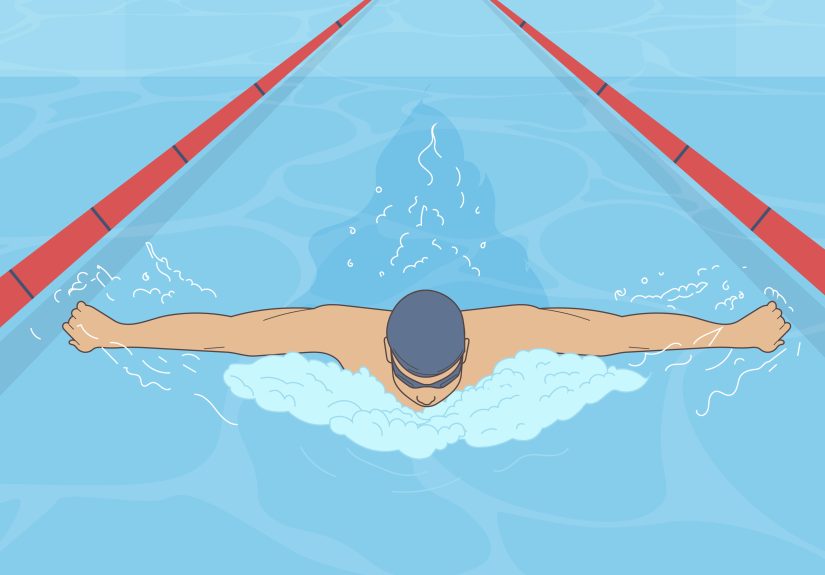
Dolphin kick (on your stomach or back) recruits hips, glutes, core, and the entire length of the legs. It’s excellent for building that “long, athletic” look because it trains your legs as a coordinated unit rather than a bunch of separate parts arguing in traffic.
3) Backstroke + steady flutter kick for “lean-leg” endurance
Backstroke is underrated for legs because it makes your flutter kick work continuously while your upper body stays surprisingly chill. If you struggle with breathing rhythm in freestyle, backstroke sets can help you keep intensity high without stopping every 25 yards to negotiate peace terms with your lungs.
A thigh-targeting swim set you can steal (20–30 minutes)
Warm-up (5 minutes): Easy swim + 4 x 25 easy kick (rest as needed)
Main set (repeat 2–3 rounds):
- 4 x 25 backstroke steady (rest 15–20 seconds)
- 4 x 25 kick (flutter kick with board or on back) moderate-hard (rest 20 seconds)
- 2 x 25 breaststroke technique-focused (rest 20–30 seconds)
- 2 x 25 dolphin kick (with fins if needed) smooth-fast (rest 30 seconds)
Cool down: Easy swim 2–4 minutes
Way #2: Use interval training so swimming burns more (and shapes more)
“Swimming for skinny thighs” isn’t about swimming foreverit’s about swimming with enough intensity to change your metabolism and body composition. Intervals help because they let you work hard in short bursts, recover just enough to do it again, and rack up quality effort.
Here’s the simple rule: if your swims always feel like a spa day, you’ll mostly get spa-day results. If you sprinkle in structured hard efforts, you’ll signal your body to adaptstronger legs, better conditioning, and (when paired with smart eating) a leaner look over time.
How hard is “hard”?
Use a 1–10 effort scale (RPE). Easy is 3–4, moderate is 5–6, hard is 7–8, and “I can see my life choices” is 9–10. For fat-loss-friendly intervals, you want a lot of time at 7–8, not constant 10.
Beginner interval session (no stopwatch drama)
- Warm-up: 6–8 minutes easy swim
- Main set: 10 x 50 at RPE 7 (rest 20–30 seconds)
- Leg finisher: 6 x 25 kick at RPE 7–8 (rest 25–35 seconds)
- Cool down: 4 minutes easy
Intermediate “thigh burner” intervals (35–45 minutes)
- Warm-up: 200 easy + 4 x 50 build (each 50 gets a bit faster)
- Main set:
- 4 x 100 at RPE 7 (rest 20 seconds)
- 8 x 50 at RPE 8 (rest 15–20 seconds)
- 6 x 25 kick fast (rest 25–30 seconds)
- Cool down: 200 easy
Why this helps thighs look leaner
Intervals do three useful things: (1) they increase total workload without endless time in the pool, (2) they keep your legs under repeated tension (hello, muscular endurance), and (3) they raise overall training demand so your body has a reason to adapt. Combine that with consistent weekly volume and you’re playing the long game the only game fat loss actually respects.
Way #3: Add smart resistance + support habits (so you get lean legs, not cranky legs)
Swimming already has built-in resistancewater makes sure of that. But you can amplify leg work intelligently, then back it up with recovery and nutrition so the changes show up in the mirror.
Use resistance tools like seasoning, not like a fire extinguisher
- Short fins: Great for building kick strength and ankle mobility. Start with small doses (4–8 x 25) so your calves don’t revolt.
- Kickboard: Helps isolate legs, but don’t over-arch your lower back. If it bothers you, kick on your back instead.
- Drag gear (optional): Drag shorts or a light resistance belt can increase effort, but they’re “nice to have,” not required.
Do 2 quick dryland moves so thighs don’t do all the work alone
“Skinny thighs” are often a glute story in disguise. When glutes are undertrained, thighs compensate and can feel perpetually tight or overworked. Twice a week, do:
- Glute bridges: 3 sets of 10–15
- Reverse lunges: 2–3 sets of 8–10 per side
This supports cleaner kicking mechanics and better leg drivemeaning you can train harder in the pool with less “my knees hate me” energy.
Nutrition: the unglamorous hero of thigh slimming
If your goal is slimmer thighs, you’ll usually need a consistent calorie deficit (not a crash dietjust a steady trend), plus enough protein to support muscle while you’re training. A common trap is the “I swam, therefore I deserve a pastry tower” mindset. You do deserve joy. Just maybe not a pastry tower every time.
Try this instead: eat a normal balanced meal within a couple hours after swimming (protein + carbs + colorful produce), hydrate, and keep your overall weekly intake aligned with your goal. Swimming can increase appetiteplan for it rather than getting ambushed.
A simple 4-week lean-thigh swim plan (3 days/week)
You don’t need to swim every day. You need consistent progression. Here’s a plan that increases either distance or intensity each week without turning your schedule into a chlorinated second job.
Week 1: Build the base
- Day A: Technique + thigh-targeting set (Way #1 set)
- Day B: Beginner intervals (10 x 50)
- Day C: Easy steady swim 20–30 minutes + 6 x 25 kick
Week 2: Add a little more work
- On intervals day, add 2 more 50s (12 x 50 total) or shorten rest by 5 seconds.
- On steady day, add 5 minutes or a few extra easy laps.
Week 3: Push intensity (not panic)
- Swap some 50s for 25 fast / 25 easy patterns inside each 50.
- Add a small fin set: 6 x 25 dolphin kick (smooth-fast).
Week 4: Consolidate and test
- Repeat Week 3 but aim for slightly better consistency: smoother pace, fewer breaks, cleaner technique.
- Optional mini-test: time one 200-yard swim at a strong but controlled effort and compare it to Week 1.
Common mistakes that block “skinny thigh” results
- Only swimming easy: You’ll feel good, but change comes slower.
- Only doing breaststroke: Great leg work, but repetitive stress can irritate kneesmix strokes.
- Going all-in on fins: Too much too soon can overload calves and ankles.
- Reward-eating without noticing: Swimming can spike hungerplan post-swim meals.
- Inconsistency: Two great weeks and then ghosting the pool won’t build momentum.
FAQ: Quick answers swimmers actually need
How often should I swim to slim my thighs?
A strong starting point is 3 sessions per week, with at least one interval day. If you’re already fit, 4–5 shorter sessions can work toobut consistency beats heroics.
Will swimming make my thighs bigger?
For most people, swimming leads to a leaner, more defined look, not bulky thighs. Significant size gain typically requires heavy resistance training plus a calorie surplus. Swimming does build muscle endurance, thoughso expect “firmer” more than “bigger.”
Which stroke is best for thighs?
Breaststroke and dolphin kick are the most leg-dominant, while backstroke can keep legs working continuously. The best choice is the one you can do with good form and repeat weekly.
What if I can’t swim well yet?
Start with short repeats (25s and 50s), use a kick-on-back option, and prioritize technique. Better form = more effective leg work = fewer unnecessary breaks.
How long until I see changes?
Many people feel stronger in 2–4 weeks and see visible body-composition changes in 6–12 weeks, depending on training consistency, nutrition, sleep, and starting point.
Conclusion
Getting “skinny thighs” from swimming is less about magical kicks and more about smart structure. Use stroke choices that challenge your legs (Way #1), add intervals so you’re not just sightseeing in Lane 3 (Way #2), and support it all with resistance tools, glute-friendly dryland, and nutrition (Way #3).
Stick with it, progress gently, and keep your technique clean. Your thighs will get the messageright after they stop pretending they didn’t receive it.
Real-World Poolside Experiences
If you hang around lap swimmers long enough, you’ll notice a pattern: people don’t usually quit because the workouts “don’t work.” They quit because they do the same comfy routine until boredom wins. The swimmers who get noticeably leaner legs almost always change one thingtheir sessions stop being random.
A common early experience is the “kicking awakening.” Someone starts adding dedicated kick setsmaybe 6 x 25 flutter kick at a moderate-hard paceand suddenly discovers muscles along the front of the thighs and hips that have been living rent-free. The first week can feel comical: legs heavy, kick pace inconsistent, and a brief moment of wondering whether the water got thicker overnight. But by week two or three, that same swimmer often reports two wins: (1) they can hold a steady kick without cramping, and (2) their legs feel firmer walking up stairs.
Another frequent storyline: the breaststroke relationship. People try breaststroke because it “hits the thighs,” then get overexcited and do 30 minutes of it like they’re auditioning for a frog documentary. When knees complain, they assume swimming “isn’t for them.” In reality, the better experience comes from small, technique-focused doses. Swimmers who keep breaststroke kicks compact, focus on hip movement, and balance it with backstroke or freestyle tend to get the thigh benefits without the joint drama. They also learn something oddly empowering: good technique makes the workout harder in the right places and easier in the wrong places.
Then there’s the interval effectusually the most noticeable shift for body composition. Many swimmers describe the first interval day as a surprise. A steady 30-minute swim feels “fine,” but 10 x 50 at a strong pace with short rest? That hits different. The rest feels short, the heart rate climbs, and the legs start to feel like they’re pushing water uphill. The funny part is how quickly the body adapts. After a few weeks, swimmers often notice they’re not stopping at the wall as long, their breathing settles faster, and the same set feels more controlled. That’s fitness improving in real time.
One of the most relatable experiences is appetite. Swimming can make you hungry in a special, highly persuasive way, like your stomach is writing marketing copy: “You worked hard. You need a snack the size of a surfboard.” Swimmers who get leaner thighs usually don’t “never eat treats.” They just build a post-swim routine: a real meal with protein and carbs, water, and a plan. They keep snacks convenient but reasonableGreek yogurt, a sandwich, fruitso hunger doesn’t hijack their day. Over time, that consistency is what turns strong workouts into visible results.
Finally, swimmers often report a confidence shift that has nothing to do with a tape measure. Legs feel more capable: treading water gets easier, kicks feel more powerful, and day-to-day movement feels lighter. The mirror changes matterbut so does the feeling that your body is training for something real. And if you can learn to enjoy the process (and laugh at the occasional goggle mishap), you’re far more likely to stick with it long enough for “skinny thighs” to become a side effect, not the only reason you show up.