Table of Contents >> Show >> Hide
- Before You Pick a Style: 4 Smart Attached-Pergola Basics
- 1) The Patio-Frame Pergola (A Classic Outdoor Living Room)
- 2) The Deck-Extension Pergola (So the Deck Feels Finished)
- 3) The Two-Tone Pergola (Instant Designer Cred)
- 4) The Modern Minimal Pergola (Clean Lines, Big Impact)
- 5) The Pergola-with-Polycarbonate Top (Light, But Not Sunburn)
- 6) The Outdoor Kitchen Pergola (Because Grilling Is a Sport)
- 7) The Small-Space Side-Patio Pergola (Tiny Footprint, Huge Upgrade)
- 8) The Corner-Wrap Pergola (Architectural “Hug” Around the House)
- 9) The Entry or Portico-Style Pergola (Curb Appeal That Works)
- 10) The Garage-Side Pergola (A Surprising Place for Shade)
- 11) The Pergola with Outdoor Curtains (Resort Mode, Activated)
- 12) The “Living Roof” Pergola (Vines = Nature’s Dimmer Switch)
- 13) The Pergola with a Privacy Wall (Block Neighbors, Keep Style)
- 14) The Pergola that Matches Interior Trim (Seamless Indoor-Outdoor Flow)
- 15) The Mixed-Materials Pergola (Wood + Metal for a Custom Look)
- 16) The “Zone Maker” Pergola (One Patio, Multiple Purposes)
- Shade and Style Upgrades That Make Any Attached Pergola Better
- Real-World Experiences: What People Love (and What They Wish They’d Done)
- Conclusion
An attached pergola is basically your home saying, “Come hang out outside,” and your patio replying,
“Only if you bring shade.” Because when a pergola connects to your house, it can feel like a true outdoor room
not just a random structure plopped in the yard. Done right, it adds architectural interest, improves comfort,
and makes your outdoor space look intentionally designed (instead of “we impulse-bought patio chairs”).
In this guide, you’ll find 16 attached pergola ideas that work across stylesmodern, farmhouse, coastal, traditional
plus practical ways to dial up shade without making your backyard feel like a cave. Along the way, we’ll cover the
real-world details that separate “Pinterest-perfect” from “why is water going behind my ledger board?”
Before You Pick a Style: 4 Smart Attached-Pergola Basics
1) Treat the house connection like a weatherproofing project
Anytime you attach a structure to a home, water management matters. The best-looking pergola in the world isn’t worth
a hidden leak. A pro (or a very code-savvy DIYer) should plan the attachment, flashing, and water-resistive barrier
details so the connection stays dry season after season.
2) Expect permits (sometimes) and always check locally
Permit rules vary by city, HOA, size, and whether the structure is attached. In many areas, attachment can change the
requirements compared with a freestanding pergola. Make the quick call to your local building departmentit’s cheaper
than redesigning mid-project.
3) Decide how “roof-like” you want it
Classic pergolas are open-slat by design. But you can add partial cover (lattice, fabric, vines) or near-solid cover
(polycarbonate panels, metal panels, or a louvered system). Your climate, sun exposure, and how you use the space will
drive this decision.
4) Don’t forget the ground game
Posts need stable support, and footings may be required depending on your area and design. If digging is involved,
call 811 to locate underground utilities. Not glamorous, but extremely “keep-your-weekend-intact” energy.
1) The Patio-Frame Pergola (A Classic Outdoor Living Room)
Attach a pergola right outside your back door to frame a dining set or lounge area. Keep the lines simple and let the
furniture do the talking. Shade boost: add a retractable canopy so you can go from “sunny brunch” to “cool dinner”
without moving a chair.
2) The Deck-Extension Pergola (So the Deck Feels Finished)
If you have a deck that feels a little “platform in the yard,” an attached pergola adds structure and visual height.
Match the pergola finish to your deck railing or trim for a cohesive look. Shade boost: use a slatted top oriented
to block the harshest afternoon sun.
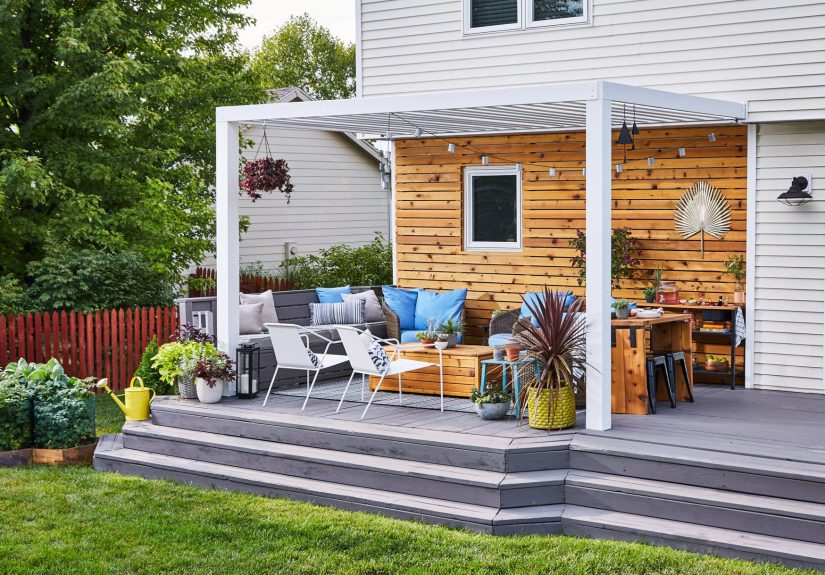
3) The Two-Tone Pergola (Instant Designer Cred)
Paint or stain the pergola a contrasting colorthink white pergola on a darker exterior, or a warm wood tone against
light siding. The house connection makes it read like architecture, not a kit. Shade boost: weave outdoor fabric
panels between rafters for a breezy, cabana vibe.
4) The Modern Minimal Pergola (Clean Lines, Big Impact)
Go sleek: squared posts, simplified beams, and minimal ornamentation. This style looks especially sharp on modern
homes and contemporary remodels. Shade boost: consider an adjustable louvered roof system that lets you tune light,
airflow, and rain protection.
5) The Pergola-with-Polycarbonate Top (Light, But Not Sunburn)
Want rain coverage and UV reduction without turning your patio into a dark tunnel? Polycarbonate roofing panels can
protect from UV and stay bright underneath. Choose a finish that complements your home (clear, bronze, or opaque).
Shade boost: pair with ceiling fans and light-colored outdoor textiles to keep it feeling airy.
6) The Outdoor Kitchen Pergola (Because Grilling Is a Sport)
Attach a pergola over a built-in grill zone to define the “chef’s corner” and add overhead structure for lighting.
If you’re adding electrical, plan early and follow local requirements. Shade boost: add side curtains or a privacy
screen to block low-angle sun when you’re flipping burgers at golden hour.
7) The Small-Space Side-Patio Pergola (Tiny Footprint, Huge Upgrade)
Not every attached pergola needs to be massive. A narrow pergola along a side patio can create a cozy coffee spot and
make an overlooked area feel intentional. Shade boost: install a roll-down shade screen on the sunniest side to cut
glare without losing airflow.
8) The Corner-Wrap Pergola (Architectural “Hug” Around the House)
For L-shaped patios or corner doors, a wrap-style attached pergola can connect multiple outdoor zones. It’s a strong
design move that feels custom. Shade boost: use a mixpartial solid cover near the door, more open slats farther out.
9) The Entry or Portico-Style Pergola (Curb Appeal That Works)
A smaller attached pergola over a front or side entry can add depth and styleespecially if your exterior feels flat.
Keep it proportionate and detail it like trim. Shade boost: integrate a simple trellis panel to support climbing
plants (and soften the façade).
10) The Garage-Side Pergola (A Surprising Place for Shade)
Attaching a pergola to a garage can create a shaded transition spacegreat for a side door, workshop entry, or a
tucked-away sitting spot. Style tip: match the pergola finish to garage doors or exterior lighting metals.
Shade boost: add a sail-style fabric canopy for a light, modern look.
11) The Pergola with Outdoor Curtains (Resort Mode, Activated)
Curtains add softness, privacy, and serious shade controlespecially when the sun drops low. Choose outdoor-rated,
mildew-resistant fabric and keep the palette simple. Shade boost: combine curtains with a slatted roof for layered
comfort (and extra drama when the breeze hits).
12) The “Living Roof” Pergola (Vines = Nature’s Dimmer Switch)
Train climbing plants over the top for dappled shade and a lush vibe. It’s romantic, functional, and slightly
smug-looking in the best way. Pick plants suited to your region and give them a sturdy support plan.
Shade boost: start with partial fabric cover while plants fill in.
13) The Pergola with a Privacy Wall (Block Neighbors, Keep Style)
Add a slatted wall, lattice, or vertical battens on one side to screen views and wind. This works especially well on
patios close to property lines. Shade boost: orient the wall toward the harshest sun angle to reduce late-day heat.
14) The Pergola that Matches Interior Trim (Seamless Indoor-Outdoor Flow)
If your home has strong trim detailsblack windows, warm wood beams, crisp white moldingecho that outside. Matching
finish and proportions makes the pergola look like it was always part of the plan. Shade boost: add integrated
lighting and a ceiling fan so the space functions like a true room.
15) The Mixed-Materials Pergola (Wood + Metal for a Custom Look)
Mixing materials can feel high-end: warm wood overhead with metal brackets or accents for a modern edge. The key is
consistencyrepeat the metal finish in lighting or furniture. Shade boost: use a canopy system that slides on tracks
so you can adjust coverage throughout the day.
16) The “Zone Maker” Pergola (One Patio, Multiple Purposes)
Use an attached pergola to divide space: dining under the pergola, lounging just outside it, a fire feature beyond.
This creates flow and makes even a modest yard feel bigger. Shade boost: define the pergola zone with a partial roof
and add outdoor rugs to reinforce the “room” effect.
Shade and Style Upgrades That Make Any Attached Pergola Better
Layer your shade
The most comfortable pergolas usually combine two shade strategies: overhead slats plus a canopy, or a roof panel plus
side screens, or vines plus curtains. Layering gives you control as weather and seasons change.
Light it like you mean it
Add lighting in zonesstring lights for sparkle, a task light near a grill, and warm ambient fixtures for dining.
The attached structure makes wiring easier to plan, but always use outdoor-rated components and follow local rules.
Protect the posts
Moisture at the base is a common longevity problem for wood structures. Many builders use post bases that hold wood up
off the concrete to reduce rot risk. It’s not flashy, but it’s the difference between “nice pergola” and “why is my
post doing that?”
Make it look intentional
Small details sell the design: matching stain, repeating angles from your roofline, consistent hardware finishes,
and scaled beams that don’t look undersized. Think “architectural extension,” not “temporary shade gadget.”
Real-World Experiences: What People Love (and What They Wish They’d Done)
After seeing a lot of attached pergola setups in the wild, one pattern shows up fast: people rarely regret adding a
pergola, but they often regret not planning shade control from day one. The classic open-slat look is beautifuluntil
you realize your patio gets blasted at 4 p.m. in July. The happiest homeowners usually picked a pergola design that
could evolve: a frame that looks great on its own, with the option to add a canopy, curtains, or panels later.
Another big lesson is that “attached” is a design upgrade and a responsibility upgrade. When a pergola ties into a
house, it looks more built-in (great), but the connection has to be treated seriously (also great, but less fun).
People who hired a pro for the attachment detailor at least had a contractor review the plantend to sleep better
during heavy rain. And they don’t spend fall weekends staring suspiciously at the siding like it owes them money.
Comfort upgrades tend to be surprisingly affordable compared to rebuilding. Outdoor curtains, roll-down shades, and
a quality canopy system can change how often you use the space. The same goes for lighting: a pergola that’s usable
only from 10 a.m. to 2 p.m. feels like a missed opportunity. Add warm lighting and suddenly you’re eating outside,
hosting friends, and pretending your Tuesday night salad is a vacation experience.
Style-wise, the best results usually come from choosing one “anchor idea” and sticking with it. Maybe that’s matching
the pergola color to the home trim, or keeping everything modern and black, or leaning into a soft coastal palette.
When people try to combine five different vibesrustic beams, modern hardware, boho curtains, tropical plants, and
industrial pendantsthe pergola starts to feel like an identity crisis with rafters. Pick a lane, then accessorize.
Finally, don’t underestimate how much a pergola changes traffic flow. Once there’s shade, everyone naturally gathers
under itso plan furniture placement, door clearance, and “paths” across the patio. A great attached pergola isn’t
just decoration; it becomes the default hangout spot. Which is exactly the point.
Conclusion
The best attached pergola ideas do two things at once: they make your home’s exterior look more designed, and they make
your outdoor space more livable. Choose a style that fits your architecture, plan shade like you actually want to use
the patio at peak sun, and treat the house connection like the important detail it is. Do that, and your backyard will
go from “nice” to “why didn’t we do this sooner?”