Table of Contents >> Show >> Hide
- Before You Start: The Non-Negotiables of Proper Plank Form
- How to Use These Planks in a Real Core Workout
- The 15 Plank Variations
- 1) Forearm Plank (The Classic “Foundation”)
- 2) High Plank (Straight-Arm Plank)
- 3) Kneeling Plank (Smart, Not “Easy”)
- 4) Side Plank
- 5) Side Plank (Modified Knees-Down)
- 6) Side Plank with Reach-Through
- 7) Plank Shoulder Taps (Anti-Rotation MVP)
- 8) Plank Up-Downs (Forearm to High Plank)
- 9) Plank Hip Dips (Rainbow Planks)
- 10) Plank Jacks
- 11) Mountain Climbers (Controlled, Not Chaotic)
- 12) Spiderman Plank (Knee to Elbow)
- 13) Plank with Alternating Leg Lift
- 14) Hardstyle Plank (RKC-Style Tension Plank)
- 15) Stability Ball Stir-the-Pot (Advanced)
- Common Mistakes (So Your Core Actually Thanks You)
- Mini Plank Plan (10 Minutes, No Drama)
- of Real-World “Plank Life” Experiences (What People Notice)
- SEO Tags
Planks are the broccoli of the fitness world: not always exciting, definitely good for you, and somehow they make
you question your life choices about 12 seconds in. But here’s the twistplanks don’t have to be a single, endless
forearm-hold where you stare at the floor and bargain with time itself. With the right plank variations,
you can build real core stability, train your abs, obliques, back, shoulders, and glutes, and keep
your workouts from turning into the same “plank… again?” routine.
This guide breaks down 15 effective plank exercise variationsfrom beginner-friendly to “who hurt you?”
advancedplus a simple way to program them into a core workout that supports posture, lifting mechanics,
athletic performance, and everyday tasks (like carrying groceries without folding like a lawn chair).
Before You Start: The Non-Negotiables of Proper Plank Form
Most plank “fails” aren’t about weak absthey’re about leaking tension. A plank is an anti-extension
core exercise (you’re resisting your lower back arching), and many variations add anti-rotation
(you’re resisting twisting). So the goal isn’t to survive; it’s to stay stacked and steady.
Quick Form Checklist (Use This Every Time)
- Stack your joints: elbows under shoulders (forearm planks) or wrists under shoulders (high planks).
- Neutral spine: think “long line” from head to heels; avoid sagging or piking.
- Brace like a zipper: lightly tuck ribs down toward hips and tighten your midsection.
- Squeeze your glutes: it helps keep your pelvis from tipping and your low back from doing extra work.
- Breathe on purpose: slow nasal breaths if you can; don’t hold your breath like you’re hiding from a bear.
If your lower back feels cranky, you’re usually losing the brace (hips sag) or over-tensing the shoulders.
Fix the position first, then worry about intensity.
How to Use These Planks in a Real Core Workout
Two simple ways to program plank variations without turning your life into a plank-themed reality show:
Option A: “Quality Holds” (Best for Core Stability)
- Pick 3–5 variations.
- Do 2–3 rounds.
- Hold each for 10–30 seconds with perfect form.
- Rest 20–40 seconds between moves.
Option B: “Controlled Reps” (Best for Dynamic Core Strength)
- Pick 3–5 variations.
- Do 2–4 sets of 6–12 slow reps (where applicable).
- Rest 30–60 seconds between sets.
The secret sauce: stop the set when your form changes. A 15-second plank with real tension beats a
90-second plank that looks like a hammock.
The 15 Plank Variations
1) Forearm Plank (The Classic “Foundation”)
Your baseline core stability test. Elbows under shoulders, forearms down, legs long, glutes tight.
Focus on a straight line and steady breathing. If your neck complains, look slightly ahead of your handsnot at your ego.
2) High Plank (Straight-Arm Plank)
Same idea, different leverage. Hands under shoulders, press the floor away, keep shoulder blades stable.
Great for building shoulder endurance alongside abs and deep core control.
3) Kneeling Plank (Smart, Not “Easy”)
Drop to your knees but keep everything else tight: ribs down, glutes engaged, neutral spine.
This is perfect if you’re learning to brace without dumping into your lower back.
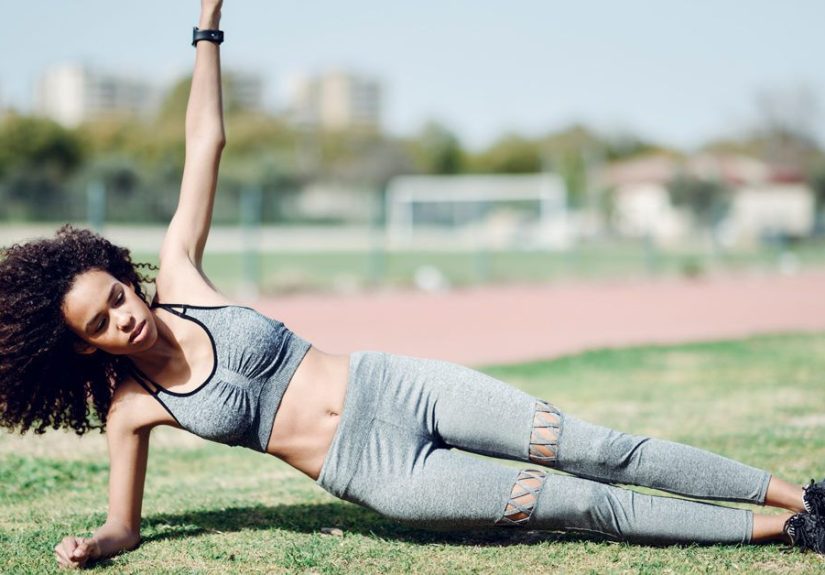
4) Side Plank
A go-to anti-lateral flexion move that lights up obliques and hips.
Elbow under shoulder, stack shoulders and hips, squeeze glutes, and keep your body in one clean line.
5) Side Plank (Modified Knees-Down)
Same benefits, more accessible. Bend your knees and support on the lower knee and forearm.
Keep hips liftedthis is about alignment, not collapsing elegantly onto the mat.
6) Side Plank with Reach-Through
Start in side plank, then rotate your top arm under your torso (controlled), and open back up.
This adds rotational control without turning it into a flailing windmill.
7) Plank Shoulder Taps (Anti-Rotation MVP)
In a high plank, tap opposite shoulder slowly. The mission: no hip wiggle.
Widen your feet to make it easier; narrow them when you want the “why is my core shaking?” upgrade.
8) Plank Up-Downs (Forearm to High Plank)
Move from forearms to hands and back down, one arm at a time, keeping hips level.
Think: controlled ladder climb, not a bodyweight panic attack.
9) Plank Hip Dips (Rainbow Planks)
From a forearm plank, rotate hips gently toward the floor side-to-side.
You’ll feel obliques working while your shoulders learn patience.
10) Plank Jacks
High plank + quick feet out/in like a jumping jack. Great for cardio-core crossover.
Keep your torso quietif your hips bounce, slow down and regain control.
11) Mountain Climbers (Controlled, Not Chaotic)
Drive one knee toward your chest at a time from high plank.
Start slow to keep your shoulders stacked and spine neutral, then build speed only after you own the pattern.
12) Spiderman Plank (Knee to Elbow)
From high plank, bring knee toward the outside elbow (same side). This shifts the challenge to obliques and hip flexors.
Go slow enough that your hips don’t turn it into interpretive dance.
13) Plank with Alternating Leg Lift
Forearm or high plank: lift one leg a few inches without shifting your pelvis.
It’s sneakyyour glutes and deep core will have a very real conversation about “staying square.”
14) Hardstyle Plank (RKC-Style Tension Plank)
This is a short, intense plank designed for full-body tension. Squeeze glutes and quads hard, pull elbows toward toes
(without moving them), and keep ribs “locked down.” Think 5–15 seconds of serious effort rather than long duration.
15) Stability Ball Stir-the-Pot (Advanced)
Forearms on a stability ball in a plank, then make small circles with your elbows like you’re stirring invisible soup.
Small circles first. If your hips wobble like a shopping cart wheel, shrink the circle and brace harder.
Common Mistakes (So Your Core Actually Thanks You)
- Sagging hips: usually means the brace is gonereset with glute squeeze and ribs down.
- Piked hips: turns it into a different exercise; bring hips back into line.
- Shrugged shoulders: press the floor away and keep your neck long.
- Holding your breath: breathe steadily; tension should come from bracing, not oxygen deprivation.
Mini Plank Plan (10 Minutes, No Drama)
Try this 2–3 times per week:
- Forearm Plank 20 seconds
- Side Plank (Right) 15 seconds
- Side Plank (Left) 15 seconds
- Shoulder Taps 8 per side (slow)
- Plank Up-Downs 6 reps total
Rest 20–40 seconds between moves. Repeat the circuit 2 rounds. Upgrade by adding 5 seconds per hold or 2 reps per move.
of Real-World “Plank Life” Experiences (What People Notice)
When people start doing plank variations consistently, the first surprise is usually emotional, not physical:
“Why does 20 seconds feel like an entire season of a TV show?” That sensation is normalplanks are isometric, so the
muscles stay under tension the whole time. What changes with practice isn’t just strength; it’s your ability to
organize tension. Early on, many folks feel planks mostly in their shoulders or lower back, which is basically
your body’s way of saying, “Hello, we’re compensating.” Once they learn to brace (ribs down, glutes on, steady breath),
the sensation shifts into the midsectionmore like a firm, even “wrap” around the torso.
Another common experience: side planks reveal “mystery weaknesses.” Someone might be solid on the right side and wobble
on the left like a baby giraffe learning to stand. That asymmetry is incredibly common, and it’s one reason plank
variations are so usefulthey don’t just build strength; they expose where you leak stability. People also report that
anti-rotation planks (like shoulder taps) feel humbling at first, because the goal isn’t moving fastit’s staying
still while your limbs move. The win is when the hips stop swaying and the movement becomes quiet and controlled.
In day-to-day life, the “thank you” often shows up in boring, practical moments: carrying a backpack feels easier,
sitting at a desk feels less slumpy, and lifting something off the floor feels more stable. Athletes and active
beginners alike often notice better body awarenesslike they can tell when their ribs flare or their pelvis tips,
and they can fix it before it turns into discomfort. Many also find that short, intense planks (hardstyle tension
planks) feel more productive than marathon holds because they teach what full-body bracing actually feels like.
The funniest shared experience? Planks create a strange sense of personal honesty. You can’t “kind of” plank the way you
can “kind of” curl a dumbbell. Either you’re stacked and bracedor you’re inventing a new yoga pose called “The Sinking
Bridge of Regret.” People who track progress often prefer measuring quality over time: cleaner reps on up-downs, less
hip movement on shoulder taps, or smoother breathing under tension. And when those improvements happen, the core really
does feel like it’s paying you backlater, when your body moves better, feels steadier, and complains less during the
stuff you actually care about.