Table of Contents >> Show >> Hide
- Why do some flowers mimic animals?
- 15 animal-looking flowers (and why they pull it off)
- 1) Monkey Orchid (Dracula simia) the “Why is it smiling?” bloom
- 2) Bee Orchid (Ophrys apifera) the master of botanical catfishing
- 3) Flying Duck Orchid (Caleana major) tiny duck, huge personality
- 4) Dove Orchid / Holy Ghost Orchid (Peristeria elata) a bird nested inside a bloom
- 5) White Egret Orchid (Habenaria radiata) wings, fringe, and garden drama
- 6) Butterfly Orchid (Psychopsis papilio) the flutter that never quits
- 7) Spider Orchid (Brassia spp.) long legs, zero rent
- 8) Moth Orchid (Phalaenopsis) the gateway animal-flower
- 9) Bat Flower / Bat Plant (Tacca spp.) the goth icon of the plant world
- 10) Kangaroo Paw (Anigozanthos) fuzzy tubes that actually look like paws
- 11) Shrimp Plant (Justicia brandegeeana) the flower that says “seafood, but make it tropical”
- 12) Lobster Claw (Heliconia rostrata) hanging claws in bright uniform
- 13) Bird of Paradise (Strelitzia reginae) the classic “bird head” bloom
- 14) Cat’s Whiskers (Orthosiphon aristatus / Orthosiphon stamineus) whiskers you don’t have to vacuum off the couch
- 15) Giant Pelican Flower / Giant Dutchman’s Pipe (Aristolochia gigantea) a flower that looks like it’s trying to become a bird
- How to enjoy animal-shaped flowers without harming them
- FAQ: Quick answers for curious plant people
- Experience: Your “Animal-Flower Safari” (about )
Nature has a sense of humor. One minute you’re strolling through a greenhouse, minding your own business, and the next you lock eyes with a
monkeyexcept the monkey is a flower and it’s judging your outfit choices. Welcome to the wonderfully weird world of animal-shaped flowers,
where petals cosplay as birds, bracts pretend to be crustaceans, and orchids basically run the world’s fanciest costume party.
This isn’t just “my cousin’s friend swears it looks like a duck” territory. Many of these blooms evolved their animal-ish looks for serious reasons:
to attract pollinators, to trick them, or to guide them like a neon “THIS WAY TO THE NECTAR” sign. Below are 15 real flowers that genuinely resemble
animalsplus what makes each one so convincing.
Why do some flowers mimic animals?
Plants can’t chase bees down the street yelling, “Excuse me! Pollinate me!” So they use strategy. The big three:
- Pollinator bait: Bright colors, tempting shapes, and landing platforms that make it easy for a bee, bird, or insect to do its job.
- Pollinator trickery: Some species mimic insects so closely that pollinators attempt to mate with the flower (yes, really), moving pollen
in the process. - Guidance systems: Patterns and structures that steer a visitor toward pollen and stigma like a botanical airport runway.
The result is evolutionary theater: flowers shaped like wings, paws, faces, whiskers, and even entire birds in flight. Let’s meet the cast.
15 animal-looking flowers (and why they pull it off)
1) Monkey Orchid (Dracula simia) the “Why is it smiling?” bloom
If you’ve ever wanted to be stared at by a tiny floral monkey, congratulations: the monkey orchid exists. The arrangement of its petals and lip can form a
surprisingly face-like “monkey” expressionespecially when you see a close-up photo. It’s also part of the Dracula orchid group, which already
sounds like it should come with dramatic lighting and a fog machine.
Animal illusion: A monkey face (often complete with “eyes” and a “mouth”).
Fun plant reality: These orchids are known for preferring cool, humid conditionsthink “cloud forest vibes,” not “sunbathing on a windowsill.”
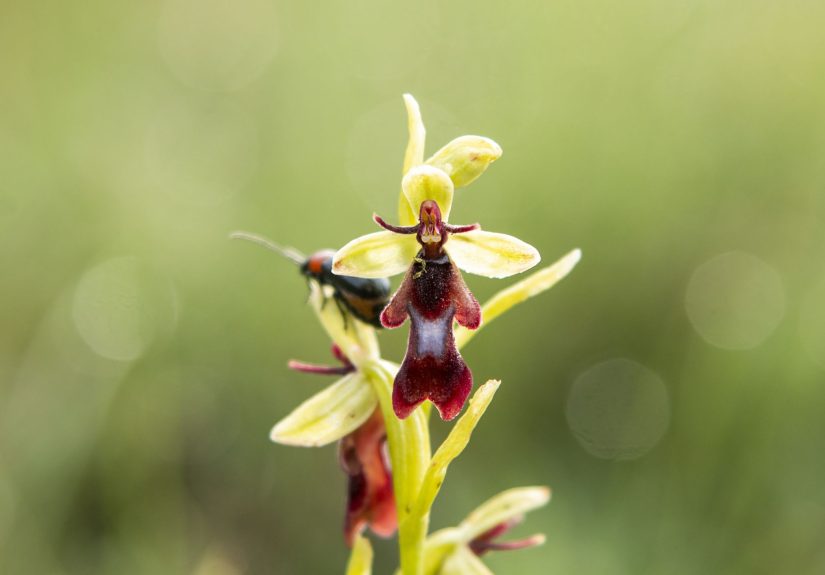
2) Bee Orchid (Ophrys apifera) the master of botanical catfishing
The bee orchid is famous for looking (and, in some species, even smelling) like a female insect. That’s not a cute coincidence. It’s a pollination strategy:
a male insect gets fooled into attempting to mate with the flower, and pollen gets transferred. In other words, this plant built an entire romance scam to
achieve fertilization. Respect? Concern? Both?
Animal illusion: A fuzzy little bee (or bee-like insect) perched on the flower.
Why it works: Shape + pattern mimicry can trigger insect behavior tied to reproduction, leading to pollination.
3) Flying Duck Orchid (Caleana major) tiny duck, huge personality
This orchid looks like a duck mid-flight, with a “body” and “wings” formed by the flower’s structure. It’s one of those plants that makes you wonder if
nature hired a cartoonist. The duck-like silhouette is most obvious from the sideso yes, angle matters. (You could say it’s… a flower that knows its best side.)
Animal illusion: A flying duck.
Where it shines: As a prime example of how orchid shapes can become wildly specific.
4) Dove Orchid / Holy Ghost Orchid (Peristeria elata) a bird nested inside a bloom
The dove orchid is legendary because the central part of the flower can look like a small white dove sitting inside. It’s so distinctive that people often
see the “bird” instantlyeven from a distance. Botanically, it’s also a heavy-feeding orchid that tends to reward patient growers, and it’s famously associated
with Panama (where it’s a national symbol).
Animal illusion: A white dove in the flower’s center.
Extra wow factor: The “bird” effect is built into the flower’s inner structure, not just surface markings.
5) White Egret Orchid (Habenaria radiata) wings, fringe, and garden drama
With fringed petals that resemble feathery wings, the white egret orchid looks like a tiny egret caught in the moment before takeoff. It’s delicate, elegant,
and a little unreallike a paper-cut bird made of petals.
Animal illusion: A white egret with outstretched wings.
Grower note: Because some populations are threatened, ethical sourcing mattersadmire responsibly and avoid anything that seems sketchy.
6) Butterfly Orchid (Psychopsis papilio) the flutter that never quits
The name is practically a spoiler: “Psychopsis” comes from Greek roots referring to a butterfly-like look, and many people swear the blooms resemble
butterflies hovering near a stem. Some varieties are known for producing successive blooms over a long period, which means you can enjoy the “butterfly”
effect again and againwithout having to bribe an actual butterfly with nectar.
Animal illusion: A butterfly poised to land.
Why it’s convincing: Wing-like petal shapes plus striking patterning that reads as “insect” to the human brain.
7) Spider Orchid (Brassia spp.) long legs, zero rent
Spider orchids earned their nickname honestly: elongated petals and sepals extend outward like spindly legs. In a greenhouse, a big Brassia bloom can look like
a polite spider that’s dressed for a gala. If you’re arachnophobic, you may want to appreciate this one from a respectful distance… while reminding yourself
that it is, in fact, incapable of jumping.
Animal illusion: A spider with outstretched legs.
Bonus: Great for teaching kids (and adults) that “spider” doesn’t always mean “panic.”
8) Moth Orchid (Phalaenopsis) the gateway animal-flower
Phalaenopsis orchids are sometimes called “moth orchids” because the blooms can resemble moths in flight. They’re also among the most common orchids sold
for indoor growing in the U.S., largely because they can handle home conditions well when given bright, indirect light and sensible watering.
Animal illusion: A moth or butterfly-like silhouette.
Easy-care angle: Often a beginner-friendly orchid when light and water are dialed in.
9) Bat Flower / Bat Plant (Tacca spp.) the goth icon of the plant world
If a flower could wear a cape, this one would. Bat plants in the genus Tacca can produce dramatic bracts that look wing-like, often accompanied by
long, whisker-ish filaments that dangle like they’re auditioning for a fantasy movie. There are multiple species and forms (including white and darker
varieties), but the vibe is consistent: mysterious, theatrical, and absolutely not here to be subtle.
Animal illusion: A bat with spread wings (plus bonus “whiskers”).
Care clue: Think rainforestwarmth, humidity, and filtered light beat harsh sun.
10) Kangaroo Paw (Anigozanthos) fuzzy tubes that actually look like paws
Kangaroo paw flowers are famous for their tubular shape and fuzzy texture, which can resemble a paw or claw. The “paw” look is especially noticeable when
the bloom opens and the segments curve in a way that feels hand-like (or, more accurately, kangaroo-like). It’s one of those plants where the common name
feels unusually fair.
Animal illusion: A kangaroo paw.
Design bonus: These blooms add bold texture and shape to landscaping and cut arrangements.
11) Shrimp Plant (Justicia brandegeeana) the flower that says “seafood, but make it tropical”
Shrimp plant produces drooping spikes of overlapping bracts that resemble shrimpespecially in varieties with rosy or shrimp-colored bracts. The actual flowers
peek out from within, but it’s the bracts that steal the show and make your brain go, “Wait… is that a crustacean?”
Animal illusion: A shrimp (or a cluster of shrimp).
Garden-friendly note: It’s often grown as an ornamental shrub and can be pruned to shape.
12) Lobster Claw (Heliconia rostrata) hanging claws in bright uniform
Lobster claw heliconia is basically a tropical sculpture that happens to be alive. Its bold, pendulous bracts resemble lobster claws stacked along a stem.
In warm climates, it’s a showstopper; as a cut flower, it’s practically an event. It also has straightforward needs: warmth, moisture, and fertile soil.
Animal illusion: Lobster claws (or crab claws).
Care hint: Regular feeding and consistently moist soil help it perform like the diva it is.
13) Bird of Paradise (Strelitzia reginae) the classic “bird head” bloom
Bird of paradise flowers look like a tropical bird’s head with a bright crest emerging from a beak-like structure. It’s iconic for a reason: the silhouette
reads as “bird” even to people who can’t tell a fern from a pinecone. In warm zones it can thrive outdoors; elsewhere, it’s a popular houseplant (with the
important footnote that it needs strong light to bloom well).
Animal illusion: A bird’s head and plumage.
Growth note: It’s tolerant once established, but blooms are best with ample light and consistent care.
14) Cat’s Whiskers (Orthosiphon aristatus / Orthosiphon stamineus) whiskers you don’t have to vacuum off the couch
Cat’s whiskers has flowers with long, extended stamens that resembleyepwhiskers. When the plant is in bloom, those slender filaments stick out well beyond
the petals like a cat doing that slow, confident stretch right after a nap.
Animal illusion: Cat whiskers (especially up close).
Why gardeners love it: It’s an easy conversation starter and can attract pollinators.
15) Giant Pelican Flower / Giant Dutchman’s Pipe (Aristolochia gigantea) a flower that looks like it’s trying to become a bird
Some Aristolochia species produce enormous, dramatic flowers with shapes that can suggest a bird-like profilehence names like “giant pelican flower.”
These blooms can be impressively large, richly veined, and (fair warning) often associated with strong odors that attract specific pollinators.
Animal illusion: A pelican-like or bird-like form (especially in bud and profile).
Science-y detail: Certain “pelican flower” relatives are known for pollination strategies that lure insects inward, guiding them past pollen.
How to enjoy animal-shaped flowers without harming them
These plants are best admired with a “look, don’t loot” mindsetespecially orchids and any species that may be threatened in the wild.
If you’re buying:
- Choose reputable nurseries that propagate plants legally and ethically (especially for orchids).
- Avoid “too rare to be true” listings and sellers who can’t explain where the plant came from.
- Don’t wild-collectever. Many wild populations can’t recover from removal.
If you’re photographing:
- Bring a macro lens or use macro modethe “animal” illusion often lives in small details.
- Try multiple angles (especially for flying duck orchids and insect-mimic orchids).
- Skip the flash in conservatories if it’s discouraged, and avoid touching petals and structures.
FAQ: Quick answers for curious plant people
Are these flowers “really” shaped like animals, or is it just imagination?
A little of both. Human brains are pattern-finding machines, so we’re primed to see faces and creatures. But many of these plants have
structural features that evolved specifically to interact with animal pollinatorsso the resemblance isn’t purely accidental.
Which animal-shaped flower is easiest to grow at home?
For many people, a moth orchid (Phalaenopsis) is the most approachable. Bird of paradise can work too, but it often needs very bright light to bloom.
Shrimp plant is also a relatively friendly ornamental in warm conditions or containers.
Do any of these flowers smell bad?
Some do. Certain large, dramatic blooms (including some Aristolochia relatives) use strong odors to attract specific insects. The scent is part of their
pollination strategyunpleasant to us, irresistible to the right bug.
Experience: Your “Animal-Flower Safari” (about )
If you want the full “these flowers can’t be real” experience, don’t start with a random internet slideshowstart with a place where plants are living,
blooming, and slightly showing off. A botanical garden conservatory or an orchid show is the closest thing to an animal safari you can do without needing
hiking boots (or mosquito repellent the size of a fire extinguisher).
The first thing you notice is scale. Online, a flying duck orchid looks like it could be the size of your hand. In person, it can be surprisingly small,
and that’s part of the magic: you lean in, you focus, and suddenly your brain snaps the shape into placeduck! It’s like a visual puzzle that rewards
patience. The same thing happens with the bee orchid. From far away it reads as “pretty flower,” but up close the patterns and textures become insect-like,
and you understand why pollinators get fooled. (If a bee could talk, it would probably say, “I swear she looked different in her profile photo.”)
Then there’s the emotional whiplash of the bat flower. You walk into the humid greenhouse, and everything is lush and cheerful… and then you see what looks
like a winged creature hovering in a pot, with long filaments dangling like whiskers. It’s dramatic in a way most flowers aren’t. People tend to react in
one of two ways: delight (“That’s the coolest plant I’ve ever seen!”) or suspicious laughter (“Why does it look like it listens to spooky podcasts?”).
Either way, it gets attentionmission accomplished.
If you’re doing this as a mini-adventure day, make it interactive. Bring a notes app and “score” each flower on two categories: (1) how instantly the animal
shape appears, and (2) how weird the plant had to get to achieve that look. Bird of paradise scores high on instant recognitionmost people see the bird
profile right away. Spider orchids score high on “weird engineering,” because those long, leggy segments feel like a design choice made by a committee of
aliens who just learned what spiders are.
Finally, the best part: sharing the reveal. Animal-shaped flowers are social plantsnot because they’re chatty, but because they turn everyone into a
tour guide. You’ll catch yourself saying things like, “No, look from this anglenow you see the dove!” And when someone finally sees it, they do that
delighted little gasp-laugh that says, “Okay, nature wins.” You leave with a camera roll full of botanical optical illusions and a new appreciation for
the fact that plants can be both scientifically clever and absolutely ridiculousin the best possible way.