Table of Contents >> Show >> Hide
- Quick Jump
- Before we start: “Alien” usually means “microbe,” not “movie villain”
- 1) The right chemical building blocks (the universe’s “LEGO set”)
- 2) A liquid medium for chemistry (a “reaction dance floor”)
- 3) A way to harvest energy (because existing isn’t free)
- 4) Redox skills (using chemical gradients like a pro)
- 5) A boundary that keeps “self” separate (the original privacy setting)
- 6) Big molecules (polymers) that can do jobs
- 7) Information storage and copying (a recipe book that makes more recipe books)
- 8) Reproduction (because biology is a numbers game)
- 9) Evolution by natural selection (life’s ultimate upgrade system)
- 10) Homeostasis and repair (the “please don’t fall apart” feature)
- So… does this mean aliens must be “Earth-like”?
- Conclusion: The universe has rules, not vibes
- of Experiences: Trying on an Astrobiologist’s Goggles
- Experience #1: Visit a place that looks “unlivable” (and notice how alive it is anyway)
- Experience #2: Watch footage of deep-sea vents and feel your brain update
- Experience #3: Do the simplest “origin of life” thought experiment
- Experience #4: Notice how your own body is basically a repair shop with opinions
- Experience #5: Try “biosignature bingo” on your next nature walk
Somewhere out there, a life-form is doing something life-like: eating sunlight, sipping chemicals, or aggressively minding its own business under a kilometer of ice.
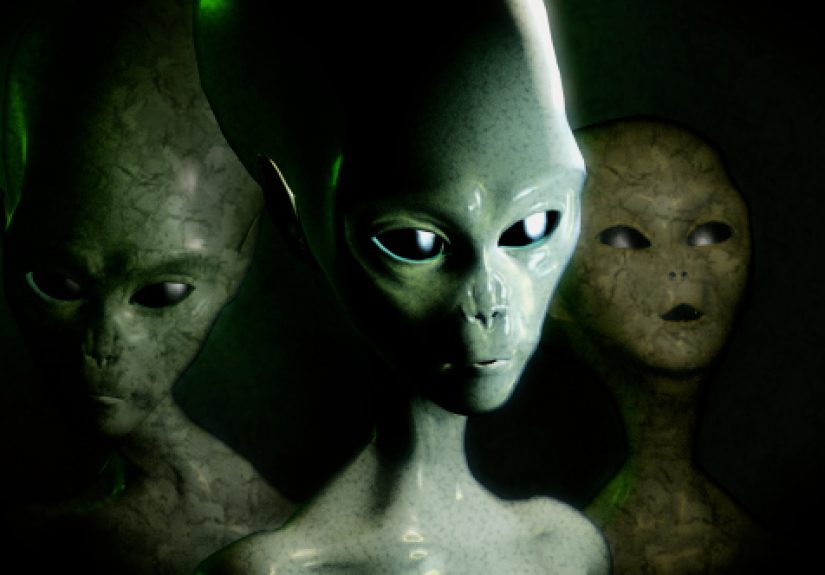
Will it look like a gray humanoid with big eyes? Maybe. Will it look like a damp rug that learned calculus? Also maybe.
Science can’t tell us what aliens look likebut it can tell us what alien life probably needs to exist and persist.
Because even in a universe full of surprises, chemistry still has rules, and physics is famously allergic to exceptions.
Below are ten science-backed traits that extraterrestrial life (microbial or complex) is likely to share. Think of them as the “minimum viable weirdness” checklist for life anywhere:
energy, building blocks, boundaries, information, and the ability to keep going long enough to matter.
Before we start: “Alien” usually means “microbe,” not “movie villain”
When scientists talk about extraterrestrial life, they’re often imagining something closer to bacteria than to a space emperor with a dramatic cape.
Microbial life is (1) easier to create, (2) tougher than we give it credit for, and (3) extremely good at colonizing places we’d describe as “absolutely not.”
So the traits below are written to fit the full spectrum of possibilitiesfrom a single cell in an underground ocean to a complex biosphere doing its own thing around a distant star.
If intelligent aliens exist, they still had to pass through the same basic gates first: chemistry → biology → ecology → (maybe) group chats.
1) The right chemical building blocks (the universe’s “LEGO set”)
Life needs raw materials: elements it can assemble into useful molecules. On Earth, the stars of the show are carbon, hydrogen, nitrogen, oxygen, phosphorus, and sulfuroften summarized as “CHNOPS.”
That lineup isn’t random; these elements form stable bonds, build complex structures, and participate in energy-transfer reactions.
Why science leans this way
Carbon is especially popular because it can make four strong bonds in many arrangementschains, rings, brancheslike an overachieving molecular Tinkertoy.
That flexibility makes it easier to build everything from membranes to enzymes to information-bearing molecules.
What it could look like elsewhere
Alien life might still be carbon-based even if it’s not “Earth-like.” The chemistry could run in colder oceans, inside rocks, or in environments with very different atmospheres.
The details may vary; the need for dependable building blocks probably doesn’t.
2) A liquid medium for chemistry (a “reaction dance floor”)
Most complex chemistry needs a medium where molecules can move, collide, and react. For life as we know it, that medium is liquid wateran all-time great solvent that supports a ridiculous range of biochemical reactions.
Why water keeps winning the popularity contest
Water dissolves many substances, helps molecules find each other, and stays liquid across a wide temperature range compared with many other compounds.
In other words: it’s the chemical equivalent of a well-run city with good public transit.
But could aliens use something else?
Scientists do consider alternative solvents (like liquid hydrocarbons or even exotic acids) in specific environments.
The deeper point is the trait: life likely needs a stable liquid medium (or something functionally similar) to enable rich chemistry over time.
3) A way to harvest energy (because existing isn’t free)
Life is a constant battle against entropy. Staying organized takes energyperiod.
On Earth, ecosystems run mainly on sunlight (photosynthesis) and, in some places, on chemical energy (chemosynthesis).
Sunlight is common, but it’s not mandatory
Photosynthesis is powerful because stars are generous. But life can also thrive without sunlight by tapping chemical reactionsespecially in places where hot, mineral-rich fluids meet colder water, creating energy gradients.
Alien takeaway
If an alien organism is alive, it must be doing “energy accounting” in some form:
capturing energy, storing it, spending it, and avoiding bankruptcy. The currency can vary; the budget requirement does not.
4) Redox skills (using chemical gradients like a pro)
Here’s a nerdy secret: a lot of life is basically controlled electron traffic.
Many biological energy systems rely on redox chemistrymoving electrons from a donor to an acceptor, releasing usable energy along the way.
Why this matters for alien life
Redox reactions are common in planetary environments: rocks, oceans, atmospheres, and hydrothermal systems can all set up chemical imbalances.
Where there’s a stable imbalance, there’s potential “food” for metabolism.
Example, minus the lab coat
Think of it like rolling a ball downhill. If your planet can keep making hills (chemical gradients), life can keep rolling the ball and skimming off the energy.
5) A boundary that keeps “self” separate (the original privacy setting)
Life needs a way to stay distinct from its environmentotherwise your carefully organized chemistry becomes everybody’s chemistry.
On Earth, cells use membranes to create an inside and an outside, letting in what’s useful and keeping out (or exporting) what’s not.
Why boundaries are a big deal
A boundary allows concentration: nutrients can be gathered, waste can be managed, and reactions can be coordinated.
Without a boundary, complex metabolism becomes like trying to cook a soufflé on a windy sidewalk.
Alien versions of a “cell”
Maybe it’s a membrane. Maybe it’s a mineral compartment in porous rock. Maybe it’s something we haven’t imagined.
But some kind of compartmentalization is likely, because life needs a “workshop,” not an open-air flea market.
6) Big molecules (polymers) that can do jobs
Tiny molecules are great, but complex life needs molecular multitaskers: structures that can build, catalyze, transport, and signal.
On Earth, proteins do a lot of the heavy lifting, while nucleic acids store and transmit information.
Why size and structure matter
Polymers can fold into shapes that act like tools: binding to specific targets, speeding up reactions, and forming machines at the nanoscale.
If alien life becomes complex, it likely has some “macromolecule class” that plays this toolmaker role.
Practical example
If a life-form has metabolism, it probably uses catalysts (enzyme-like helpers) to make reactions fast enough at its local temperatures and pressures.
Otherwise it’s stuck waiting for chemistry to happen on “geological time,” which is not a great lifestyle choice.
7) Information storage and copying (a recipe book that makes more recipe books)
Life isn’t just chemistryit’s organized chemistry that can persist across generations.
That persistence requires information: instructions for building the organism and running its processes.
Why science expects an “information molecule”
Evolution needs heredity. Heredity needs something that can be copied with occasional variation.
On Earth, DNA and RNA do this job. Elsewhere, the “alphabet” could be different, but the functionstore, copy, transmitremains essential.
What this means for alien traits
If alien life can adapt, it almost certainly has a genetic-style systemmaybe not the same letters, but the same logic:
a stable blueprint plus a copying process that’s accurate enough to preserve life, and imperfect enough to allow change.
8) Reproduction (because biology is a numbers game)
A single organism can be fascinating, but a population is what makes life durable.
Reproduction lets life persist through accidents, disasters, and the occasional asteroid having a bad day.
Two big modes, infinite weird variations
Earth uses both asexual reproduction (fast, efficient, great for microbes) and sexual reproduction (slower, often useful for generating diversity).
Aliens could use either, both, or a method that would make our textbooks quietly cry.
The real trait
The key is not “sex” versus “no sex.” The key is replicationcreating new individuals that carry inherited information forward.
9) Evolution by natural selection (life’s ultimate upgrade system)
If there’s one trait that shows up again and again in scientific definitions of life, it’s the ability to evolve.
A self-sustaining system that can undergo Darwinian evolution is often treated as a practical working definition because it captures what makes life “life” rather than “interesting chemistry.”
Why evolution is non-negotiable for long-term survival
Planets change. Stars flare. Oceans freeze. Continents collide. If a biosphere sticks around, it adaptsor it becomes a brief historical anecdote.
Evolution is how life becomes fitted to its environment without needing a designer, a manager, or a motivational poster.
Alien implication
Wherever there are populations, heredity, and variation, selection can happen.
That means even alien microbes could develop clever survival strategieslike tolerating radiation, living on fumes, or napping for centuries.
10) Homeostasis and repair (the “please don’t fall apart” feature)
Chemistry is messy. Radiation breaks bonds. Heat speeds up side reactions. Cold slows everything down. Salt pulls water out of cells.
Life persists anyway because it actively maintains itself: regulating internal conditions, fixing damage, and keeping key processes in a survivable range.
What homeostasis looks like in practice
On Earth, organisms regulate temperature, acidity (pH), ion balance, hydration, and moredepending on what their bodies need.
Microbes repair DNA, replace broken proteins, and manage toxins.
Why alien life probably needs it too
Any environmentsurface, subsurface, ocean, atmospherewill stress a living system.
Without maintenance and repair, complexity collapses fast. With it, life can persist long enough to evolve and diversify.
So… does this mean aliens must be “Earth-like”?
Not at all. These traits don’t demand tentacles, skeletons, or any specific aesthetic.
They’re more like a set of physical and chemical constraints: if something is alive, it must (somehow) gather resources, manage energy, preserve information, reproduce, and stay intact.
The fun part is the “somehow.” The universe can remix the details in ways we haven’t dreamed up yet.
But it probably can’t skip the basicsbecause physics is not known for handing out free lunches.
Conclusion: The universe has rules, not vibes
“Alien life” sounds like pure imagination, but astrobiology is less about guessing faces and more about following constraints.
If life exists elsewhere, it likely runs on dependable building blocks, operates in a workable medium, taps energy gradients, and survives through boundaries, information, reproduction, evolution, and repair.
In other words: aliens don’t have to be like usbut they probably have to be like life.
And if you ever meet one, please don’t start with “Take me to your leader.” Start with “So… what do you use as a solvent?” That’s how you impress scientists.
of Experiences: Trying on an Astrobiologist’s Goggles
You don’t need a rocket, a PhD, or a secret badge that says “Cosmic Detective” to feel what these traits mean. You just need a few real-world experiences that make the science clickbecause once you’ve seen how stubborn life is on Earth, “aliens” stops sounding like fantasy and starts sounding like a chemistry problem with extra drama.
Experience #1: Visit a place that looks “unlivable” (and notice how alive it is anyway)
Next time you’re near a rocky shoreline, a desert trail, or even a grimy city puddle, pause and look closer. The macro-world might look empty, but the micro-world is throwing a party. Biofilms cling to stone, algae tint water, and tiny organisms exploit every crevice that holds moisture. This is trait #2 and #5 in action: give life a liquid medium and a protected boundary, and it will move in like it found cheap rent.
Experience #2: Watch footage of deep-sea vents and feel your brain update
If you’ve only pictured life powered by sunlight, hydrothermal vent ecosystems are a delightful plot twist. The base of the food web can run on chemical energy instead of lightproof that trait #3 and #4 aren’t “solar-only.” The first time you realize an ecosystem can be fueled by chemistry coming out of rocks, you start seeing alien oceans differently. A dark, ice-covered world stops being “dead” and starts being “potentially busy.”
Experience #3: Do the simplest “origin of life” thought experiment
Imagine you have a soup of ingredients (trait #1), a place where they can mix (trait #2), and a steady energy source (trait #3). What happens over long time scales? Chemistry explores possibilities. Some combinations persist. Some structures help other reactions happen faster (trait #6). Then picture a molecule that can copy itself imperfectly (trait #7 and #9). At that moment, you can almost feel the transition from “stuff happening” to “life happening.”
Experience #4: Notice how your own body is basically a repair shop with opinions
Get a paper cut. Your body closes it. Eat something too salty. You get thirsty. Pull an all-nighter. Your brain complains loudly. That’s homeostasis (trait #10) being aggressively practical. It’s also a reminder that life isn’t passive. Living systems constantly correct, regulate, and patch. When you imagine alien organisms, don’t picture them as decorations on a planetpicture them as maintenance engines that fight decay every second.
Experience #5: Try “biosignature bingo” on your next nature walk
Look for signs that something is metabolizing and changing its environment: oxygen from plants, methane from wetlands, mineral staining from microbial mats, even the smell of sulfur in certain places. These aren’t just “nature vibes.” They’re chemical fingerprints of energy use and waste management. Once you start thinking this way, the search for extraterrestrial life becomes a little more personal: it’s not about spotting a spaceship, but about spotting a planet that looks chemically “too active” to be sterile.
These experiences don’t prove aliens existbut they train your intuition. They make the ten traits feel less like a checklist and more like a story: matter becomes chemistry, chemistry becomes organized systems, systems become populations, and populations evolve into the kind of complexity that makes you wonder who else might be out there doing the exact same thing… just with different ingredients and better gravity.