Table of Contents >> Show >> Hide
- 1. Hades – The King of the Greek Underworld
- 2. Osiris – The Egyptian Lord of the Dead
- 3. Anubis – Egyptian God of the Dead
- 4. Hel – The Norse Queen of the Dead
- 5. Yama – The Hindu God of Death
- 6. Mara – The Buddhist Lord of Death
- 7. Hecate – The Greek Goddess of Magic and the Underworld
- 8. The Devil – The Christian Lord of Hell
- 9. Charon – The Ferryman of the Underworld
- 10. Tezcatlipoca – The Aztec God of Death
- Conclusion
- Experiences with the Terrifying Rulers of the Underworld
The concept of the underworld has existed in various forms across cultures and mythologies for millennia. From ancient civilizations to modern popular culture, there has always been fascination with the rulers who preside over the realms of the dead. These powerful figures are often depicted as ruthless, cunning, and terrifying, each bringing their own brand of terror to the world of the afterlife. Here, we delve into ten of the most terrifying rulers of the underworld, exploring their mythologies, their impact, and why they continue to haunt our imaginations today.
1. Hades – The King of the Greek Underworld
When it comes to the underworld, the name Hades is one that resonates most deeply. The Greek god of the underworld, Hades ruled the realm of the dead with an iron fist. Often misunderstood as a purely evil deity, Hades was a necessary force in Greek mythology. His dominion, the realm known as the Underworld, was the place where souls journeyed after death. His infamous three-headed dog, Cerberus, guarded the gates, ensuring that no soul could escape once it entered his realm.
Although Hades was not associated with death itself (which was the domain of Thanatos), he controlled all the spirits of the deceased. His unyielding nature and his cold, emotionless demeanor made him a figure that both feared and respected by mortals and gods alike.
2. Osiris – The Egyptian Lord of the Dead
In ancient Egypt, Osiris was one of the most revered gods, associated with the afterlife, resurrection, and the judge of the dead. His story is one of betrayal, death, and resurrection. Osiris was murdered by his brother Set, but he was later resurrected by his wife, Isis. As the ruler of the dead, Osiris was not a figure of terror in the same way as some others, but his domain was one that demanded respect. After death, all souls were judged by Osiris to determine their fate, making him a powerful and often feared figure in Egyptian mythology.
The weighing of the heart ceremony was a central theme in Osiris’s role. In this process, the hearts of the deceased were weighed against the feather of Ma’at (truth), determining whether they could enter the afterlife or be devoured by Ammit, the soul-eating demon.
3. Anubis – Egyptian God of the Dead
While Osiris may have been the ultimate ruler of the dead in Egypt, it was Anubis who was most closely associated with the mummification process and guiding souls to the afterlife. Often depicted as a man with the head of a jackal, Anubis was the god of funerary practices, protecting the deceased and overseeing their journey to the afterlife.
Though Anubis was not inherently evil, the fear surrounding death and the afterlife made his role seem ominous. He was also believed to be the one who weighed the souls of the dead against the feather of Ma’at, ensuring that only those worthy would pass into eternal life.
4. Hel – The Norse Queen of the Dead
In Norse mythology, Hel ruled over the realm of the dead, a land called Helheim. The daughter of the trickster god Loki and the giantess Angrboða, Hel was a striking figure: half of her body was beautiful, while the other half was rotting and decayed, reflecting her dominion over death.
Hel’s realm was a cold and dark place, where the souls of those who died of sickness or old age were sent. Unlike warriors who were honored by being taken to Valhalla, those who fell under Hel’s rule had no glory. The Norse feared her harsh judgment and her unyielding grip over the dead.
5. Yama – The Hindu God of Death
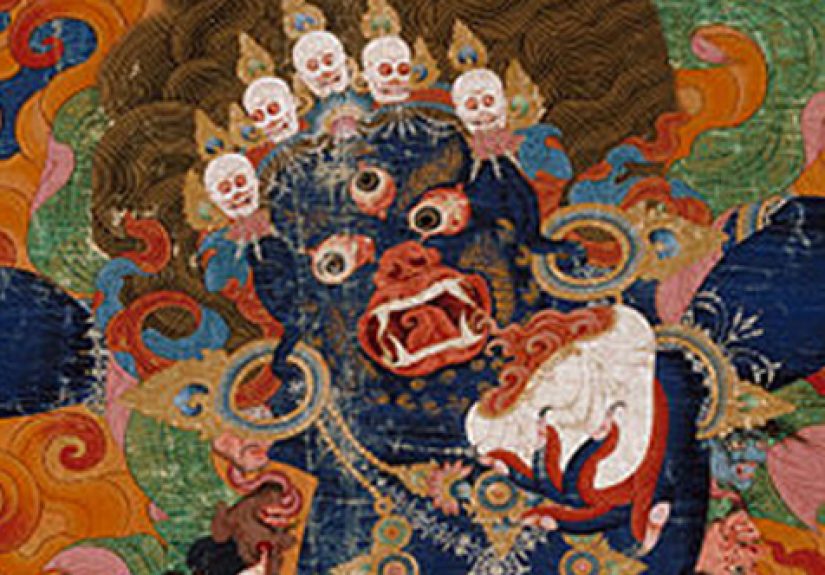
Yama, the god of death in Hindu mythology, is the ruler of Naraka, the realm where souls go after death to be judged for their actions on Earth. As the first mortal to die, Yama became the judge of the dead, deciding their fate. He is often depicted riding a buffalo and carrying a noose to capture the souls of the deceased.
In some depictions, Yama is a fair but stern judge, ensuring that every soul faces the consequences of its earthly actions. However, his role also instills fear, as he is the one who decides whether a soul will be reborn or condemned to eternal suffering.
6. Mara – The Buddhist Lord of Death
Mara is one of the most terrifying figures in Buddhist cosmology. Known as the tempter and the embodiment of desire, Mara’s role is to prevent individuals from reaching enlightenment by distracting them with the pleasures and attachments of the material world. As the lord of death, Mara is also a figure of judgment, often leading individuals astray from their spiritual path.
Mara’s terrifying role extends beyond physical death. He represents the death of the soul and the mind, causing beings to become enslaved to desires and illusions. His terrifying ability to delay or even prevent spiritual liberation makes him a feared force in Buddhism.
7. Hecate – The Greek Goddess of Magic and the Underworld
Hecate is one of the most enigmatic and powerful figures in Greek mythology. While not a ruler of the dead in the traditional sense, she is deeply connected to the underworld and its magic. As the goddess of witchcraft, magic, and necromancy, Hecate has dominion over the boundaries between life and death.
Her dark and mysterious nature, as well as her association with the restless spirits of the dead, make her a terrifying figure. Often depicted holding a torch and accompanied by dogs, Hecate was both feared and revered, as she had the power to control the flow of souls between the living world and the underworld.
8. The Devil – The Christian Lord of Hell
Perhaps the most universally recognized ruler of the underworld, the Devil, or Satan, is the figure who rules over Hell in Christian theology. Initially a high-ranking archangel, Satan fell from grace and became the ruler of a hellish domain where the damned souls are eternally punished for their sins.
The Devil is often depicted as a tempter, leading souls astray with promises of power, wealth, and pleasure, only to send them to eternal suffering. His terrifying role as the ultimate adversary to God and his ability to manipulate human desires make him one of the most feared figures in any religious tradition.
9. Charon – The Ferryman of the Underworld
In Greek mythology, Charon is the ferryman who transports souls across the river Styx to the underworld. Although he is not a ruler in the traditional sense, his role is crucial in determining whether souls reach their final resting place. Charon is often depicted as a grim figure, demanding payment for his services, with the souls of the dead needing a coin to cross.
Charon’s job is not only essential for the passage of souls but also symbolizes the finality of death. His stern demeanor and his role in cutting off the living from the dead make him a terrifying figure in Greek mythology.
10. Tezcatlipoca – The Aztec God of Death
Tezcatlipoca was one of the most powerful gods in the Aztec pantheon, associated with the night, sorcery, and the underworld. Often depicted with a smoking mirror, Tezcatlipoca was seen as a god who could deceive, destroy, and judge mortals. He was not only a god of death but also a trickster, whose influence over life and death was both unpredictable and terrifying.
Tezcatlipoca’s role as the god of war and sacrifice was also deeply intertwined with his connection to death. His power over life, death, and the afterlife made him a figure of immense fear, particularly among those who sought to avoid his judgment.
Conclusion
The rulers of the underworld, from Hades to Tezcatlipoca, have long been symbols of the unknown, the inevitable, and the terrifying aspects of death. Whether they are fair or cruel, these figures play an essential role in their respective mythologies, shaping the way societies view life after death. Their terrifying power over the souls of the departed reflects humanity’s deep-seated fear of mortality, and their legacies continue to haunt us to this day.
Experiences with the Terrifying Rulers of the Underworld
Throughout history, the rulers of the underworld have sparked both fear and fascination in countless cultures. My own experiences with these dark figures have often revolved around how their stories have shaped not only religious beliefs but also personal perceptions of death and the afterlife. As a child, I was drawn to Greek and Norse mythology, captivated by the idea of a realm where powerful beings like Hades or Hel controlled the fate of souls. These mythologies taught me early on that the fear of death is universal, and these figures were often symbols of judgment and the consequences of one’s actions during life.
In later years, I found myself increasingly interested in the ways different cultures personify death and the afterlife. My travels took me to Egypt, where I visited the tombs of pharaohs and learned about Osiris, the god of resurrection. The Egyptians saw death as a transition, not an end, which contrasted sharply with the more final depictions in Western religious traditions. I also explored the beliefs of the ancient Aztecs, where Tezcatlipoca’s power was woven into the fabric of everyday life and the rituals of sacrifice, a far more visceral and ritualistic approach to death and afterlife than I had encountered elsewhere.
Ultimately, these experiences shaped my understanding of death not as a fearsome, final act, but as a concept intertwined with the way we live. Whether it’s the cold, controlling nature of Hades or the trickster tactics of Tezcatlipoca, these figures serve as reminders that death is not just an end, but an eternal force that transcends culture, time, and geography.