Table of Contents >> Show >> Hide
- How to Make Any Casserole Lower-Cal Without Making It Sad
- The Recipes
- 1) Chicken, Broccoli & Quinoa “Alfredo-ish” Bake
- 2) Unstuffed Pepper Casserole (Turkey + Brown Rice)
- 3) Roasted Veggie Enchilada Casserole (Bean-Boosted)
- 4) Tuna “Noodle” Casserole, Modernized
- 5) Sweet Potato, Spinach & Turkey Sausage Breakfast Casserole
- 6) Mushroom & Spinach Chicken Rice Bake (Cottage Cheese Creaminess)
- 7) Healthy Green Bean Casserole (From-Scratch, Lighter Sauce)
- 8) Squash & Kale “Gratin-Style” Casserole (Cheese, But Strategic)
- 9) Mediterranean Eggplant & Zucchini Bake (Ratatouille Meets Casserole)
- 10) Taco-Style Cauliflower Rice Casserole (Big Flavor, Lighter Base)
- Real-World “Casserole Experience” Tips (The Stuff Recipes Don’t Always Admit)
- Conclusion
- SEO Tags
Casseroles have a reputation: delicious, cozy… and occasionally the nutritional equivalent of wearing sweatpants with a drawstring that’s lost all hope. The good news? You can absolutely bake a bubbling, cheesy, spoonable dinner that feels like comfort food and stays light enough to fit your goals.
This guide gives you 10 low-calorie casserole ideas (generally about 250–450 calories per serving, depending on portions and brands), plus smart swaps that keep flavor high and calories low. Each recipe is written to be practical, meal-prep friendly, and actually satisfyingbecause nobody wants to finish dinner and immediately start flirting with the snack cabinet.
How to Make Any Casserole Lower-Cal Without Making It Sad
- Start with volume: Build the base with vegetables (broccoli, cauliflower, zucchini, mushrooms, peppers, spinach). More food, fewer calories.
- Choose lean protein: Chicken breast, turkey, tuna, beans, lentils, or reduced-fat cottage cheese add staying power.
- Use “creamy” strategy, not “cream” strategy: Greek yogurt, blended cottage cheese, puréed cauliflower, or a light roux can mimic richness.
- Cheese like a consultant, not a landlord: A little sharp cheese goes far. Use it for punch, not square footage.
- Watch the “stealth calories”: Heavy oils, buttery crumb toppings, and oversized pasta portions can quietly triple your math.
- Salt smart: Use garlic, onion, citrus, mustard, smoked paprika, chili flakes, and fresh herbs so you don’t rely on piles of cheese for flavor.
The Recipes
Each recipe below includes: what it tastes like, why it stays lighter, and a simple method you can actually follow on a weeknight. (Because “simmer for 3 hours while humming gratitude” is not a weeknight instruction.)
1) Chicken, Broccoli & Quinoa “Alfredo-ish” Bake
Estimated calories: ~380–440 per serving (6 servings)
This one hits the classic creamy-chicken-casserole vibe, but the sauce gets its richness from Greek yogurt and Parmesan instead of a pool of heavy cream. Quinoa adds protein and a slightly nutty bite that makes it feel substantial.
What you’ll use: cooked quinoa, cooked chicken breast (or rotisserie), broccoli florets, garlic, onion, low-sodium broth, Greek yogurt, Parmesan, lemon zest, black pepper.
- Steam or microwave broccoli until crisp-tender. Don’t overcookno one asked for broccoli mush.
- Sauté onion and garlic. Add broth and bring to a gentle simmer.
- Whisk in Greek yogurt off heat (to prevent curdling), then stir in Parmesan, lemon zest, and lots of pepper.
- Mix quinoa + chicken + broccoli + sauce. Bake at 375°F until bubbly (about 20–25 minutes).
Make it even lighter: Replace half the quinoa with riced cauliflower. Make-ahead tip: Assemble, refrigerate up to 24 hours, then bake.
2) Unstuffed Pepper Casserole (Turkey + Brown Rice)
Estimated calories: ~350–420 per serving (6 servings)
Stuffed peppers are greatuntil you realize you’ve turned dinner into a time-management puzzle. This bake gives you the same flavors with far less work. Lean turkey, bell peppers, tomatoes, and a modest amount of rice keep it filling but not heavy.
What you’ll use: lean ground turkey, diced bell peppers, onion, garlic, canned crushed tomatoes, cooked brown rice, Italian seasoning, a sprinkle of mozzarella.
- Brown turkey with onion and garlic; drain if needed.
- Add peppers, tomatoes, seasoning. Simmer 5–8 minutes so flavors concentrate.
- Stir in cooked brown rice. Pour into a baking dish, top with a light sprinkle of mozzarella.
- Bake at 375°F for 15–20 minutes until hot and melty.
Shortcut: Use microwave brown rice cups. Lower-carb option: Swap rice for cauliflower rice (stir it in near the end).
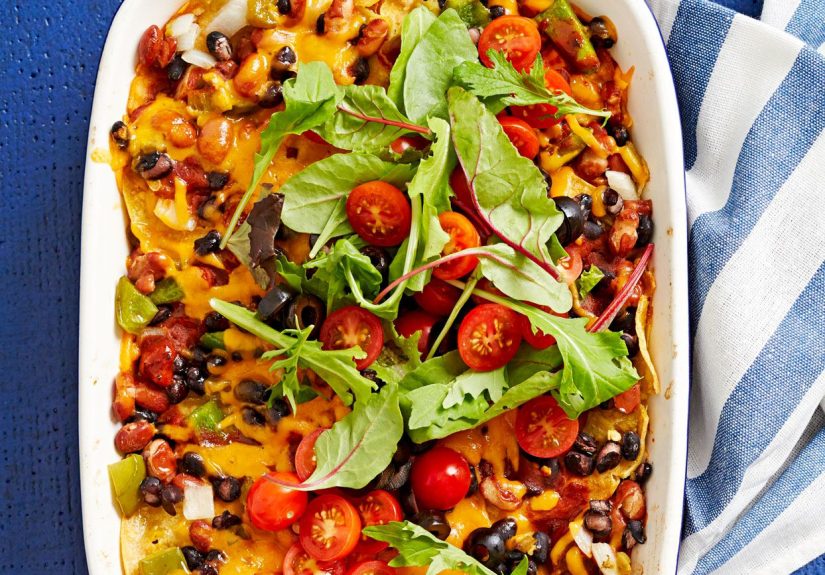
3) Roasted Veggie Enchilada Casserole (Bean-Boosted)
Estimated calories: ~320–400 per serving (8 servings)
Big enchilada energy, zero rolling. Roasting veggies builds flavor without added fat, while black beans add protein and fibertwo things that keep you from “accidentally” eating half the pan while standing at the stove.
What you’ll use: zucchini, bell peppers, onions, black beans, corn, enchilada sauce (look for lower-sodium), corn tortillas, cumin, lime, a small amount of cheese.
- Roast chopped veggies at 425°F with salt, pepper, and cumin until browned at the edges.
- Layer: enchilada sauce → tortillas → roasted veggies + beans → sauce. Repeat 2–3 times.
- Top with a modest sprinkle of cheese (or keep it cheese-free and add avocado later).
- Bake at 375°F for 20–25 minutes. Finish with lime and cilantro.
Pro move: Add shredded chicken for extra protein, or keep it vegetarian with extra beans.
4) Tuna “Noodle” Casserole, Modernized
Estimated calories: ~340–430 per serving (6 servings)
The classic version can be a sodium-and-cream-soup festival. This one uses a quick, lighter sauce and leans on peas, celery, and mushrooms for volume. Still nostalgic. Less… “nap afterward required.”
What you’ll use: whole-wheat pasta (or chickpea pasta), canned tuna in water, peas, mushrooms, celery, Greek yogurt, Dijon mustard, a little cheddar, whole-wheat breadcrumbs.
- Cook pasta al dente. (It keeps cooking in the oven.)
- Sauté mushrooms and celery. Stir in peas to warm through.
- Combine yogurt + Dijon + a splash of broth for a creamy tangy sauce. Season well.
- Mix pasta + tuna + veggies + sauce. Top with a light layer of breadcrumbs + a bit of cheddar. Bake 20 minutes at 375°F.
Lower-cal tip: Skip breadcrumbs and use crushed whole-grain crackers sparinglyor go topping-free and finish with black pepper and lemon.
5) Sweet Potato, Spinach & Turkey Sausage Breakfast Casserole
Estimated calories: ~300–380 per serving (8 servings)
Breakfast casseroles are meal-prep royalty: bake once, eat all week. Sweet potato slices replace bread, adding natural sweetness and fiber, while turkey sausage keeps the flavor bold without as much fat.
What you’ll use: sweet potatoes (thinly sliced), spinach, turkey sausage, eggs, egg whites, onion, a little feta, paprika.
- Brown turkey sausage with onion; add spinach to wilt.
- Layer sweet potato slices in a sprayed dish. Add sausage-spinach mix.
- Whisk eggs + egg whites + paprika + pepper; pour over.
- Top with a little feta. Bake at 375°F for 35–45 minutes until set.
Meal-prep win: Cool fully, slice, refrigerate. Reheat slices in the microwave or toaster oven for better texture.
6) Mushroom & Spinach Chicken Rice Bake (Cottage Cheese Creaminess)
Estimated calories: ~380–450 per serving (6 servings)
Here’s the trick: blend low-fat cottage cheese until smooth and stir it into broth-based sauce. You get creamy, high-protein comfort without heavy cream. Mushrooms bring savory depth so the dish tastes richer than it is.
What you’ll use: cooked chicken, cooked brown rice, mushrooms, spinach, low-fat cottage cheese, broth, thyme, a little Parmesan.
- Sauté mushrooms until browned (don’t rush thisbrowning equals flavor).
- Add spinach just to wilt, then stir in broth and thyme.
- Blend cottage cheese until smooth; stir in off heat with Parmesan.
- Mix with chicken + rice; bake 20–25 minutes at 375°F.
Extra credit: Add chopped artichokes for a briny kick.
7) Healthy Green Bean Casserole (From-Scratch, Lighter Sauce)
Estimated calories: ~140–220 per serving (8 servings as a side; 4 as a main with protein)
This classic often relies on canned soup and fried onions. A lighter version uses sautéed mushrooms, broth, and a little Greek yogurt (or reduced-fat milk) for creaminess. You still get that cozy holiday feelminus the “why is my sweater shrinking?” feeling.
What you’ll use: green beans, mushrooms, onion, garlic, broth, Greek yogurt or reduced-fat milk, black pepper, whole-wheat panko, Parmesan.
- Blanch green beans until bright green and crisp-tender.
- Sauté mushrooms + onion until deep golden. Add garlic briefly.
- Add broth; simmer a few minutes. Stir in yogurt off heat; season aggressively with pepper.
- Combine with green beans. Top with panko + Parmesan. Bake at 375°F until browned (15–20 minutes).
Main-dish idea: Add shredded chicken or white beans to turn it into dinner.
8) Squash & Kale “Gratin-Style” Casserole (Cheese, But Strategic)
Estimated calories: ~220–320 per serving (6 servings)
This is the “I want something creamy and baked” option that’s still veggie-forward. The key is using a small amount of flavorful cheese and letting the squash do the heavy lifting with natural sweetness.
What you’ll use: butternut squash (or yellow squash), kale, onions, garlic, a splash of milk, Swiss or Parmesan (small amount), nutmeg, whole-grain crumbs.
- Sauté onion and garlic. Add kale until wilted.
- Fold in thin-sliced squash and a splash of milk. Season with nutmeg, pepper, and a pinch of salt.
- Transfer to a baking dish. Top with a light mix of cheese + crumbs.
- Bake at 375°F until squash is tender and top is golden (30–40 minutes).
Texture tip: If your squash is very watery, salt it for 10 minutes and pat dry before assembling.
9) Mediterranean Eggplant & Zucchini Bake (Ratatouille Meets Casserole)
Estimated calories: ~230–330 per serving (6 servings)
Think tomatoey, garlicky vegetables with a little cheese sparkle. It tastes like a summer garden decided to become a cozy blanket. Serve as a main with chickpeas, or as a side with grilled chicken.
What you’ll use: eggplant, zucchini, onion, garlic, crushed tomatoes, oregano, basil, a small amount of mozzarella or feta.
- Salt diced eggplant for 15 minutes, then pat dry (this helps with bitterness and excess moisture).
- Sauté onion and garlic; add tomatoes and herbs. Simmer to thicken.
- Fold in eggplant and zucchini. Transfer to dish, top lightly with cheese.
- Bake at 375°F for 30–40 minutes until tender and bubbly.
Upgrade: Add white beans for extra protein and a creamier mouthfeelwithout adding cream.
10) Taco-Style Cauliflower Rice Casserole (Big Flavor, Lighter Base)
Estimated calories: ~320–410 per serving (6 servings)
Taco casserole is popular for a reason. This version keeps the seasoning and the satisfaction, but swaps most (or all) of the rice for cauliflower rice. You still get a hearty scoopjust with more veggies and fewer calories.
What you’ll use: lean ground turkey (or extra-lean beef), cauliflower rice, black beans, salsa, diced tomatoes, taco seasoning, a small amount of shredded cheese.
- Brown turkey with taco seasoning and a splash of water; stir in beans and tomatoes.
- Microwave cauliflower rice and squeeze out moisture (important!).
- Mix everything with salsa; spread into dish and top with a light cheese sprinkle.
- Bake at 375°F for 15–20 minutes. Top with cilantro, pickled jalapeños, or plain Greek yogurt.
Why it works: Salsa + spices create a “saucy” feel without needing a heavy cream base.
Real-World “Casserole Experience” Tips (The Stuff Recipes Don’t Always Admit)
After people start making healthier casseroles regularly, a few patterns show upusually right around the moment someone says, “Why is my casserole watery?” or “How is this healthy but still tastes like actual dinner?”
1) Moisture is the #1 villain. Vegetables release water as they bake. That’s great for keeping things tender, but it can turn your masterpiece into soup. The fix is simple: pre-cook high-water veggies (mushrooms, zucchini, spinach) to drive off moisture. For cauliflower rice, microwave it first and squeeze it in a towel. For eggplant, salting and patting dry helps. Once you start doing this, your casseroles stop crying in the oven.
2) “Creamy” doesn’t have to mean “heavy.” Many home cooks find that Greek yogurt and blended cottage cheese are the cheat codes. They add body, protein, and that cozy “casserole mouthfeel.” The one rule: don’t boil them aggressively. Stir yogurt or cottage cheese into warm sauce off heat, then bake. You’ll get creaminess without the curdle drama.
3) A little cheese can do a lot of emotional labor. Sharp cheddar, Parmesan, feta, or Swiss can deliver big flavor with smaller amounts. Sprinkle cheese on top rather than mixing huge quantities throughout; your taste buds hit cheese first, so it feels more indulgent. Bonus: use cheese alongside bold seasonings (mustard, smoked paprika, chili flakes, garlic) so your casserole tastes exciting, not “diet.”
4) Portioning is part of the planwithout being a buzzkill. The easiest way to keep calories reasonable is to treat casseroles like meal prep: bake in a standard dish, cool, slice into equal portions, and store. It removes the “oops, my serving is the size of a throw pillow” problem. Pair with a big salad, roasted vegetables, or a broth-based soup, and the meal feels abundant without needing a second mountain of casserole.
5) The freezer is your best friend (if you do it right). Casseroles freeze beautifully when they’re not overly creamy with delicate sauces. Tomato-based bakes (enchilada, stuffed pepper, ratatouille-style) are freezer champions. If you freeze a yogurt-based casserole, it can still work, but the texture may be slightly less silky after thawing. A trick people use: freeze before baking, then bake fresh when ready. Always cool fully before wrapping, and label with the date so Future You isn’t playing “mystery casserole roulette.”
6) Reheating is an art. Microwaves are convenient, but they can soften crunchy toppings. If you love a crisp top, reheat portions in a toaster oven or air fryer for a few minutes. Or reheat in the microwave and finish under the broiler for 1–2 minutes. That little finishing step makes leftovers feel like a real mealnot like a microwave memo from yesterday.
7) Make one base, then change the personality. A surprisingly fun “experience” approach is repeating a formula: veggie + lean protein + smart creamy sauce + crunchy topping. Then swap the theme: taco seasonings one week, Italian herbs the next, lemon-dill the next. Your grocery list stays easy, but your dinners don’t feel repetitive.
In other words: healthier casseroles aren’t about removing joy. They’re about relocating joyfrom “heavy ingredients” to “smart technique.” When you master moisture control, seasoning, and the creamy swaps, your casseroles become something you can eat often… without needing a nap, a vow, and an elastic waistband.
Conclusion
Low-calorie casseroles can be just as comforting as the classics when you lean on vegetables, keep protein high, and use smart “creamy” tricks. Try one recipe this week, then repeat it with a new flavor theme next weekbecause the healthiest plan is the one you’ll actually stick with.