Table of Contents >> Show >> Hide
- Quick Jump
- 1) Goldfish Have a Three-Second Memory
- 2) Bats Are Blind
- 3) Ostriches Bury Their Heads in the Sand
- 4) Bulls Hate the Color Red
- 5) Lemmings Commit Mass Suicide
- 6) Touching Frogs (or Toads) Gives You Warts
- 7) Daddy Longlegs Are Ultra-Venomous (But Can’t Bite You)
- 8) Chameleons Change Color to Match Anything
- 9) Sharks Don’t Get Cancer
- 10) Camels Store Water in Their Humps
- Final Thoughts: The Truth Is Usually Weirder (and Better)
- Extra: Everyday “Myth Encounters” (and Why They Stick)
Animals are incredible. Humans are… enthusiastic storytellers. Put those two facts together and you get a
never-ending buffet of “animal facts” that sound true, feel true, and are spectacularly wrong.
This myth-busting guide is here to rescue your brain from outdated trivia, cartoon logic, and that one uncle
who swears he learned it on a very educational road trip in 1997.
Below you’ll find 10 wildly popular wildlife misconceptionsalong with what’s actually happening in nature,
why the myth won’t die, and a few conversation-ready nuggets you can deploy at parties, classrooms, or the next
time someone says, “blind as a bat” with their whole chest.
1) Goldfish Have a Three-Second Memory
This one is the Michael Jordan of wrong animal facts. It’s everywhere: movies, memes, pet-store jokes, and the
phrase “memory like a goldfish” used to roast your friend who forgot your birthday (again).
Why people believe it
Goldfish look calm. They glide. They blink at nothing. Their vibe screams “no thoughts, just bubbles.”
Also, “three seconds” is oddly satisfyingshort enough to be funny, specific enough to sound scientific.
What’s actually true
Goldfish can remember things for far longer than a few seconds. Researchers and animal behavior experts have
documented that goldfish can learn, recognize patterns, and retain information over long periodsthink weeks
and beyond, not the length of a TikTok intro. In other words: your goldfish is not rebooting like a router
every time it turns around.
What to say instead (without sounding smug)
Try: “Goldfish can actually learn routines.” It’s accurate, it’s gentle, and it doesn’t start a family debate
about whether fish have feelings (they do, but let’s not ruin Thanksgiving).
2) Bats Are Blind
“Blind as a bat” is a classic phraseand it’s also a classic example of humans confidently naming something
they didn’t bother to verify. (We do that a lot, honestly.)
Why people believe it
Bats fly at night. They live in caves. They don’t make eye contact. Their faces look like they were designed
by a committee of moths. So people assume: no vision, just vibes.
What’s actually true
Bats can see. Many have perfectly functional eyesight, and they use it along with other senses. Echolocation
is the headline actbats “see” with sound in low lightbut it’s not the only tool in the kit. Depending on the
species, vision can be quite good, especially for navigating outside a cave or spotting what’s not within
echolocation range.
Bonus myth within the myth
If someone says bats “fly into your hair,” that’s another misconception. Most bats are skilled flyers with
excellent spatial awareness. Your hair is not a bat magnet. It’s just… hair.
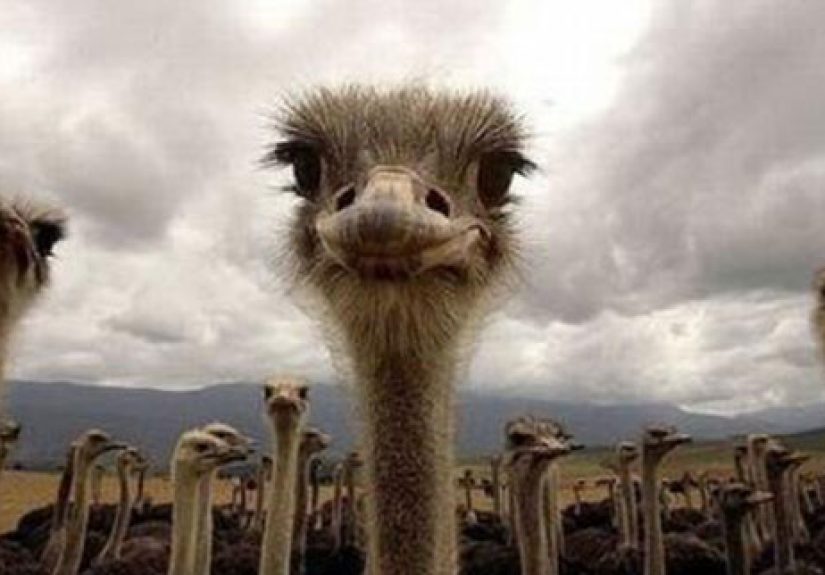
3) Ostriches Bury Their Heads in the Sand
The mental image is iconic: danger approaches, ostrich panics, head goes underground, problem solved.
It’s like avoidance as a lifestyle brand.
Why people believe it
From far away, an ostrich lowering its head can look like it’s “hiding” it. Add a dash of ancient storytelling
and the metaphor basically writes itself.
What’s actually true
Ostriches don’t bury their heads in the sand to escape threats. They may lower their heads close to the ground,
especially around nests, and they dig shallow nest scrapes for eggs. Sometimes they put their heads down to
tend or rotate eggsbehavior that can create the “head in the sand” illusion at a distance. When threatened,
ostriches are more likely to run (very fast) or use their size and powerful legs defensively, not perform an
impromptu soil-based disappearing act.
Translation for humans
The “ostrich strategy” is a human invention. Real ostriches are not out here inventing denial. We’ve got that
covered.
4) Bulls Hate the Color Red
Bullfighting imagery is so strong that it’s basically welded into pop culture: a bright red cape, a furious
bull, chaos, drama, and someone in an outfit with more embroidery than a wedding cake.
Why people believe it
The cape is red, the bull charges, therefore: red triggers rage. It feels like a neat cause-and-effect story.
Unfortunately, nature does not care about our tidy narratives.
What’s actually true
Cattle don’t react to red the way humans do. Bulls are provoked primarily by movement and perceived threat,
not by a specific color. In bullfighting, the cape’s motionflicking, sweeping, challengingdoes the heavy
lifting. The red cloth is largely tradition (and, practically speaking, it can help mask stains), not a special
bull-anger frequency.
A smarter takeaway
If you want to avoid getting charged by a bull, your best strategy isn’t “wear blue.” It’s “don’t act like a
predator with jazz hands.”
5) Lemmings Commit Mass Suicide
If animal myths had a “most dramatic” award, lemmings would take itexcept the award itself is based on a myth.
Lemmings are not tiny cliff-jumping philosophers.
Why people believe it
The “lemmings jumping off a cliff” story spread widely through popular media, including a famously misleading
nature film sequence that helped cement the idea in public imagination. Once a story like that lands, it’s hard
to un-land.
What’s actually true
Lemming populations can boom and then disperse as animals search for food and space. During these movements,
some lemmings may attempt to cross bodies of water and some may drown. That’s not suicideit’s migration pressure
plus tough terrain plus the brutal math of nature. The “mass suicide” framing is human melodrama stapled onto
normal (if intense) animal behavior.
Why this myth matters
Besides being unfair to lemmings, it’s a reminder of how easily staged or sensational storytelling can replace
real biology. Nature is already intense. It doesn’t need plot twists.
6) Touching Frogs (or Toads) Gives You Warts
The myth: touch a bumpy toad, wake up with warts, instantly regret your life choices. It’s been passed down like
a spooky campfire storyexcept the villain is dermatology misinformation.
Why people believe it
Frogs and toads often have textured, bumpy skin. Those bumps can resemble warts, so people assumed they were
contagious. Humans love visual shortcuts. Our brains are basically “pattern-matching machines” that occasionally
set themselves on fire.
What’s actually true
Common warts in humans are caused by human papillomavirus (HPV), which spreads through human-to-human contact or
shared surfacesnot through amphibian skin. Toads can secrete substances that irritate sensitive skin (so wash
your hands after handling wildlife), but irritation isn’t the same as “you caught a wart.”
Do the frogs deserve any blame at all?
Only for being adorable and making people want to pick them up. Otherwise, they’re innocent.
7) Daddy Longlegs Are Ultra-Venomous (But Can’t Bite You)
This myth is like a game of telephone played by a thousand people who all started mid-sentence.
“Daddy longlegs are the most venomous spider, but their fangs can’t pierce human skin.” Sounds scientific.
Also: it’s a mess.
Why people believe it
“Daddy longlegs” is a nickname used for different creatures in different regionsharvestmen, crane flies, and
cellar spiders. When one nickname covers multiple animals, misinformation throws a party and invites everyone.
What’s actually true
Harvestmen (often called daddy longlegs) aren’t spiders and don’t have venom glands like venomous spiders do.
Crane flies are insects and don’t have spider venom at all. Cellar spiders are spiders and do have
venom, but the idea that they’re the “most venomous” and only harmless because they “can’t bite” is not
supported the way the myth claims. In short: the scary legend is doing a lot of imaginative writing.
Practical reality
These animals are generally not a threat to humans. If anything, cellar spiders often help control other pests.
So the next time you see one in the corner, you can think “tiny roommate,” not “eight-legged assassin.”
8) Chameleons Change Color to Match Anything
Pop culture treats chameleons like living Photoshop toolsdrop them on plaid, they turn plaid. Put them on a
rainbow, boom, rainbow. If only your wardrobe had this feature.
Why people believe it
Chameleons do change color. People notice. People extrapolate. People turn “sometimes” into “always”
and “for many reasons” into “for one reason that makes a cute children’s book.”
What’s actually true
Chameleons shift color for multiple reasonsespecially communication (mood, dominance, courtship signals) and
temperature regulation. Some color change can contribute to camouflage, but it’s not a magical “match any
background” superpower. Their color range is species-specific and controlled by specialized skin structures
and pigments, influenced by factors like light, stress, social interaction, and heat.
The fun part
Chameleons basically wear their feelings (and sometimes their thermostat settings) on their skin. If humans did
that, meetings would be a lot shorter.
10) Camels Store Water in Their Humps
This is one of those myths that feels so logical you can practically hear a narrator saying it over desert
footage: “The camel stores water in its hump…” Cue dramatic music. Cue disappointment.
Why people believe it
Camels can go a long time without drinking, and humps look like built-in canteens. Humans see a lumpy shape and
decide it must be a water bottle. We are visual creatures. Sometimes too visual.
What’s actually true
A camel’s hump stores fat, not water. That fat can be used as an energy reserve when food is scarce, and it can
indirectly help the animal survive harsh conditions (including by supporting metabolic processes that can
produce water as a byproduct). But the hump itself is not a sloshing reservoir.
So how do camels actually survive?
Camels are desert specialists: they conserve water efficiently, tolerate dehydration better than most mammals,
and can rehydrate quickly when water becomes available. The hump is just one part of a whole desert-survival
toolkitless “portable water tank,” more “built-in snack pack.”
Final Thoughts: The Truth Is Usually Weirder (and Better)
If there’s a theme here, it’s this: nature doesn’t need exaggeration to be impressive. Goldfish don’t need
amnesia to be interesting. Bats don’t need blindness to be mysterious. Chameleons don’t need to cosplay a couch
pattern to be one of the coolest lizards on Earth.
The next time you hear a “fun animal fact,” treat it like a free sample at the mall: enjoy it, but check the
label before you commit your whole personality to it. The real world is full of fascinating animal behavior,
and the truth tends to make for better stories anyway.
Extra: Everyday “Myth Encounters” (and Why They Stick)
Animal myths don’t spread because people are sillythey spread because they’re convenient. They fit in one
sentence. They come with a built-in mental picture. And they usually make animals feel like characters in a
human story: the forgetful goldfish, the terrified ostrich, the angry bull, the magical color-changing chameleon.
Think about how these myths show up in real life. You’re at an aquarium, watching a goldfish cruise past a tiny
castle ornament, and someone says, “He’ll forget that castle in three seconds.” It’s a joke, it gets a laugh,
and it feels harmlessuntil it shapes how people care for fish. If you assume fish are disposable little
forget-machines, you’re less likely to give them enrichment, space, or decent water quality. The myth quietly
lowers the bar.
Or picture a summer evening where bats are swooping around streetlights, vacuuming up insects like living
Roombas with wings. Someone ducks and says, “They’re blind!” and suddenly the bats seem scarier, more chaotic,
more “out of control.” But when you know bats can seeand also use echolocationyou start interpreting the same
behavior as skilled flight, not randomness. The animal hasn’t changed; your mental model has. And that mental
model affects whether people protect bat habitats or panic-call pest control.
Myths also thrive because they piggyback on language. “Blind as a bat” isn’t a research paperit’s a phrase you
learn as a kid. Same with the “ostrich with its head in the sand” metaphor. Once a myth becomes an idiom, it
stops feeling like a claim and starts feeling like a cultural fact. You can correct the science and still hear
the phrase for the rest of your life, like a catchy chorus you didn’t consent to.
Then there’s the “friend of a friend” effect. Somebody’s cousin swears their uncle touched a toad and got warts.
Dermatology would like a word, but anecdotes are persuasive because they feel personal. And honestly, amphibian
skin can irritate peopleso someone gets a rash, somebody else calls it “warts,” and the myth gets another
generation of believers. It’s misinformation with excellent people skills.
If you want a practical habit that doesn’t require turning into the Fun Police, try this: swap certainty for
curiosity. Instead of “That’s wrong,” go with “I wonder why people think that.” Ask what evidence would support
the claim. Ask what alternative explanation fits the same observation. In a weird way, animal myths can be a
gateway drug to better thinking: you learn to separate a great story from a true one, and you get more
fascinated by biology in the process.
The reward is real. Once you start myth-busting, you notice how astonishing the non-myth version is. Camels
don’t have hump-canteensthey have a whole-body strategy for surviving dehydration. Chameleons don’t “match
plaid”they communicate and regulate heat with sophisticated skin biology. Lemmings aren’t suicidalthey’re
responding to ecological pressure. The real explanations aren’t just accurate; they’re richer. And they make you
appreciate animals as animals, not as punchlines.